
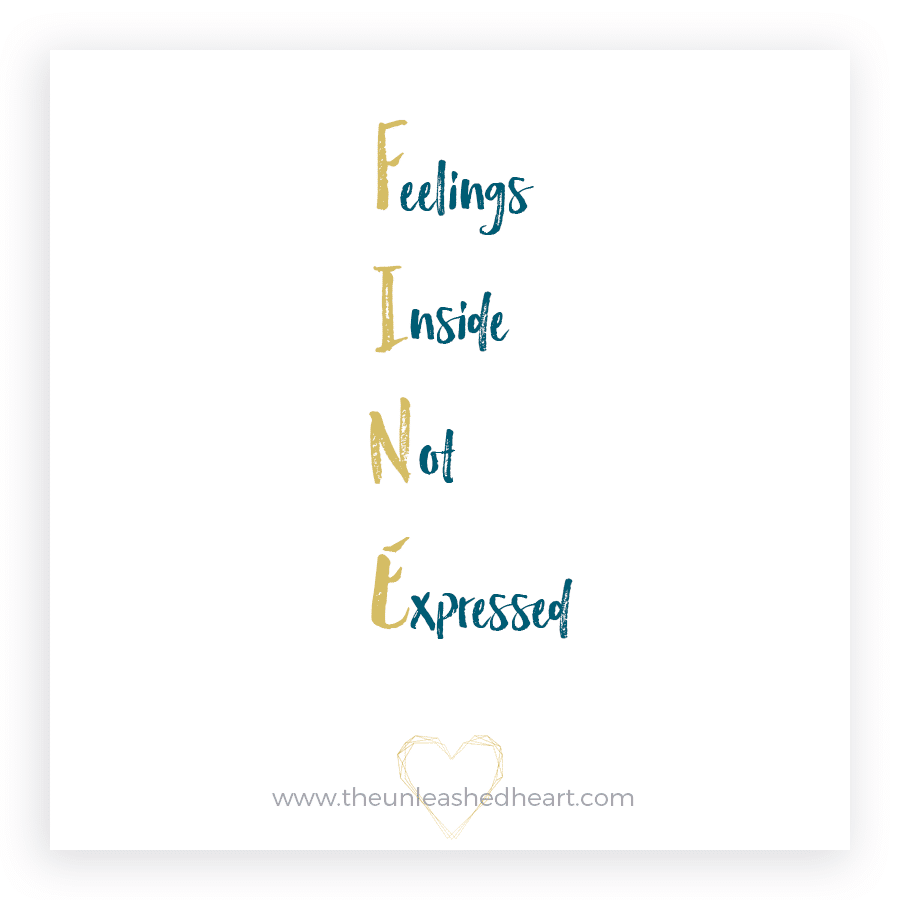
I had a different blog post planned for today; however, I felt this topic more strongly today. So, let’s talk about the word fine, particularly in the context of I’m fine.
For most of my life, when someone would ask me, “how are you?” My response (like it is for a lot of us) would be, “I’m fine.”
There’s a question we need to interject, however. In the space between that question and our knee-jerk response, ask: “Do I like to be lied to?”
We often pause, to tell the truth about ourselves in this instance, because it’s just easier. Getting deep with, what is often a casual, small-talk question, would be uncomfortable, right? I mean, if we ask someone (anyone) how they’re doing, we’re likely to be caught off guard if we got the truth – if it’s anything but “I’m fine.”
Let’s look at this typical scenario more closely, shall we?
Had I told the truth about myself when someone asked me how I was doing back in 2014, I would have said:
Life itself overwhelms me, and I am feeling miserable inside. I feel like there’s more to me than where I’m at and what I’m doing right now. Everything from my past is creaping up on me. I feel like a hot mess. I haven’t showered for three days (no lie) and only get out of my pj’s and make my bed right before my kids come home, so they don’t see what a hot mess I am. I take personality tests, am going through various personal development programs trying to figure out why I’m so f*cked up. That’s how I feel – f*cked up. I ache all over. I can’t eat because I feel bloated all the time. My hair is falling out in clumps in the shower. I am quick to anger and slow to love. Also, I got a dog because my youngest went to kindergarten and, I needed a distraction, because, just like that, I feel like I’ve lost a part of my identity – in so many ways.
How do you think someone would respond to that on the street, on the phone, or at lunch? They likely would’ve regretted even asking. And, for some reading that, you may be realizing, for the first time (if you haven’t read my book), how I really felt and what my days really looked like back then.
Grief causes us to behave in ways that are out of character for who we are at our core. But, here’s the caveat to that statement: I don’t think we truly know ourselves until we dissect ourselves. We may have an understanding of our likes, dislikes, passions, etc.. But, I’m talking really deep examining and knowing. The knowing you finally feel when you look in the mirror, and your reflection meets your soul. When have you seen yourself this way? Have you looked at yourself in the mirror so profoundly that you began to weep? If I were Kenny Rogers singing “Gamgling Man,” I’d bet my left kidney that you haven’t. It’s been a long time since I’ve done so myself.
I can tell you, what’s happened for me when I have in the past, is a whole lot of tears start flowing. Those tears would come from a whole lot of hurt at that time. I would bet my right kidney, but considering I already bet my left and probably lost, I’ll say I’d bet my next paycheck that if I did so today, it would be a different story. Today, I feel a whole lot of appreciation for being where I am in my life and all the sh*t I worked through to get to this place. I know this because it happens so easily now when I am in meditation or journaling.
So, perhaps when people ask me now, “how are you?” I should say: “Fantastic. How can I help you feel fantastic today, too?” I’m sure that’s not something most people would expect to hear, right?
So, friend – how can I help YOU feel fantastic today? Or, perhaps, tomorrow, or nine weeks from now? More specifically, I can, after the last session of my upcoming eight-week grief group program (March 11th). Shameless plug, I know. But truthfully, this program was the catalyst for changing the trajectory of the rest of my life. I feel this in my bones because I became certified, and I’ve found my calling in this work. However, even if you’re not certifying and are a participant, you’re going through it and doing the work. You complete deep inner-work, in a supported and guided environment. You don’t know it yet, but the feeling after the eight weeks will have you choosing another response than “I’m fine.” I guarantee it.
Let’s remove “I’m fine” from our vocabulary and, instead, begin to tell the truth about ourselves. Grief isn’t a dirty word. And yet, it certainly feels like it is. I’m on a mission to make grief common-talk, just like the weather. Not one person is immune to it, regardless of race, gender, sexual preference, etc.. We can look at anyone on the street and know there’s something within them that causes an ache inside because we all grieve something or someone. “I’m fine” is merely a distraction from the pain and loneliness that persists inside. And by saying “I’m fine,” we’re placing a bandaid over an infection. All the while, we’re rejecting and denying where our “hut (heart + gut)” is telling us we need to heal.
We start changing the conversation when we start getting honest with ourselves and with each other. And, this conversation starts in our homes with our children. We need to stop accepting, “I’m fine.” We have to help our children find the words to help them express how they’re truly feeling. Because behind every “I’m fine” is a lie if we take the time to dissect it.
One last thought: How can we expect our children to tell the truth about themselves when we hide the truth about ourselves?

P.S. Tickets/info for my upcoming group in Bismarck, ND can be found HERE, if you’re interested in moving beyond your grief.