Educational, Emotions, Grief, Grief Tips, Healing, Mind/Body Wellness |

Grief That Isn’t Death: You’re Still Allowed
Nobody dropped off a casserole.
There were no cards in the mailbox. No one checked in three weeks later to see how you were holding up. No one said “I’m so sorry for your loss” — because from the outside, it didn’t look like a loss.
But something ended. Something shifted. Something that used to be yours is gone now.
And you are grieving it — even if no one around you is calling it that. Even if you haven’t been calling it that.
The Losses Nobody Names
We’ve been taught — not loudly, just consistently — that grief belongs to death.
That it’s reserved for funerals. For the kind of loss that comes with a date you’ll carry forever.
But grief doesn’t work that way.
Grief is the normal and natural response to loss of any kind. And loss shows up in far more ways than we’ve ever been given language for.
The divorce was the right call, and it still broke something in you. The career that ended, taking your sense of purpose with it. The friendship that dissolved so slowly you almost didn’t notice — until one day you realized you hadn’t talked in over a year. The diagnosis that quietly rewrote the future you thought you had. The move that took you away from everything familiar. The dream you finally had to release. The version of yourself you had to leave behind to get here.
These are losses. Real ones.
And the grief that comes with them is real too — even without anything to point to.
Why “Good Change” Can Still Hurt
Here’s the part that trips people up most — and the part that can make you feel like something is wrong with you:
Sometimes the thing you’re grieving is something you chose.
The relationship you ended. The job you walked away from. The life chapter you closed on purpose because you knew it was time.
And yet — you’re sad. You’re grieving. And somewhere underneath it is a voice asking: Shouldn’t I just be grateful?
You can be. And you can also grieve it.
Gratitude and grief are not opposites. They don’t cancel each other out. You can be genuinely glad for where you are and still mourn what it cost you to get there.
Both are true. At the same time. In the same body.
That’s not confusion. That’s honesty.
When You’re Grieving a Version of Yourself
There’s a particular kind of loss that almost never gets named — and it’s one of the heaviest things I see in the people I work with.
It’s the grief of losing who you were.
The person you were before everything changed. Before the loss. Before the diagnosis. Before the relationship ended or the kids grew up or midlife arrived and quietly asked: Who are you now, outside of all the roles you’ve been filling?
That question can feel like the floor shifting.
Because when your identity has been wrapped around a role — a relationship, a career, a version of your life — and that role changes or disappears, something in you goes with it.
That something deserves to be grieved.
Not reframed. Not rushed. Not turned into a lesson before you’ve had a chance to actually feel it.
Grieved.
Stop Minimizing What You’re Carrying
If you’ve said any of these things to yourself, this part is for you:
💔“I shouldn’t be this sad — it was my choice.”
💔“Other people have it so much worse.”
💔“It’s not like someone died.”
💔“I just need to move on.”
Those are the things we say when we’ve been taught that grief has to earn its place. That it has to meet some threshold of tragedy before it’s allowed to exist.
It doesn’t.
Your grief doesn’t have to be the biggest grief in the room to be real. It doesn’t need to be compared, ranked, or justified.
The grief that doesn’t get named is the grief that gets stuck. And stuck grief has a way of showing up sideways — in your body, in your relationships, in the low-grade exhaustion you can’t quite explain.
You’re not being dramatic. You’re not weak. You’re not ungrateful.
You’re carrying something real. And real things deserve real support.
A Five-Sentence Goodbye
Here’s an invitation to practice for this week:
Write a five-sentence goodbye. To the season that’s ending. To the version of yourself you’re leaving behind. To the life you thought you were going to have.
You don’t have to share it. You don’t have to show it to anyone. You just have to say it — because the things we name lose some of their power to quietly undo us from the inside.
Five sentences. Imperfection is fine. Honesty is the only requirement.
The Grief That Goes Unnamed Is the Grief That Gets Stuck
The losses that never got named are the ones that accumulate quietly — in the body, in the nervous system, in the way you move through your days carrying a weight you can’t quite explain.
I’ve seen it in the people I work with. I’ve lived it myself.
You don’t have to keep carrying it alone. And you don’t need a “big enough” loss to deserve support.
If something in this post felt like it was written for you — it was.
→ Book a free consultation — let’s talk about what you’re carrying, what you’re grieving, and what moving through it could actually look like.
→ Explore the Grief Companion Kit — a self-guided resource for when you don’t know where to begin.
And if you’re not ready for that yet — start with the five sentences. Start with naming the thing you’ve been minimizing.
Start there.
Because the grief that finally gets named? That’s the grief that finally gets to move. 💛
____________________________________________________________________________________________________________________________
Every grief journey is different, but many begin with carrying a weight that no one else can see. The Grief Cloak explores that invisible burden and what it looks like when it slowly begins to lift. If you haven’t read it yet, you can check it out here.
Educational, Emotions, Grief, Grief Tips, Healing, Mind/Body Wellness |
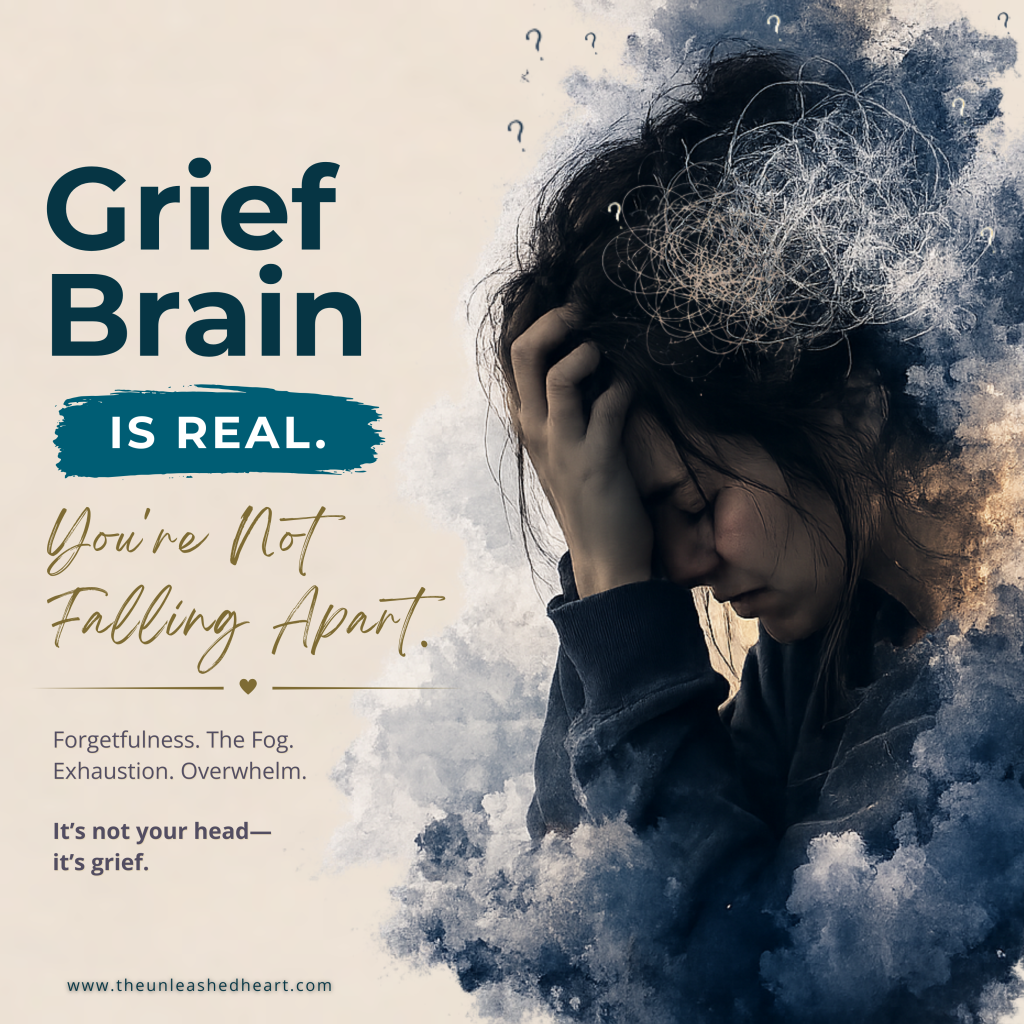
Grief Brain Is Real. You’re Not Falling Apart.
You walked into a room and forgot why you went in there.
You read the same email three times. Still couldn’t tell anyone what it said. You said yes to something — a dinner, a favor, a phone call — and have zero memory of agreeing to it.
And then, because the fog wasn’t enough, you started wondering what is wrong with you.
Nothing is wrong with you.
Your brain is grieving.
The Fog Has a Name
When you’re in the thick of loss, your nervous system is working harder than it ever has. It’s trying to process something it was never built to process quickly. The shock of it. The absence. The way everything around you looks exactly the same, even though nothing feels the same.
Your brain is doing all of that — all at once, all the time — and you’re wondering why you can’t remember where you put your keys.
The fog is real. The forgetting is real. The way a simple decision feels impossible? Real.
This isn’t a character flaw. This isn’t you being dramatic. This is what grief does — and the fact that nobody warned you is one of the quieter cruelties of how we handle loss.
We Were Taught to Push Through It
Stay busy. Be strong. Keep moving. Get back to normal.
That’s what most of us were shown — not told, shown — about how to handle grief. So we do it. We show up. We answer the texts. We smile when it’s called for. We perform fine. And “fine” in its essence actually translates to: feelings inside not expressed.
Not because we are. But because we’ve been taught that falling apart is inconvenient. That grief has some kind of expiration date we’re already behind on.
I know that performance well. I lived it for years before I understood what I was actually carrying.
And here’s what that performance costs: energy you don’t have. Mental space that’s already maxed out. And the slow, grinding shame of feeling like you should be functioning better than you are.
So let me say this plainly: you are not behind. You are grieving.
Those are two very different things.
What Grief Brain Actually Looks Like
I want you to recognize yourself here — not feel more alone — so let me name some of it:
In your head: Forgetfulness. Trouble concentrating. The inability to make even small decisions without it feeling like too much. Reading the same thing over and over and retaining nothing.
In your body: Fatigue that a full night’s sleep doesn’t touch. A heaviness in your chest that’s there before you’ve even had a thought. Tension you can’t explain and can’t shake.
In your emotions: Numbness that flips without warning into a wave of feeling. Irritability that catches even you off guard. Crying in the car, in the shower, in the middle of a sentence you didn’t see coming.
In your relationships: Canceling plans and feeling guilty about it. Showing up and feeling invisible anyway. Saying “I’m fine” so many times it starts to feel like a reflex.
If any of that sounds familiar — you’re not broken. You’re in the middle of something real.
What Actually Helps
I’m not going to give you a ten-step plan. You don’t have the bandwidth for that right now.
What I will give you is this:
Stop piling shame on top of the fog. The judgment you’re adding to the grief is its own weight. You don’t have to earn your way through this. You just have to move through it.
Pick one thing. Not a list. One thing that actually needs to happen today. Do that. Everything else is a bonus — not a failure, a bonus.
Let your body have a say. Grief settles into the body before the mind catches up to it. A walk. A cry you stop trying to hold back. Five minutes outside without your phone. These aren’t wasted time. They’re part of the process.
Tell one person the truth. Not the “I’m fine” version. The real one. Even once. Even just to one person who won’t try to fix it. Being heard — actually heard — is one of the most underrated forms of healing there is.
When you’re in the fog, you don’t need someone handing you a complicated plan and telling you to figure it out.
You need someone who can sit with you in it. Someone who can help you make sense of what you’re carrying and give you tools that actually work for a nervous system that’s already overwhelmed — not one that’s fully functioning.
I’ve been in that fog. I know what it costs to stay in it alone. And I know what it feels like when someone finally helps you set some of it down.
If that’s where you are right now, I’d love to talk.
→ Book a free consultation — no pressure, no pitch. Just a real conversation.
And if you’re not ready for that yet — start with naming what you’re actually feeling. Start there.
That’s enough for today.
___________________________________________________________________________________________________________________
The invisible changes grief creates in your mind and body are only part of the story. Not every loss comes with a funeral, yet many leave us carrying profound grief that deserves to be acknowledged.
Continue reading: Grief That Isn’t Death: You’re Still Allowed.
Educational, Emotions, Grief, Grief Tips, Healing, Mind/Body Wellness |
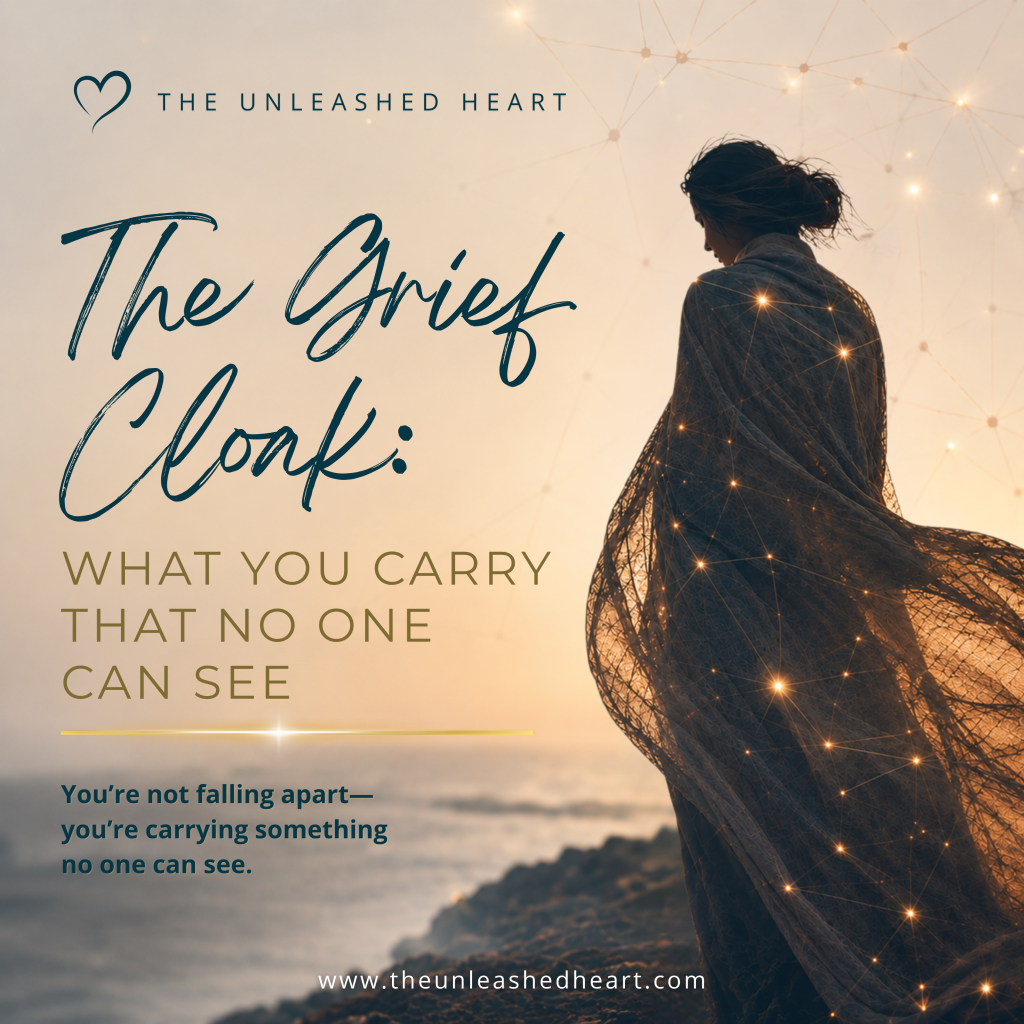
The Grief Cloak: What You Carry That No One Can See
Nobody can see it.
That’s the hardest part.
You walk into the grocery store, the school pickup line, the work meeting — and you look like everyone else. You answer questions. You function. You show up.
But you are wearing something heavy. Something that was there when you woke up and will still be there when you finally stop moving tonight.
We often wear our life stories like the clothes on our backs — without even realizing it.2.1
Grief is like a cloak.
It moves with you. It drapes over everything. It’s invisible to the people around you — but you feel every ounce of it, every single day.
And nobody hands you a manual for how to wear it.
What the Cloak Actually Feels Like
There’s a reason grievers struggle to find words for what they’re experiencing. It’s not because nothing is happening. It’s because what’s happening is so layered, so physical, so constant — that language almost doesn’t reach it.
So let me try to reach it for you.
The cloak feels like waking up tired before the day has asked anything of you. It’s the heaviness in your chest that shows up before your thoughts do. It’s the way a song, a smell, a particular slant of afternoon light can stop you cold — without warning, without permission.
It’s carrying something that no one else in the room knows you’re carrying.
It’s the exhaustion of performing fine while something inside you is anything but.
It’s being surrounded by people who love you and still feeling completely unseen — not because they don’t care, but because the cloak is invisible. They can’t feel what you’re carrying. They can only see that you showed up.
And you did. You showed up. That matters more than you know.
But showing up doesn’t mean the cloak isn’t there. It just means you’re strong enough to wear it — and strong enough is not the same as okay.
The Weight Compounds
Here’s something nobody tells you: grief is cumulative.
Every loss — every ending, every goodbye, every version of yourself you’ve had to leave behind — adds to what you’re carrying. It’s not just this loss. It’s every loss that never got its proper space. Every grief that got swept under the rug because life kept moving, and you were expected to move with it.
And because grief is cumulative, the cloak gets heavier over time.
Not because you’re doing it wrong. Because you were never taught how to do it at all.
We live in a culture that hands grievers a timeline and calls it support. Be strong. Stay busy. Focus on the good. And so we do — because what else do you do when the world keeps spinning, and no one around you seems to notice that you are carrying something they cannot see?
You wear the cloak. You keep moving. And the weight becomes your normal.
Until it no longer feels normal. Until the heaviness is so familiar you’ve forgotten what it felt like to move through a day without it.
You Don’t Have to Wear It Every Moment
This is the part grief doesn’t tell you — and the world around you certainly doesn’t either.
The cloak is yours. It holds the love, the loss, the history that is uniquely and completely yours. You don’t have to throw it away. You don’t have to pretend it doesn’t exist. You don’t have to be “over it” to set it down for a little while.
You are allowed to put it down.
Not forever. Not all at once. Just — for a moment. For an afternoon. For one conversation where you let yourself laugh without guilt. For one walk where you notice the air instead of the ache.
Setting it down doesn’t mean forgetting. It doesn’t mean betraying the loss, the person, or the life you’re grieving. It means you are human, and humans need rest from the weight of hard things.
And every time you set it down — even briefly — something shifts.
How the Cloak Begins to Change
The cloak doesn’t disappear. But it changes.
When you begin to move through grief instead of around it — when you stop sweeping it under the rug and start actually feeling it, naming it, honoring it — the cloak begins to lighten.
Not all at once. Slowly. The way winter loosens its grip — not in a single day, but in degrees.
What was once a weighted blanket — thick, suffocating, impossible to move in — starts to feel more like a heavy coat. And then, with time and the right support, more like a jacket. And then, on the days when the work is really moving, more like a soft sweater.
Something you can still feel. Something that’s still yours. But something you can breathe in.
And underneath it — underneath all of it — there is a version of you that is still standing. Still here. Taller than you remember. More grounded than you’ve felt in a long time.
That version of you didn’t disappear when the grief arrived. It’s been there the whole time, waiting for the weight to lift enough to let you feel it again.
Standing Taller Doesn’t Mean the Loss Was Less
I know what some of you are thinking.
If I feel lighter, does that mean I’ve forgotten? Does that mean it mattered less?
No.
Standing taller in your grief is not a betrayal of what you lost. It’s the most honest way to honor it. Because the love that created the grief doesn’t go away when the weight lifts. It just stops crushing you. It becomes something you carry with you instead of something that carries you.
There is a difference between grief that moves through you and grief that stays stuck. One becomes part of your story — woven into who you are, informing how you love and how you show up. The other stays heavy. Unmoving. Living in the body as tension, fatigue, symptoms you can’t quite explain.
The goal was never to get rid of the cloak.
The goal is to learn how to wear it — and to know that you don’t have to wear it alone.
You Were Never Meant to Carry This Alone
The cloak gets lighter when it’s witnessed. When someone sits with you in it — not to fix it, not to rush you out of it, but to say: I see what you’re carrying. And I’m not going anywhere.
That’s the work I do.
Whether it’s through grief recovery work or simply a real conversation where you finally get to say the true thing out loud, my whole purpose is to help you find your way back to yourself. To the version of you that is still standing underneath all of that weight.
You don’t have to have it figured out to reach out. You don’t have to be at rock bottom. You just have to be tired of carrying it alone.
If that’s where you are — I’d love to talk.
→ Book a free consultation — no pressure, no pitch. Just a real conversation about what you’re carrying and what support could look like for you.
And if you’re not ready for that yet — come back to this post on a hard day. Let it remind you that what you’re feeling is real, that the weight is real, and that feeling lighter is possible.
Because it is.
The cloak doesn’t have to stay heavy forever. 💛
_________________________________________________________________________________________________________
In the next post, we’ll explore what grief actually does to the brain and body—and why what you’re experiencing is a natural response to loss, not a sign that you’re falling apart. Read: Grief Brain Is Real. You’re Not Falling Apart.
Educational, Grief, Grief Tips, Mind/Body Wellness |
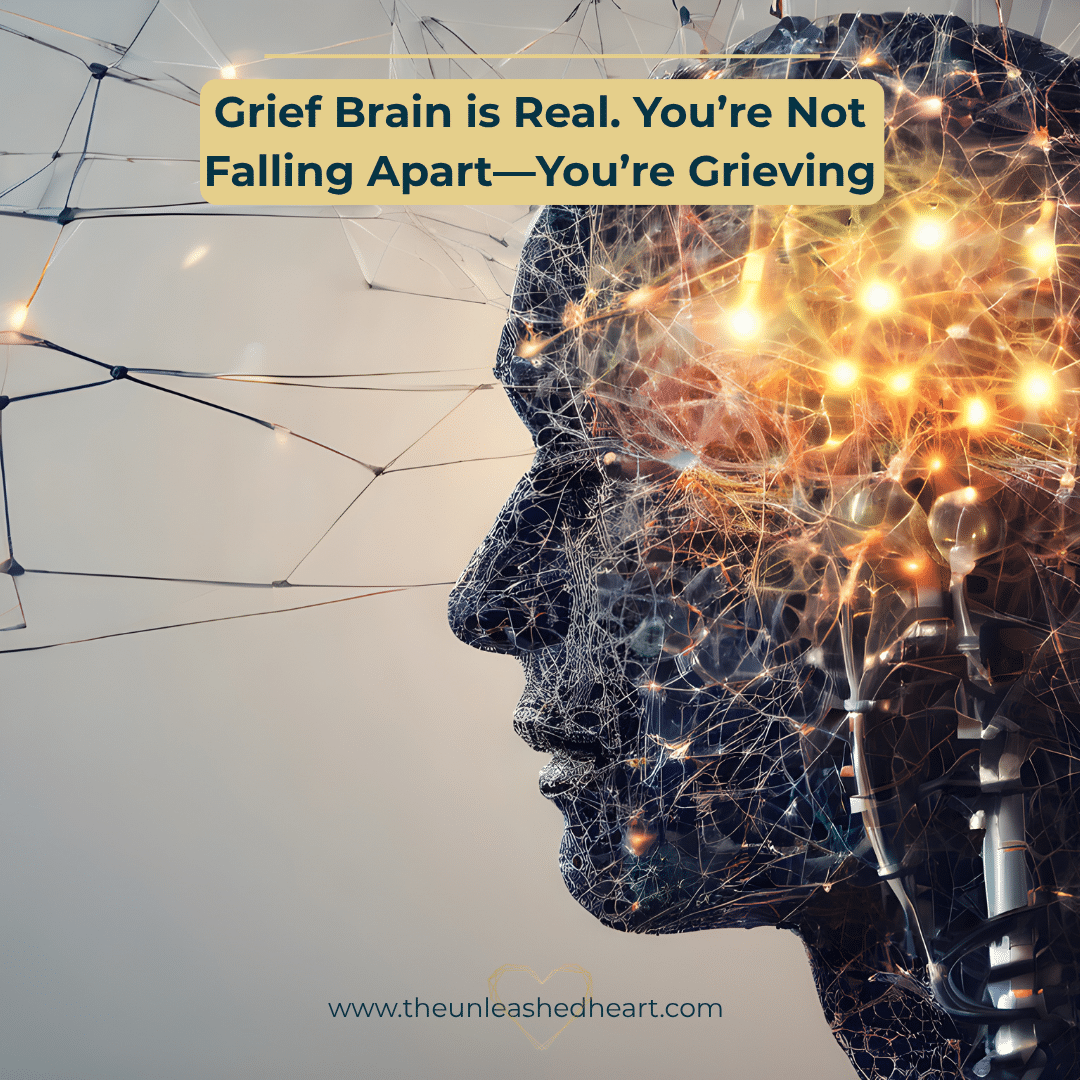
Grief Brain Is Real. You’re Not Falling Apart—You’re Grieving
You walked into a room and forgot why you went in there.
You read the same email three times and still couldn’t tell someone what it said. You said yes to something — a dinner, a meeting, a favor — and have absolutely no memory of agreeing to it.
And then, because that wasn’t enough, you started wondering what’s wrong with you.
Nothing is wrong with you.
Your brain is grieving.
The Fog Has a Name
There’s a reason grief workers talk about “grief brain”—and it’s not a metaphor; it’s physiology.
When you’re in the thick of loss, your nervous system is working overtime. It’s processing something it was never designed to process quickly. The shock, the absence, the way the world looks exactly the same as it did before, even though everything has changed, your brain is trying to make sense of all of it, all at once, all the time.
So yes—the fog is real. The forgetting is real.
This isn’t a weakness. This isn’t you being dramatic. This is what grief does to a human brain, and the fact that nobody told you that ahead of time is one of the quiet cruelties of how we handle loss in this culture.
Here’s what we were taught to do with grief: push through it. Stay busy. Be strong. Get back to normal as fast as possible.
And so that’s what most of us do. We show up to work. We answer the texts. We smile at the right moments. We perform “fine”—not because we are, but because we’ve been taught that falling apart is inconvenient, and that grief has some kind of expiration date we’re already running late on.
But here’s what that performance costs you: energy you don’t have. Mental bandwidth that’s already stretched thin. And, maybe worst of all, the quiet, accumulating shame of feeling like you should be functioning better than you are.
I want to say something directly to that shame: you are not behind. You are grieving.
Grief is the normal and natural response to any kind of loss. Not a disorder. Not a phase to rush through, a response. And responses need space to move through us, not a performance schedule to keep.
What Grief Brain Actually Looks Like
Because I want you to recognize yourself here—not feel more alone—let me name some of what grief brain can look like day to day:
Cognitively: Forgetfulness. Difficulty concentrating. Trouble making even small decisions. Reading the same paragraph four times and retaining nothing.
Emotionally: Numbness that flips without warning into waves of feeling. Irritability that surprises even you. Crying in the car, in the grocery store, in the middle of a sentence.
Physically: Fatigue that sleep doesn’t fix. A heaviness in your chest that shows up before your thoughts do. The body carries what the mind hasn’t fully processed yet.
Socially: Canceling plans and feeling guilty. Showing up and feeling invisible. Saying “I’m fine” so many times, you almost believe it.
If you saw yourself in even one of those, you’re not broken. You’re in the middle of something real.
What Actually Helps (For a Tired, Overwhelmed Nervous System)
I’m not going to give you a ten-step plan. You don’t have the bandwidth for that right now, and honestly, neither does grief.
What I will give you is this:
🛑 Stop adding shame to the fog. The judgment you’re layering on top of the grief is its own weight. You don’t have to earn your way through this. You just have to move through it.
✅ Simplify ruthlessly. What is one thing — just one — that actually needs to happen today? Do that. Everything else is a bonus. Not a failure. A bonus.
🧘 Let your body lead sometimes. Grief lives in the body before it lives in the mind. A walk. A cry you stop trying to hold back. Five minutes of sitting in the sun without your phone. These aren’t indulgences. They’re data collection.
🗣️ Tell someone the truth. Not the “I’m fine” version. The real version. Even once. Even just to one person. One of the most healing things a human being can do is be heard—really heard—without someone trying to fix them.
The One-Thing List
Here’s your small practice for this week, and I mean small:
Write down one thing that needs to happen today. Just one.
Not your to-do list. Not your should list. One thing you can actually do that will move your day forward.
Everything else? Bonus. You did enough just by being here.
Grief brain is one of the reasons the Grief Recovery Method was created the way it was (by a grieving father and Vietnam veteran). Because when you’re in the fog, the last thing you need is someone handing you a complicated roadmap and telling you to figure it out.
What you need is someone who can sit with you in it. Help you make sense of what you’re carrying. Give you tools that work for a tired, overwhelmed, nervous system—not a fully functioning one.
If you’re in that fog right now and you’re wondering whether there’s a way through that doesn’t require you to have it all together first, there is. And I’d love to talk with you about it.
→ Explore grief support options here
→ Book a free consultation — no pressure, no pitch. Just a conversation.
And if you’re not ready for any of that yet, that’s okay, too. Start with the one-thing list. Start with this post. Start with the quiet acknowledgment that what you’re carrying is real, and that you deserve support that meets you where you actually are.
If this landed for you, this blog post goes deeper into what the nervous system carries when relationships add to the weight of grief.

Emotions, Pespective |

Emotional Immaturity in Relationships: The Hidden Cost (and How to Protect Your Peace)
There’s a certain ease that comes from not knowing.
Not knowing how your tone lands.
Not knowing you’re escalating.
Not knowing there might be another way to respond besides the one you learned.
Because if you don’t know, you don’t have to change.
That’s why emotional immaturity in relationships can feel like “no big deal” to the person living inside it… while everyone else is left doing the cleanup.
I’ve left conversations and realized my shoulders were up by my ears—and I hadn’t even noticed until it was over.”
I’ve also walked away from interactions with others (very much so in my 20’s and 30’s), not fully understanding my own impact until much later, and probably not even at all. (Side note: Human Design has been a remarkable tool for awareness for me in this regard.)
Emotional ignorance can feel like bliss — until you’re the one cleaning it up.
This isn’t about diagnosing anyone. Instead, it’s about naming patterns that cost peace, clarity, and connection.
The Seduction of Not Knowing
Emotional ignorance makes it easy to stay the same.
You’re “just being honest.”
You’re “just stressed.”
You’re “just reacting.”
Meanwhile, someone else is left doing the invisible work: recalibrating, re-centering, repairing the air in the room after every emotional tremor.
You go about your day.
They go about managing the impact.
If you’re always the one smoothing things over, it can be incredibly annoying (and heartbreaking at the same time) to feel as though you’re putting your emotional needs last. It’s difficult to walk the line of taking the high road and speaking up, and risk making waves.
Emotional Immaturity in Relationships Has a Hidden Cost
Let’s name something plainly: emotional immaturity in relationships doesn’t stay contained.
It spills.
It leaks into conversations, leaving someone second-guessing themselves.
It turns small moments into “what just happened?” moments.
It makes people manage you—your mood, your defensiveness, your silence, your sarcasm—so they can keep things stable.
And the people around it start having an internal, mental, and emotional boxing match all day long:
Should I bring this up now, or will it turn into a thing?
Should I say it directly, or soften it so it doesn’t set them off?
Should I even bother, or will I end up apologizing for having a feeling?
That’s the invisible labor nobody posts about.
It often shows up as:
- sarcasm that cuts, then gets called “a joke”
- defensiveness that turns every conversation into a courtroom
- outbursts that blow through the room and leave everyone tense afterward
- silence that isn’t quiet — it’s punishment
- blame that replaces responsibility
- “I didn’t mean it like that” used to erase impact
Over time, people don’t just deal with volatility; they also face it. They start organizing their life around it.
They edit themselves.
They brace before bringing things up.
They recover for hours after a ten-minute interaction.
To keep your environment “safe,” you keep things surface-level because depth costs too much.
Emotional Intelligence Isn’t “Being Nice”
It’s not “good vibes only.”
It’s not spiritual bypassing.
It’s not even being agreeable.
Emotional intelligence is the ability to recognize what’s happening inside you, interpret it accurately, and choose your response with responsibility—especially when you’re activated.
It’s the difference between:
- feeling anger and turning it into a weapon
- feeling hurt and turning it into control
- having a hard day and making the whole house pay for it
Emotional intelligence isn’t about never having emotions. It’s about not outsourcing them.
It is possible to tell the truth without making someone bleed. It is possible to honor what’s happening for you emotionally while respecting what’s happening emotionally in others.
Emotional Literacy Should Be Taught Like Reading
I genuinely think emotional literacy should be taught in schools the way we teach math.
Not as a “be nice” program. Rather, as a basic, human skill-building program in how to:
- name what you feel (beyond fine / stressed / annoyed)
- tolerate discomfort without exploding or disappearing
- repair after conflict
- communicate without blame
- pause long enough to choose a response you can live with later
Because so much relational damage isn’t created by one catastrophic moment. It’s created by the daily paper cuts. The chronic misattunement. The way some people never learned to take responsibility for their emotional output. And again, I have learned so much about my own emotional climate through Human Design, understanding how to recognize my emotional wave, and having the wherewithal to stop, pause, and ride it out before letting my lips run loose. And, take some extra time in solitude, too.
A Self-Check That Changes a Lot
If you want something simple to practice (and by “practice” I mean real life, when you’re tired and triggered), try this:
1) Name what’s true inside you.
Not the story. The feeling.
Angry. Embarrassed. Threatened. Sad. Overwhelmed.
2) Notice your impulse.
To text. To snap. To shut down. To prove your point. To punish with silence.
3) Choose a response you can stand behind tomorrow.
Not perfect. Just clean.
That’s emotional adulthood.
Not “I never get it wrong.”
More like: “I can slow down. I can own my impact. I can repair.”
For me, it can be as simple as walking away for five minutes and coming back when I can actually hear. Or, I’ve actually given myself a timeout for weeks before I’ve responded because I recognize my emotions are getting the best of me, even weeks later. This is the complex emotional climate of an emotional authority in Human Design (which is about 1/2 of the world’s population and feels foreign to non-emotions).
Neither you nor I can fully hear what someone else is saying if we’re in a heightened emotional state. I know I’ve said things I couldn’t take back; the damage had been done. It does everyone good to take a beat, ride the emotional wave, and come back more level-headed.
What Helps (Even If They Don’t Change)
If you keep waiting for the emotionally immature person to “get it,” you can lose years of your life in that waiting. I’ve been there, done that. I was stuck in emotional jail for decades, waiting for an apology I was never going to receive. Grief recovery helped me make peace with that (among so much more).
Here are a few things that actually help—without requiring you to fix them:
- Stop arguing with someone’s nervous system. If they can’t stay present, you won’t “word it better” into accountability.
- Name the pattern (to yourself) instead of debating the details. The pattern is the point.
- Use fewer words when things get heated. Short, clear, calm. Save the deep talk for regulated moments.
- Give yourself a recovery plan. A walk, a breath, a body reset. Don’t pretend it didn’t hit you.
- Choose boundaries you can keep. The boundary is for you, not a lesson for them.
Emotional intelligence doesn’t make you perfect. It makes you safer to be close to. And emotional immaturity in relationships doesn’t have to be the thing that defines your life. It can simply become the thing you stop organizing your life around.
Reflection Question (because questions are my jam)…
Where are you still calling “that’s just how they are” something that’s quietly costing you?
Biofield Tuning, Emotions, Energy, Grief Tips, Growth, Pespective, Reiki |
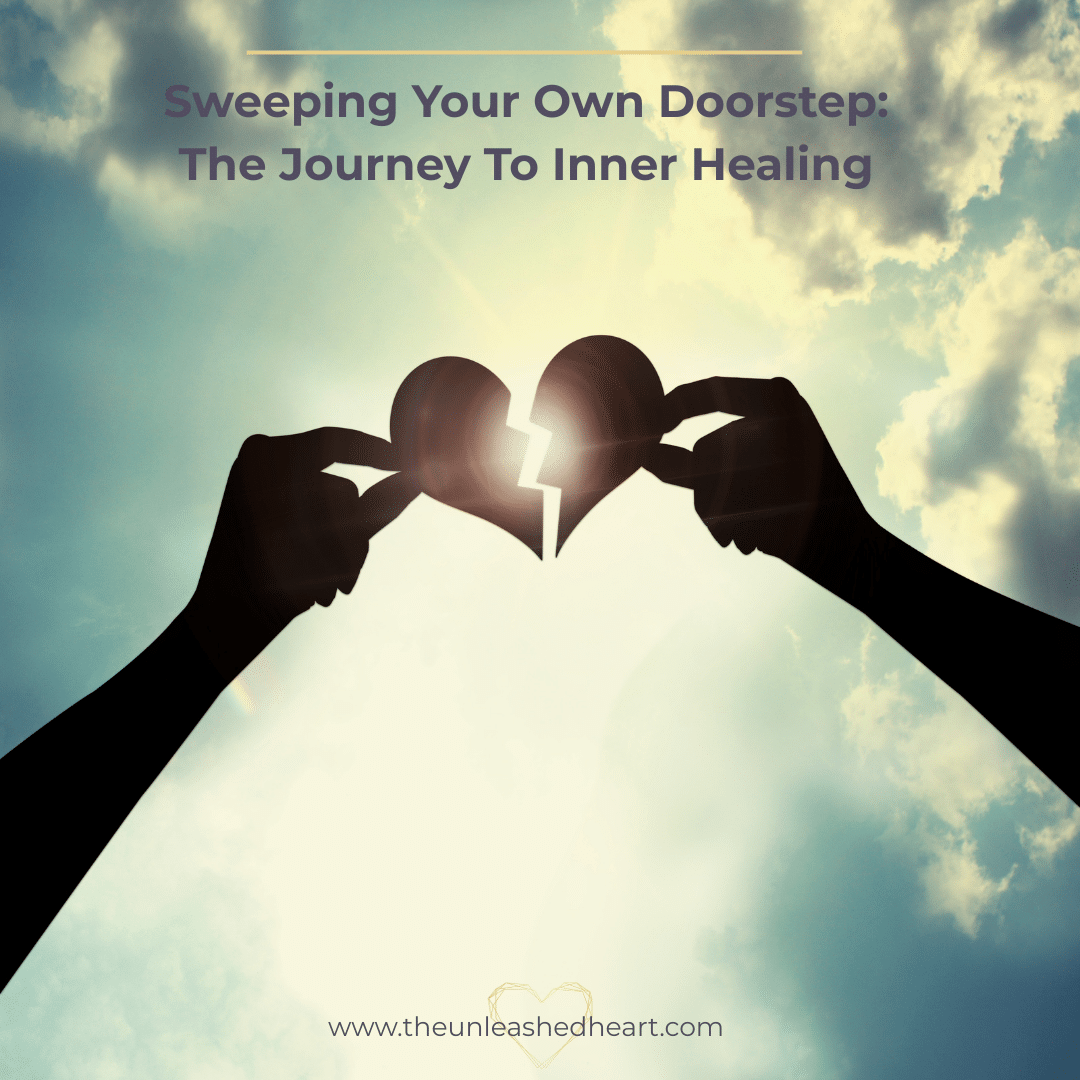
The Courage to Face Your Pain
When we avoid confronting our emotional pain, it festers inside, creating dis-ease in our bodies and spirits. Healing begins when we stop sweeping pain under the rug and instead sweep our own doorstep. The cyclical patterns that keep us stuck only change when we decide to take responsibility for our healing journey. Your body and feelings serve as guideposts indicating where growth and healing are needed. Unprocessed emotions will eventually find their way out—often in ways we don’t expect or control.
The Inner Work of Emotional Processing
Self-healing resembles peeling an onion—each layer reveals another beneath it. This work requires creating space in your life to process difficult emotions through intentional practices. Grief recovery offers a structured approach to address emotional incompleteness, while energy healing modalities, such as Reiki and Biofield Tuning, provide support exactly where your heart needs it. We transform from emotional storage tanks into emotional processing plants when we learn to sit with our feelings rather than numb them. This inner work enables us to connect past experiences to present behaviors, shifting from a state of survival to one of thriving.
The Freedom Beyond Pain
The most profound freedom comes when we release the prison of our minds. Working through our emotional pain, we discover our ability to be present in relationships without the double message of “get closer but keep your distance.” Our healing radiates outward, positively affecting all our connections. The transformation is remarkable—where once there was heaviness, clarity emerges. Where confusion reigned, purpose develops. The dust begins to settle in all areas of life when we commit to this journey, revealing a life that’s different, better, and more fulfilling than we ever imagined possible.
As a certified grief specialist and energy healing practitioner, I’ve witnessed countless individuals transform through this process. I’ve experienced it myself—moving from being weighed down by unresolved grief to living with purpose and joy. The journey isn’t always easy, but on the other side of pain lies a life of emotional stability, deeper connections, and authentic joy that can only be found by going through rather than around that which causes dis-ease in your body and your life.

Grieving Voices Podcast, Podcast, season 5, solo episode |
SHOW NOTES SUMMARY:
In this special solo episode, I announce my decision to take a sabbatical from Grieving Voices and reflect on the nature of change, the power of asking “why,” and how letting go can create space for new growth. I share my personal journey of questioning the routines and commitments that no longer serve me and the surprising sense of relief and excitement that came with making this decision.
Key Points
- Change is inevitable and often reveals our true nature and patterns
- The connection between grief and the disruption of familiar patterns
- How asking “why” questions can help us identify people-pleasing behaviors
- The importance of evaluating where we put our energy and time
- Why I’m taking a sabbatical from the podcast after 5 years
- Finding relief and expansion in letting go of self-imposed expectations
- All episodes will remain available as a resource for the grieving community
A heartfelt thank you to all the listeners, guests, and supporters who have been part of the Grieving Voices journey over the past 5 years. Your participation has helped change the narrative around grief, making it something we can discuss openly and honestly.
As I embrace this change, I invite you to consider what changes you might resist in your life. What might be possible if you leaned into that change instead? What “why” questions might help you uncover your own path forward?
RESOURCES:
Embracing Change: A Necessary Part of Growth
Change is one of life’s few certainties, yet it often brings discomfort, uncertainty, and even grief. Whether we choose it ourselves or it arrives unexpectedly, change challenges us in ways that shape who we are. It forces us to confront what no longer serves us, re-evaluate our priorities, and step into the unknown.
For years, Grieving Voices has been a space for open, heartfelt conversations about loss, healing, and personal growth. Every episode has carried the mission of normalizing discussions around grief, helping others navigate their emotions, and creating a supportive community. But just as grief teaches us that life moves forward, so too must this journey evolve. It is with deep reflection and intention that the podcast is taking an open-ended sabbatical—an opportunity to pause, reset, and make space for new possibilities.
This decision did not come lightly. Stepping away from something familiar, especially something built with passion and purpose, can stir up conflicting emotions. There may be grief in letting go of expectations or routines, but there is also freedom in allowing change to unfold naturally. Sometimes, asking the right questions—Why am I holding onto this? What is truly aligned with my heart?—leads to answers that bring clarity and peace.
But make no mistake—this is not the end. The conversations around grief and healing will continue in new and exciting ways. The past five years of episodes remain a resource for those who need support, and the space being created now will allow for fresh inspiration, deeper connections, and innovative ways to serve the grieving community. This is a time of transformation, and what comes next may be even more powerful than what has been before.
As this chapter pauses, consider what changes you may be resisting in your own life. What possibilities could open up if fear was replaced with curiosity? What new beginnings are waiting just beyond the uncertainty? Growth is never easy, but it is always worth it. And when the time is right, this journey will continue—stronger, brighter, and more meaningful than ever before.
Stay connected, stay open, and trust that the best is yet to come. 💛✨
Episode Transcription:
Victoria Volk: Hello, beautiful souls, and welcome to grieving voices. I am your host, Victoria Volk, and today’s episode is going to be a little different. It’s a solo episode, which I haven’t recorded since the end of December before the New Year. And I’ve been thinking a lot about change lately and how it shapes us, how it challenges us, and ultimately how it helps us grow. And as the staying goes, the only certainties in life are death, taxes, and I would argue to add change. Change is inevitable, and sometimes we initiated ourselves and sometimes it’s thrust upon us by others. In either way, it often feels uncomfortable, even unnerving. It’s also fascinating how change brings out the true colors in in other people, including in ourselves. When change is on the horizon, we often revert to what we know and what we’ve been taught and how to deal with uncertainty. Grief is essentially a change in or an end of a familiar pattern of behavior. So imagine if you and a friend went to lunch every Friday and spoke or spoke on the phone every Sunday, and then suddenly that pattern stopped. Those days would feel different, wouldn’t they? We take these patterns for granted until they change. When someone else’s changes impact us, we have decisions to make. We might feel anger or sadness, but allowing ourselves to be swept away by those emotions isn’t where we want to end up. And sometimes, change becomes the byproduct of asking ourselves or others better questions. It’s I’ve always been that why kid, you know, the kid that always drives everyone nuts asking why, why, why? And if you’re going to tell me what to do, then you best tell me why I’m doing it too. I need reasoning behind my actions or behind actions someone else tells me to take and that questioning nature has served me well when it’s directed outward. It’s also obviously backfired because I can be viewed as sometimes a negative Nancy or a naysayer or a questioner. Right? Like just like someone questioning authority. But lately, I’ve been turning those those y questions inward. Not lately, I guess throughout my life obviously because it can be a detriment to me too. But the y questions I’ve been asking myself are Why do I continue certain weekly routines? Why do I put energy into things that don’t light me up? Why am I still doing things that exhaust me? I have the gate of doubt in human design in my human design, which is gate six three, I am the natural skeptic. When I recommend something you can count on the fact that I vetted it thoroughly, but I’ve learned that when I turn all those questions toward myself, as self doubt, like questioning myself, that’s when I’m self sabotaging. So with all that context, I wanna share something important with you today. And this may cause some grief for some of you. And I had my own period of grief coming to this decision. This will be my final episode for a to be determined, amount of time. I am taking a sabbatical from grieving voices. I haven’t decided if this pause will last a few months or maybe weeks or be permanent. I am leaving that open because I want to honor whatever emerges during this time away. And I want to be clear that all episodes will remain available. Our work together over these past five years isn’t disappearing. It will continue to be a resource for those navigating grief just as as it has always been. When I asked myself why I’ve continued producing the podcast week after week, many of my answers stem from people pleasing tendencies, especially as of late, So I’ve been telling myself I had to reach the five year mark in two hundred and fifty episodes. But when I asked myself, why? Why does that matter? Who does that matter too? I couldn’t come up with a reason that truly resonated with me. Each episode requires about five hours of energy between recording and working with my virtual assistant not to mention the financial investment. That’s energy not going toward people who matter most in my life. The creative projects brewing within me or simply having the space to just be. For the past five years, I’ve poured my heart and soul into changing the narrative around grief working toward a world where we can talk about grief like we talk about the weather. I’m profoundly grateful to everyone who has joined me on that mission. Guest who have shared their stories, listeners who have opened their hearts in the community we’ve built together. When I finally told a friend, my decision to pause the podcast and I set it out loud, It was as if this wave of relief washed over me. I felt this pressure release and I experienced expansion and excitement in that moment. I am excited about what this change could mean. The sabbatical is an opportunity to give myself the energetic time and space to be in creative flow with whatever comes up. I might even start blogging again. I might develop new ways to serve the the grieving community, or I could rest and replenish my creative well. The beauty is in the not knowing. Imagine how different our world would be if the seasons never changed. Change is necessary for our growth and our evolution, and it helps us discover what we’re capable of even when it feels uncomfortable or painful. I want to express my deepest gratitude to each of you who has listened, shared, commented on, and supported this podcast. Together, we’ve created something meaningful that has touched lives and opened hearts. That doesn’t end with the sabbatical. It simply retransforms. And if you’d like to stay connected during this transition, you can find me through my newsletter or on social media. And I’ll be sharing updates there as as they emerge. And you can check out the show notes for links to connect in that way. And as we part ways for now, I invite you to consider the changes you might be resisting in your own life. What might be possible if you leaned into that change instead? What? Why questions might help you to uncover your own path forward? Thank you for being on this journey with me until our paths cross again, whether he or elsewhere. Remember that your grieving voice matters, your grief matters, And change while challenging can lead to beautiful new beginnings. With deep gratitude and so much love, this is grieving voices signing off for now. And remember, when you unleash your heart, you unleash your life. Much love. From my heart to yours, thank you for listening. If you like this episode, please share it because sharing is caring. And until next time, give and share compassion by being a hurt with years. And if you’re hurting, know that what you’re feeling is normal and natural. Much love my friend.
Grieving Voices Guest, Grieving Voices Podcast, Podcast, season 5 |
SHOW NOTES SUMMARY:
This week’s guest is Michelle Vignault, who opens her heart about the unimaginable journey of losing both her brother to suicide and her husband within just six months. Michelle shares how she was suddenly thrust into solo parenting two daughters, ages 2 and 4 while navigating her own overwhelming grief.
With raw honesty, Michelle reveals how writing became her lifeline—beginning as simple notes and evolving into heartfelt letters to her best friend before ultimately becoming her book, “Hold Back the Rain,” titled after a meaningful Duran Duran song that resonated with her struggle to withstand life’s torrential challenges.
Despite eight years passing since these profound losses, Michelle vulnerably shares her recent unexpected grief relapse, reminding us that healing isn’t linear, and even when we feel strong, grief can suddenly knock us off our feet.
Our conversation tenderly explores how Michelle has broken generational patterns by creating space for open communication with her daughters. She uses honest, distraction-free moments to help them process their feelings while allowing herself to express her own sadness and anger authentically and openly.
The poignant image on her book cover—capturing Michelle with her daughters as they release her husband’s ashes—symbolizes their transformed family and the quiet strength they’ve discovered together. It offers listeners a touching testament to how families can find their way forward through devastating loss with love, honesty, and resilience.
Michelle’s story reminds us that while we cannot hold back the rain of grief, we can learn to dance in it, finding moments of connection and growth even in our darkest hours. Her journey inspires us to embrace vulnerability as strength and to recognize that healing happens in community—whether through writing, honest conversations, or the simple act of showing up for ourselves and our loved ones day after day.
RESOURCES:
CONNECT:
Hold Back the Rain: A Journey Through Grief, Strength, and Healing
Grief is a storm that often arrives unannounced, reshaping our lives in ways we never expected. For Michelle Vignault, the storm came in the form of two devastating losses—her brother and her husband—within six months of each other. On a recent episode of Grieving Voices, Michelle shared her powerful story of navigating grief, the unexpected triggers that surfaced years later, and the lifelines that helped her through.
The Weight of Loss
Michelle’s journey with grief began long before she lost her brother. She grew up witnessing his struggles with depression, an ever-present shadow in their family’s life. When he passed away in 2016, the pain was immense—but nothing could have prepared her for what came next. Just six months later, her husband passed away, leaving her to navigate a new reality as a widow and a single mother to their two daughters.
For years, Michelle kept moving forward, filling her days with responsibilities and pouring her energy into being a mother, daughter, and friend. But grief doesn’t disappear just because life keeps going. It lingers, waiting for quiet moments to resurface. For Michelle, the realization hit her unexpectedly in December of last year when the weight of everything she had been carrying finally caught up to her. “I completely crashed,” she shared. “Grief is still here. You still miss these people. You’re daily affected by them not being here with you.”
Unexpected Triggers & The Airport Moment
Grief has a way of creeping up in the most unexpected places. For Michelle, airports became a painful reminder of what she and her daughters had lost. Watching happy families, fathers tending to their children, and witnessing the small, everyday moments she once had with her husband became a silent trigger. It was a reminder that grief isn’t just about the past—it’s about the present and the future that will never be the same.
Finding Healing Through Writing
Michelle discovered an outlet for her grief in an unexpected way: writing. What started as letters to a dear friend slowly turned into something much more profound. Journaling became a form of therapy—a way to connect her head to her heart and process the emotions that felt too heavy to carry alone. Over time, those letters and journal entries transformed into her book, Hold Back the Rain.
The title, inspired by a song from her favorite band, Duran Duran, became a metaphor for her journey. Rain is often associated with grief—something inevitable, something we can’t stop. But as Michelle and host Victoria Volk discussed, rain can also be cleansing. It can signify renewal, growth, and the ability to weather the storm.
The Power of Support & Self-Compassion
One of the most profound messages from Michelle’s story is the importance of support. Whether it’s the presence of a friend, a community that understands, or even the simple act of writing down your emotions—grief isn’t meant to be carried alone. Michelle also learned a hard but necessary lesson: she didn’t have to be “Supermom” all the time. She didn’t have to have it all together. She was allowed to grieve, to feel overwhelmed, and to take time to heal.
A Message to Those Grieving
If you are in the midst of grief, Michelle’s story is a reminder that healing isn’t about forgetting—it’s about learning to live with loss in a way that honors both your past and your future. It’s about finding your own umbrella in the storm and allowing yourself to take shelter when you need to.
You are not alone in your grief. You are not too much. And healing happens in its own time.
To hear Michelle’s full story, listen to the episode of Grieving Voices here: https://www.buzzsprout.com/admin/1081904/episodes/16743015-michelle-vignault-my-quest-to-create-a-new-normal-after-sibling-and-spouse-loss
Has grief ever caught you off guard? What has helped you find healing? Share your thoughts in the comments.
Episode Transcription:
Victoria Volk: Hello, and welcome to Grieving Voices. Today, my guest is Michelle Vignault. And with honesty and confidence, in touch of Duran Duran, Michelle shares her journey of ups and downs through a complicated life and how a special friendship helped her through the darkness to find a second chance at happiness. With the support of a best friend, Ignol discovers the tools she needs to overcome one obstacle after another until she eventually regains control of her family. Hold back the reign brings to light the difficult realities of life, but ultimately is the story of how inner strength and perseverance are the keys to making it through.
Thank you so much for being my guest today, Michelle, and I had to look up this Duran Duran reference, which I’m familiar with Duran Duran. I think everybody listening if you grew up in the eighties particularly, you know the song Hungry like a wolf, like who doesn’t know Hungry like a wolf. And if you don’t, you’ve been living under a rock. Even my youngest like, she’s gonna be sixteen years soon, knows that song. Like, she I’ve made sure to expose her to all types of genres, not a cash, like, so many old stuff. Yeah. But I did not know the song, hold back the writing, which is the title of your book. And so I’m interested to learn more of that connection that you felt, feel with Duran Duran and music, and and how that plays into the title. But I just let’s start at what brings you to greet you voices and and how the book came to be.
Michelle Vignault: Thank you. Well, thank you, Victoria. Thank you for having me and having your listeners take time to listen to my story and our conversation. I wanna first commend you. You’re raising a great daughter if she already knows about Duran Duran and Hungry like the Wolf. So thank you for for educating her. I’ve had a long love for the music, the band, the style, and over decades, their music has followed me. And I’ve, you know, through difficult times would rely on music to keep me going. And so after tackling, I think, tackling a lot of life changes I decided to write my story and it was for me an easy inclusion of Duran Duran, the references sometimes in the book and hold back the rain. It’s It’s an uncommon song of theirs and it has some beautiful sweet lyrics to it. So it was a good it wasn’t the original title to be honest with you for my book, but In the end, it was it was the best choice.
Victoria Volk: What does that title mean to you? Hold back the rain.
Michelle Vignault: You know, I think I’ve been given some cards, some life cards that have been far difficult to live with. And I feel like things come at you, work comes at me, life comes at me, comes out to all of us, and you wanna push back, you wanna be able to handle it all, but sometimes I can’t. I don’t. And it’s a little bit ironic. Hold back the rain. Who’s going to stop rain? Who’s going to stop life changes? So it’s it’s meaningful for me for me.
Victoria Volk: A picture that comes to my mind is, you know, grief can be so isolating and that I think there’s a lot of pictures depicting grief with rain falling. Right? And someone just kinda crouch down and you feel like you’re under this cloud of sadness and sorrow and like, you’re under the rain clouds. Right? And
Michelle Vignault: Yeah. Yes, that cloud of grief or depression for some or just that weight. Right? Mhmm. The overwhelming feeling and the simplicity of the rain being also cleansing and refreshing and sometimes a new start.
Right?
Victoria Volk: But I picture someone just coming in because it can be so isolating and you feel like you’re alone in it. And then sometimes someone comes along with an umbrella. Or you decide you figure out that, oh, I guess I can get my own umbrella. And empower myself and cover myself from this pouring rain. Right?
Like, just I don’t know. That’s the picture that comes to my mind. It’s not even it’s not a trying to stop or push back but it’s trying to shelter in place and get some solace and protection within yourself and with community and with support. And so let take us back in time to when your storm started.
Michelle Vignault: Yes. Thank you. My storm My storm happened a few years ago. Well, I take that back already. You know, my depression is something that has it’s a big topic but it’s been a part of my family history for a lot of years. I grew up with a brother nine years older named Mark. And knew very young, at a very young age of my own, I realized that Mark had depression. And so with a life journey with with being his younger sister and seeing him go through ups and downs for decades. And so at one point, it was just really too much for him. And so we always had an inkling that he might not sure how detailed to get, but you know, he had so many challenges. We just kind of had this idea that at some point Mark might not be able to handle life like the rest of us. And and we can talk more about him, but he passed away in fall of twenty sixteen, and he took his life. And so my grief journey first time ever in my early forties lost someone dear to me. And even though I had a life of preparation, it still was real. Right? So I lost my brother. And had a hard time managing my grief. I married at the time two young daughters and my husband was at the same time going through his own challenges. And he passed away six months after my brother. So in that short time to lose two of your most favorite people was a lot. And so that’s about when my journey began eight years ago. Eight years ago. I became a widow, March twenty seven. And in eight years, sometimes I think Victoria, I have this. I feel like I’m super mom most of the days.
I work hard at my job. I know I’m a good daughter. I know I’m a good friend, but you know at the same time it catches up with you and it caught up with me completely off guard last year. And so last year, I was going, going, going, fast forward to November. Started feeling a little funny about things just overwhelmed and stressed more than normal and then in December, just this past December last month, I completely crashed. And not talking car accident. I’m talking that complete overwhelm and just a big kind of like a slap in the face of Oh, no. No. No. No. No. No. Reef is still here. You still miss these people. You’re you’re daily affected by them not being here with me with us. And oh, it it knocked me on my feet. I probably was in bed as much as possible, slept as much as possible, didn’t see it for weeks and then woke up one day at the end of the month and realized, oh, you’re you’re not superwoman. You cannot do it all. You you do have the weight of the grief in it. That was hard. That was a that was a hard lesson last month.
Victoria Volk: Can you pinpoint to anything that provoked them?
Michelle Vignault: You know, I travel for work and airports for some reason. Are can be triggering for me. And the third time I had a it’s a third time this has happened. I had a work trip came back from it. And I think the thing about airports is that I often see these families going on vacation or, you know, people are at their in their best form, their cited. They’re happy typically. And these families with the daughters, and even though my daughters are older, twelve and ten, But to see these dads with the little kids and helping with the diapers and doing all the dad things, it airports they remind me of what I didn’t have for my daughters. And it’s yeah. Yeah. I don’t Yeah. It’s just a strange It was a catalyst for kind of me realizing, it’s eight years. You’re doing really good, Michelle. But you’re still you know, we go to the restaurant, we ask for a table for three. Oh, would there be a husband? Would there be a forthcoming? No. Just the three of us. You know, there’s so many encounters that can happen. And it kind of built up. It really did build up.
Victoria Volk: Do you feel like you’ve processed a lot of your grief? And if you have, if you feel you have what you mentioned a friend, but how how was your healing process been the past eight years?
Michelle Vignault: Yes. Thank you. You know, at the beginning, when I lost my brother and my husband, I I’m a notetaker. I should say that. I have pages here of notes as we’ve been talking and talked earlier. And even then I was making lists. My husband was in the hospital. I feel that the process of writing and scribbling, taking notes, making lists, and very much that kind of person. And at the beginning, when I lost my brother and lost my husband, I was all about less, you know, what was happening to my husband, Tracy, in the hospital. And who do I need to contact? And who do I need to do this and that? And so I bring this up because those lists turned into letters at the time to my best friend in Austin, Texas. And I was writing letters to Suzanne. And I love letters and mail and little things like that, and it makes me happy to send people cards and things like that. So at first, I was writing some letters. One of the letters I started writing more at night just for myself to get ideas out and get concepts out and release. And then after about a year, I realized that I was processing my grief at that time through writing. And it was just writing for myself at that point. I don’t know that I’ll ever be over the loss of my brother and husband and the loss of so many layers to the onion of feelings, but coping and working through it and getting through it and looking to light Writing. Writing was a surprising more than a safety net.
Writing became more of a critical mission. I had to express myself. And then in time, it became a book. And I went down that process and and in the end to have have my book to show.
Victoria Volk: Well, what writing does is it helps us connect our head to our heart. It’s different when you’re typing, you know, on a laptop or something, but versus ink to paper. It’s the ink to paper. It’s the active process of your thoughts coming through your fingertips and I think onto paper is the process of connecting to your heart and that’s why I think writing is so powerful. It was it’s journaling has been my thing since I was young. Writing poetry. I was writing poetry when I was an elementary, you know, not very good poetry, but needless to say, I was writing as well. I’ve I’ve published a book too actually in twenty seventeen, but I’m curious because the the cover of your book
Michelle Vignault: Mhmm.
Victoria Volk: It’s neither your brother nor your spouse and yet that’s the pain I I believe you’re writing about, but I, of course, know there’s more to more to a cover of a book that meets the eye, and there’s more engraver than meets the eye. And our grief is usually cumulative and it’s cumulatively negative. And so I imagine that you had plenty of grief before your brother even passed having Mhmm. Had that happen in your forties. You know, we don’t get to our forties unscathed and we definitely don’t get beyond our forties unscathed. So what were your grief experiences as a child, if you’re open to sharing any of those. And Mhmm. What did you learn about grief? What were you taught about grief? Is it something that was talked about growing up?
Michelle Vignault: Oh, Victoria, you’re so good.
Victoria Volk: Thank you. I’ll take that as a compliment.
Michelle Vignault: Yes. Yes. I have some thought collisions going on in upstairs. You know, as a child, my experience with Greek was very limited. You know, I I’m a child of the seventies, and my parents did not talk about feelings. You know, we we sat down to eat dinner, we ate it. We had a job to do, we did it, we didn’t talk back. You know, it’s a very different time than today in twenty twenty five. But when I grandparents passed away on my mom’s side. I was maybe under nine, you know, maybe somewhere between six and nine. And mom was sad. We nothing was said too much after we had the news, and that was it. And I never felt comfortable asking questions. I never felt comfortable bringing it up. And with many things in our family, we didn’t talk about it. We didn’t talk about things and especially our feelings. So
Victoria Volk: Were you exposed to your grandparents?
Michelle Vignault: We were a little distant of geographically on the grandparents. So I didn’t have a big closeness to them. You know, I had a heart broken, a timer too, and lost friends along the way due to geographic or life changes. But a true death of someone flows was probably one of my best friends, her brother died of suicide. Back in the nineties. And seeing how her and her family worked through their grief was probably one of the bigger lessons I’ve had in seeing people express, talk about it, and kind of work through that brief. What is strangely ironic about life is that it’s so unpredictable? Meaning when my friend’s brother took his life, my parents went to that son’s funeral on my behalf. Twenty five something years later, that same family came to my brother’s funeral to support my parents. And it’s just so fascinating to see how, you know, the loss of a child is just so great.
And to see my parents and their parents, it it’s just a fascinating thing. Just the pain. And so fast forward to the cover of my book, which is a picture of myself with my two daughters. As you said, not my brother, not my exes, not my boy husband, it’s a picture of my daughters and I that captures us in such a way we took the photograph when we went to release my husband’s ashes, a friend took that photograph of us. And I feel like it’s so striking because in the end, who’s still here?
Are the three of us? And that image that is on the cover, we had no idea what we were getting ourselves into. I had no idea that I was in that moment going to have such a great responsibility. I already knew I was a parent and I had a responsibility, but I had a buddy to do parenting with. Right? And in that moment taking that photograph, it was kind of one of those life aha moments of this is our family. It’s the three of us. The dad’s not here. He’s not coming back. And there was a very again aha an aha moment. But there’s a strength there. There’s fear in the eyes. But there’s a strength there of I have the opportunity to improve communication in my family history, to teach the girls skills, They were two and four when their dad passed. But I had the opportunity to give them a family that communicates. And so I put us on the cover because together, we’re stronger. And in some ways, we can’t hold back that rain. We can’t push through.
Victoria Volk: How have you communicated with your daughters about grief? What have you found helpful? I’m sure you’ve done research along the way and how to support them and would have you found helpful. Then all kids are different. Right? To I mean, I lost my dad when I was eight, but nobody knew what to do. Mhmm. It was there was no communication whatsoever. And so I’m just curious what you learned and what was helpful for you and and helping supporting your daughters. Mhmm.
Michelle Vignault: A couple of things that come to mind are simplicity. And don’t elaborate, but simplicity and trying different things. So in regards to simplicity, because they were so little at the beginning, that I thought, okay, I don’t want them to rely on hugging a stuffy. I don’t want them to rely on seeing a TV in the background and that’s their memory of. I I wanted simplicity. So upstairs are our bedrooms and there’s a landing and it’s very it’s just a hallway. So we typically go to that landing to have a serious conversation of sorts. Right? So that way, there’s no distractions, and I keep it simple. So I don’t I wouldn’t typically speak with them for more than five or six minutes. And in those moments, it’s being honest. And me saying, giving them the information, for example, when their dad passed, you know, remaining honest and also telling them I’m really sad. And if I feel like crying when I’m talking with them in those moments and I cry, I want them to sometimes see that mom does have those emotions, does get sad, does get mad, mad that your dad is not here to see you dance ballet at your recital. And I’m sad he’s not here to go on the airplane with us to go on vacation. You know? So I feel like me expressing different emotions over time gives them and has taught them that when my now twelve year old has a problem with a fellow student She is not cautious about coming to talk to me about it. She trusts that I’m gonna listen and see if there’s a way to course correct. And then trying things, honestly, Victoria, like years ago, we did this family group therapy, where the adults would go to one side and talk about things, and then the kids would have art therapy and talk about things. Well, years later, my daughter, my oldest daughter, Charlotte, she says, I hate it going to do that. You know? Some things work and some things don’t. But, you know, at the time, I felt like it made sense to be around a group of kids that all had lost someone dear to them and talk through it. And even though she may have rolled their eyes at different points in time. I’m only trusting that trying these different trying different tools and trying different things that it will help propel them for their womanhood. You know, to be able to, like you mentioned earlier, have your heart work more cohesively with your mind.
Right?
Victoria Volk: Would you say that would you describe Charlotte as highly sensitive, empathic?
Michelle Vignault: Yeah. That
Victoria Volk: is why that didn’t work for her.
Michelle Vignault: Yeah.
Victoria Volk: It was too sad. It was too heavy. It’s too much of other people’s stuff. She hasn’t learned how to create this energetic bubble for herself that what’s theirs is theirs and what’s hers is hers.
Michelle Vignault: I think
Victoria Volk: she can learn as an highly sensitive child and pathogen child, which there’s a difference. Not all highly sensitive people are in passive, but all empaths are highly sensitive. So I’m an empath who’s highly sensitive. When I started to learn about energy work and energy itself and grief and how this all tied together and looking back at my childhood, it made total sense. I required a lot of sleep.
I slept a lot. The world was just too much and too heavy. My environment was too much and too heavy. It was chaotic. It was a lot of anger. It was fighting. It was it was just too heavy for me. It weighed literally weighed me down. So the best gift that you can give her is for her to learn what’s her’s what isn’t hers, to tuning into her body, connecting with her body. Mhmm. Being in her body. That’s where, like, dance, yoga. Expressive using her like, just being in her body can create a sense of safety within herself.
Michelle Vignault: That’s so fantastic that you share that because Charlotte is such a Active participant with a bubble, volleyball soccer. She loves k pop dancing. You’re with a group but you’re honing in on yourself
Victoria Volk: Mhmm.
Michelle Vignault: In big ways.
Victoria Volk: When it comes to emotions, that can be a little harder. Yeah. Because as an empath, you want it you’re you can put yourself in the shoes of other people. You’re sensitive to other people’s emotions. You want to help.
You want to you want your environment to be higher vibe because it helps you to feel better. Right? So empathize highly sensitive people can tend to become the caretakers, emotional caretakers of their environment, of those people around them, often at their own expense.
Michelle Vignault: And then zaps and not share of it. Yeah. Interesting.
Victoria Volk: Just I’m just throwing that out there just based on what you described. Absolutely. But I can relate to that, you know, being that as a kid and not understanding it. No one having this understanding around me. Right? Like, there was my mom wasn’t into personal development or anything like that. It was I pretty much raised myself. Emotionally raised myself. So but if you can help her recognize sensations or feelings in her body, Like, what’s a yes and what’s a no and sensing the emotions of others? Well, what comes up for you when you’re when you’re sitting with someone who said? Do you recognize that that’s not yours that you’re just maybe feeling what they’re feeling? Mhmm.
Michelle Vignault: That’s so much to learn. And a lot of it is hands on learning. Right? It’s not it’s it’s not what I was taught. I was
Victoria Volk: oh, we’re not.
Michelle Vignault: No. And on top of being raised in a family unit that didn’t communicate. Mhmm. On top of that, my parents had very loud relationship. And it was volatile at times. And so I grew up knowing. Stay in my bubble. Look a certain way. Don’t be too loud. Don’t be too quiet. So I feel like I’m now as an only parent. I’m careful not to say single parent. That makes me very uncomfortable. I’m an only parent. But as an only parent, I’m also overcompensating so many days of trying to be the dad or the mom or the this and the that, and that’s exhausting and it’s impossible.
Victoria Volk: How do you support yourself? In your own energy.
Michelle Vignault: I’m learning, Victoria. I’m constantly learning. You know, in lately, I’m having to remind myself and literally remind myself, you’re doing a good job. You’re doing a good job. You’re doing enough. And lately, I’ve also been realizing that it’s very lonely because we go go go throughout the year work and family and this and that. And you know, it gets it gets very lonely. So I think I I certainly rely on my good friendships to help me. And Yeah. Yeah. Not sure if that answers your question.
Victoria Volk: Are your parents still living?
Michelle Vignault: They are still living. Mhmm. They divorced after forty five years to get there?
Victoria Volk: Wow.
Michelle Vignault: And I thought I thought at the time I thought why? Why at this point? You know? How old were they then? That was that was in o six that they divorced the next year over twenty.
They’re in their late eighties.
Victoria Volk: Wow.
Michelle Vignault: They’re still in great shape for for soon to be eighty eight and eighty six, I think.
Victoria Volk: Wow. They’re living on their own yet?
Michelle Vignault: Mom is in not a compound, but a a facility with, you know, she has her own apartment and,
Victoria Volk: you know, like assisted living type.
Michelle Vignault: Yeah. She has
Victoria Volk: people there to help out if she needs it, when she needs it, but has that independence.
Michelle Vignault: Yes. A hundred percent. She loves it. She loves it. And then dad is still in his house downstream.
Victoria Volk: That’s remarkable. Did he either remarry?
Michelle Vignault: He’s had a long standing girlfriend for a lot of years. So dad and Sandy have been together a long time and very happy, did not marry. They had done that, then they were done.
Victoria Volk: How did that? How did you work through that? Forty five years? Like, your parents like, forty five years. Like, how did you it’s so different. Like, I had a friend that Mhmm. Her parents divorced when we were, you know, thirteen. She was third like, that’s a really difficult age. And and then my mom had remarried after my dad past and they ended up getting divorced too, but that was a blessing in disguise. Mhmm. Blessings to me anyway. But how did forty five years? Like, what like, was it hard did you feel it was heartbreaking? Or It was so disappointing
Michelle Vignault: because for all that time, you know, my brothers are six and nine years older. And
Victoria Volk: so you were the youngest.
Michelle Vignault: I’m the youngest. The baby girl. So live through all the heartache, be yelling, the physical stuff. Like, live through stuff it down. I was married to my first husband at the time. And and they had a call on a Sunday afternoon, and it was a phone conversation, had me on speaker phone, just had a regular Sunday conversation, call plan, And they dropped the news that they’re getting into force, and I’m thinking, you couldn’t have done it sooner.
Victoria Volk: Wow.
Michelle Vignault: And to be honest with you, Victoria, they’re they’re happier apart and together. I can say that now. But right at the time, it was it was very disappointing. And I think the hardest thing is that Even adults can’t be adults. They can’t even adult themselves sometimes, meaning now I’m an only parent and I know they’re older, but they’ve not really, you know, the girls don’t go there for sleepovers.
Right. You know, they’re not meeting me at the bus stop to get the girls. They’re you know, it’s it’s still a disjointed relationship. Mhmm. There’s that separation in wall, not to get too close. You know, so I mentioned that because Yeah. It was it was disappointing. And and then after forty five years of spending time together, they were so done that when I did get remarried, they had to stay separate. When I have a birth of my first child and then the second child and then that this happens and that happens. It’s like, why do now I have the burden of keeping them separate? For the past twenty years, when they were inseparable, almost forty five. Mhmm. So it’s also a resentment of, really, now I have to deal with this slayer of the onion, on top of all the other things. Yeah.
Victoria Volk: Something no one’s ever really I don’t think anyone’s ever mentioned in terms of divorce as adults, like when the parents divorce as adults. Like, I don’t think that’s something that’s really talked about as that you can feel relief, right, that they’re happy and that they’ve, you know, gone their separate ways because now you don’t have to hear that noise. And at the same time, well now then, how is this my problem now to accommodate? Great. Right. In the number of times, I’ve asked either of them.
Michelle Vignault: Can you just
Victoria Volk: move forward? Can you simply and they have?
Michelle Vignault: And they have, but they have that.
Victoria Volk: That’s the thing that goes back to your that goes back to your statement of, like, even adults don’t know how to adult. And b, it’s When it comes to I I’ve talked about this before on the podcast, that, like, when it comes to, like, child creepers, we’ll say divorce in particular and there’s children involved. It’s like or even a best spouse passes away. Right? When my dad passed away, my grandparents, I lost my entire dad’s side of the family, cousins, aunts, uncles, because the adults could not Mhmm. Adults. Could not have a child? Yeah. I was like, I then suffered that connection because the adults couldn’t adults. Right.
And so it’s like it’s no different. You can be a child and your parent can make decisions that affect you You can see
Michelle Vignault: your adult, the child,
Victoria Volk: and your parents, choices can still affect you. It’s like, do you not learn as adults? Like, your parents not learn, like, this is why it’s so important that we sweep our own doorstep. Like, and look at the past. What are the lessons?
How can I move forward? How can I make this better for other people involved? That’s awareness? That takes some self sacrifice. Right?
Michelle Vignault: Self reflection. Self reflection.
Victoria Volk: Exactly. Like, I’m getting a little worked up just because it’s, like, the patterns are keyed. That’s my point in saying this. Yes. That’s why it’s so important.
And that’s why what you’re doing in talking with your kids about grief, it stops with you. This is why it’s so this is why education on this podcast is so important to me that people get this message, sweep your doorstep. It will impact generations.
Michelle Vignault: And that gives me shivers right now because it’s so true. Don’t go to
Victoria Volk: change Yeah. You might not see it today. That’s your legacy.
Michelle Vignault: Right.
Victoria Volk: Wouldn’t that be your legacy of anything? People think, oh, I’m, you know, with your grief. Like, I have to write a book or I have to do this big grandiose thing. Clean up your energy, clean up your life, look at the past, learn from it, let it transform you, transmute it into into let the legacy be that you become a better version of yourself and for those people in your life. That give your legacy.
Michelle Vignault: And it’s it’s taken me now being a widow for eight years. It took me about six to feel proud and not embarrassed of my family because a younger Michelle would have judged that mom with the two daughters and no partner with her. My eighteen year old self would be very judgey. Now in my early fifties, much different story. Now I see a vision of, you know, me and my girls and I think I’m the one that’s doing it. And we’re gonna do this together. We’re going to depression for example. It doesn’t it didn’t just hit my brother Mark. It’s it’s in our family genes. So I can recognize I can sniff out almost somebody with depression a mile away because I know the signs and I know the attitudes. And so there’s a chance my daughters could have that. Challenge in their life. So I’m very observant to recognize and fight for them and make a better life for them. And for example, my youngest daughter, Justine, is now ten. She has spent the last eight years in speech therapy. And she was just this calendar month released from speech therapy for the first time. She’s set. But identification at two years old when that child did not want to walk or talk, we had to intervene. As an adult, you have the opportunity To make things better, I have the opportunity then to get her into early child care, get her to good doctors, work through the system. Eventually, I had a test done, a blood test done, and found out a diagnosis to her trisonomy.
Which is a whole other conversation, I’m sure. But here’s a challenge. I gotta fix it. I gotta find a way to pivot and take care of this because I don’t want my daughter one day to take her life because of depression. I don’t want my daughters one day to have an alcohol problem like their father. I want to ideally, I can’t I can’t keep them from harm. I recognize that. And there’s no crystal ball, but as an adult. Adult. So I’m learning what skills work for me to try to pass on to them.
And so many times when the girls say, can you help me with this? Can you do this for me? Can you There’s always an opportunity. Not every time. No one would be too much on someone. But so many times, there’s that opportunity to say, okay, this is our problem. This stinks. Great. What are we gonna do about this? And then we talk about it and we’d figure, okay. What are our options? Can we call the school and ask them a question? Can we call a dance class and see if this is right? You know, can we how do we pivot in teaching them the skills is so key? So, yes, I’m all about adulting.
Victoria Volk: Well, it’s not taught in school. Right? Like, how to how to navigate life is not taught in school. And so as the parents and as the caregivers and caretakers, like, it is up to us. To become the best versions of ourselves.
So we’re in a position where we can be that for our kids. Mhmm. And that’s like, as you were talking, like, you came to this podcast because of the death of your brother and your spouse. And yet, your parents divorced after forty five years. You had a divorce prior to your husband passing. Your spouse had been dealing struggling with alcohol. Like, your daughter has this diagnosis? Coincidentally at age two, like, did she have symptoms beforehand? Like, that you You know, the timing of it seems interesting to me is as when when this came out to be around her father passing. Because by age three, we’ve learned seventy five percent of how to respond to life.
By age three.
Michelle Vignault: Oh my gosh. You know, Justine, she’s such a good person and she very early on. I was on maternity leave and she wouldn’t quite look at me I had a I had a very I feel like it took a long time to get her to be in that moment of being her mom. With Charlotte, it was instant love. It was taking to the moon and back.
But with Justine, it was just a little different. I didn’t quite connect. I didn’t quite get her. And so fast forward our first one or two years, didn’t wanna talk, didn’t make a lot of noises, very quiet, didn’t wanna walk, did kind of a boot but scuffle kind of maneuver. And knew something was up. Knew something was a little different and had to figure out what maybe that was. And about the same time, we decided to move from Austin to Atlanta. So, Justine is six months old. We move across the country, and that’s really when things got interesting. But while my husband while Justine was we were realizing she needed early intervention is really when my husband started to go off the rails. So I was managing being back in Atlanta, being close to family. My husband is spiraling. I haven’t tapped my finger on that it’s alcoholism. But he’s different. And I have this beautiful two year old that doesn’t wanna walk and does not have much to say.
Victoria Volk: Let’s another child.
Michelle Vignault: And another child that is Ready for college, not for. You know, she’s just she’s witnessing
Victoria Volk: all this happening and and being she’s in it too. Right?
Michelle Vignault: She’s she hears mom and dad. Talking in ways that we’re never mom and dad didn’t argue. Now we’re arguing. You know, we’re in a different place. Her sisters you know, mom and dad are spending time on phone calls and doctor appointments for little sister, and so it affected everybody. And, yeah, and kind of fought and really fought for Justine. And many doctors at two one and two charter for autism. And having a couple of friends with autistic children I didn’t why I didn’t buy it. I didn’t agree with the doctors. So I kept finding other doctors.
And someone finally listened. And she needed a speech therapy. She needed physical therapy to teach her how to walk. And trisotomy, it turns out years later, I found out what her diagnosis was and very proud moment. To get that diagnosis for her, to treat her the right way, to give her the skills that she needed, not just a diagnosis on a form to change the trajectory of her life of wasted opportunity.
No. I argued with the doctors, I got sent out of offices. That’s fine. In the end, she got her diagnosis. And it takes a little bit longer for her brain to be able to do the things that aren’t so easy for so many of us. And so now at ten, she’s now becoming an actual ten year old. Like, all all cylinders are firing and whatever that saying is, but Yeah, adulting, going back to adulting for a moment and and recognizing how I want things to be as good as they can be for my kids. And I think every parent really wants that and it takes hard energy to push forward. And I think as an only parent, I just have that drive of Well, who else is gonna clean the bathrooms? Who else is going to pay the bills? Who else? No. No. Can
Victoria Volk: I just applaud you? For a moment. Takes courage to do what you’ve done. I’ll be proud of yourself, and I hope you take stock of that sometimes. And you know you’ve written a book While doing all of this Yes. We don’t celebrate ourselves enough. I’m guilty of it too, but we just don’t. We just don’t. So I’m just celebrating you. In this moment.
Michelle Vignault: I will accept that today. Thank you. Thank you.
Victoria Volk: So, I mean, you’ve shared a lot about what grief has taught you, not without me. Asking even the direct question. I feel like you’ve really articulated what has what you’ve gotten out of all that you’ve experienced because it’s not just the death of your brother and the death of your husband. It’s all that stuff in between that make us who we are. It’s not just the one big thing in this other thing.
It’s it’s cumulative. How would you have described the Michelle before? And I don’t even know which which before you wanna go with. Mhmm. The before your brother I think that’s a decision for you to make. Like, when you felt yourself really, I’ll say, cocoon and then come out a different way. The other side? How would you describe yourself before and after? And what where is that distinction for you? You think?
Michelle Vignault: Interesting question. Before and after, I feel like we live so many lives or we have the opportunity to live lives. And I’ve probably mostly of my life been a half full kind of a girl, glass half full. But that that shift, I feel like I didn’t come into my oh, if I’m being really honest, probably after I had both my girls, I feel like I grew up in the right ways. And I’m stumbling here a little bit.
Victoria Volk: Okay.
Michelle Vignault: I think with Tracy, my husband’s death, it’s been such a lot of a few years day to day, hoping. But I feel like Yeah. I asked me your question one more time. I’m so sorry.
Victoria Volk: How would you describe the Michelle before?
Michelle Vignault: If you
Victoria Volk: ever experience, you feel transitioned you the most into you know, so let’s say, for example, maybe this will help. Like, we all have these, like, defining moments or these moments in life where that’s the day everything changed. That’s the day where I was, like, I’m sick and tired of being sick and tired. And whatever that was, who I was before and who I was after are not the same. Like, it was, like, exponential growth, exponential self awareness. You know, it takes action oftentimes. Right? There’s action in between there. And for me, it was grief recovery. Like, I did grief recovery, went through that, and that changed my life.
It changed my entire perspective of my past. Help me reframe my story, the story I was holding on to, stories that I weren’t even mine that I was holding on to. Does that help? How would you describe the Michelle before and the Michelle after?
Michelle Vignault: Thank you for that. You know, I think there was a defining moment on the floor of my kitchen. I had just lost my husband. He was in the hospital for forty five days. And one of those evenings, soon after, I had to make my kids dinner. And we had just moved into this house, I hadn’t cooked a lot, I hadn’t used the oven. And I sat here on the floor far too long trying to turn this machine on. And just with the girls having some movie blaring, I think it was finding nemo. And they were consumed. And I’m on the other side of the partition, on the floor, staring at the oven, balling. Balling. And I thought, okay. If I can turn this thing on, this is it. This is where the old Michelle of being selfish and going to concerts and doing what I want and having this lights that I chose and being Michelle, this is where I’m a grown up. He’s gone. I have to do this and I can do this. And I sort of just pulled myself up. Got the ebb and going, got dinner going, got them to bed, and moving forward, in time I embraced my family and what it looked like. With the three of us. Because in the long term, we were going to be a family far longer than that short blurb of time that we dated and had babies.
We had so much more to do. And in the picture on the cover of the book is so defining of that moment that we were newly by ourselves, the three of us. And that was maybe my defining pivot of a stronger Michelle. I’ve become a lot stronger, more confident, more flexible, and a lot more honest. And I hope those are all attributes that the girls are witnessing. In that one day, when they’re in their thirties and they’re comprehending more and more and doing more and that ideally they can look back and think mom did write by us. You know, she she taught us the best she could.
Victoria Volk: You forgot one attribute. Patients.
Michelle Vignault: Don’t we need so much patience? And maybe COVID taught us that, you know, COVID was an amazing equalizer in so many ways, you know, and that’s a whole other conversation, but patience. You have to have patience.
Victoria Volk: One thing we haven’t really talked about, I kind of touched on it earlier, but we didn’t really go there in the conversation. And I I feel it’s important from your perspective as an only parent. And the circumstances that brought you to only parenting, but self care. Mhmm. What does that look like for you?
Michelle Vignault: Self care. You know? For a long time, you know, when I was writing my book, eating well, I’ve always slept well. Can’t complain there. But while I was writing my book, I did teach myself sometimes by watching videos on YouTube, but also taught myself to sit in the quiet. Meaning, I’m not a big TV person. I might have my radio on, but I’m not a big TV person. I get the girls to bed at a certain hour and then I’d have a block. Of, you know, two to four hours of Michelle time. And that would be my self care opportunity. And sometimes I would do yoga and watch yoga videos or listen to brief talks. I wanted to hear who had it worse, who had it harder. You know, if it wasn’t real, I could not relate. And so, self care has taken different forms over the years. And more recently, it’s walking.
It’s always dancing. We always have dance, little dance parties in our house. And then even more recently, Victoria, I would say as recent as the past three months. I am having to remind myself to be Michelle. Not the widow, not the only parent, not the flexible person at work that, you know, helps people get things done. It’s me and Michelle. And self care is hard. It’s hard for me to be nice to myself. I don’t always eat great. I don’t walk every day. You know, it’s that is a that’s a hard it’s hard to take care of myself.
Victoria Volk: When do you feel the most like yourself? When do you feel the most like at home within yourself? What are you doing when you’re feeling the most like yourself?
Michelle Vignault: Probably when I’m being creative, you know. For a few years, it was the book. Other times, it’s collaging, maybe painting, maybe writing, but doing something creative and listening to music and yes. Having that that quiet time.
Victoria Volk: So are you doing more of that?
Michelle Vignault: I will start.
Victoria Volk: I think you found your solution for self care.
Michelle Vignault: Self care. It’s so hard. It’s so hard
Victoria Volk: for your self care. Right? Like, think people think, like, self care is, like, bubble bath, and pampering, and getting your nails done, and hair, and done, and, like, no, sometimes it can be. Just doing what brings you joy. Right.
That simplicity.
Michelle Vignault: Mhmm. Absolutely. Yes. I need to I’m that’s my goal this year. And it’s not to be corny.
Oh, it’s January and, you know, spring is around the corner and, you know, it’ll be here before we know it. It it’s just it’s a true need. For me to put on the oxygen mask. You know, when you’re on the airplane, what do they always say? Take care of yourself first and then the person next to you? And it’s hard to keep that oxygen tank on. And as recent as this morning, I logged in to work, I work remote, logged in, and I thought, no, I can’t juggle today. I don’t want to focus x amount of time on this and then have this great opportunity to talk with you. I want to be, I need boundaries, and I’m just now learning to say, no, I’m actually going to not work today. I’m not going to put my energy towards this. I’m going to focus on myself today. And focus on telling our story. And it took me a couple hours this morning to just decompress, you know, get the girls to school, do the thing, be myself and I’m really trying. I’m really going to keep trying. To sometimes say no, I have to just be Michelle.
Victoria Volk: Is a really good book that, you know, after we go after I went through brief recovery, I learned that I didn’t I didn’t know boundaries. I wouldn’t recognize I didn’t recognize other people’s boundaries, and we don’t. Like, if we don’t have boundaries ourselves, we don’t recognize other people’s boundaries. That’s where we get offended and feel like someone did something to us because that’s why we’re uncomfortable with other people’s boundaries. If that’s your indicator that you don’t have boundaries yourself as if you’re upset by someone else’s boundaries. There’s your sign, but it’s the book called the book is called boundaries. Doctor Townsend and there’s another doctor. So I’ll put the link in the show notes. But that covers all aspects of life, really. There’s a little bit of a Christian spin on it, but not heavily. Mhmm. But, yeah, it’s a really good book. I got one final question that I jotted down here. Can you speak to the difficulty or maybe not of friendships? First of all, friendships are tough as an adult, but as an only parent, as a widow. And then I’m also curious if if you’ve dated or tried dating and what that’s like.
Michelle Vignault: Oh, dating. Dating. Friendship ups and dating. So let’s talk about this. Friendship ups is one of the reasons that I began my book.
I started writing letters to Suzanne, and it was a way to you know, Suzanne, let me talk about her for a real quick moment, please. She’s a fiery little firecracker. She is in Austin, Texas. She has a great husband and family. And we worked together for close to twenty years. Two different companies but we always work together. So we were work spouses for forever until I moved back to Atlanta as an adult. And so when Tracy died and I was writing, I was writing to Suzanne because she was she knew everything about me. She knew my coffee order. She knew how much I slept. She knew what I did the night before. She knew it all. And so my friendship with Suzanne was mission critical. And she and Deb and other friendships just saved me. The past couple of years, I’ve been very close with some girlfriends named Sofia and Kelly, and I’ve known since Sofia since high school.
And the three of us joke that were like the golden girls already because, you know, we check-in. I check-in with them daily. They check-in with me. They they bug me if I’m eating okay. They you know, friendships have become so important and they’re so valuable. They’re they they keep me going. I need my friendships. I need my girl team. I have some guy friends. But funny, most women don’t want a widow chit chatting with their husband. So you know, don’t get quite invited to maybe all the parties or all the dinners or, you know, I’ve learned that over the years.
Victoria Volk: Do you know do you know any other widows?
Michelle Vignault: I do and not very close with them, very different experiences. I feel like I’ve moved forward with understanding my relationship with Tracy is over. He’s gone. But some widows that I know, the few widows I know, honestly, really still connected to those husbands. And almost still speak of them in the present.
And I’m just not that way, so it’s a little hard for me to connect
Victoria Volk: and maybe more connected to the word widow. Mhmm. Do they also have children?
Michelle Vignault: Yes. Older children? Yeah.
Victoria Volk: Thinking it’s like, well, you know, I thought you could create Michelle’s widow club, you know. You could have your own club. Yeah.
Michelle Vignault: I believe it. I believe it. Yeah. So friendships are key. But when it comes to dating, couple funny stories. You know, it’s been eight years, and so I’ve had ebbs and flows of dating. At the beginning, it was you know, no interest, please. That was the last thing. But then during COVID, you know, a couple of years in, just thought it was, you know, worth trying to date. So I got on some of those apps and and it was just miserable. You know, it was like people like me, you know, in their mid forties and been married once or twice and had the kids and I thought, oh, god, you know, I don’t want other kids. I don’t want, you know, it just There’s so many thought collisions of dating in your forties and definitely had some fun and had some good first and last dates. Met in a wonderful Mandarin at the end of COVID. And we dated for a year very different experience, different feelings of feeling selfish or getting sinners and going on dates and leaving the girls and so much guilt. And then, you know, combated with the yin and the yang of but you have to be Michelle. You have to get out there. You need to do this. You need to do this. And I put all this pressure to be dating and and found a nice guy and we dated a year. And We had just had the holidays together and he caught COVID in about two weeks passed by and he calls me It’s like Michelle, you haven’t been sick with COVID, I haven’t heard from you when You know what?
I honestly forgot. I’m so busy with work and life and my daughters. That the moment we had a little bit of a break. And in that moment, I thought, oh my god. We need to break up. First of all. And second of all, I don’t need this. Right now in my life, my priority is getting the mask on my mouth and raising to good kids. And I’m good with that. It’s not a lazy thing. It’s not because, you know, I’ve lost myself. I just I feel cute. I feel good, but right now it’s not a priority. Now if we talk and my girls are out of the house down the road and, you know, I deserve another big love. I know I do, and that better happen for me in the future. Right? But for now, it is just not we’re such a good team, the three of us, that I feel like it needs to stay that way for them.
Victoria Volk: That’s a great answer. And I think, you know, if it’s if or when it’s meant to be Mhmm. It’ll bump into you when you least expect it. Right. That’s the best.
That’s when it’s unexpected, you know.
Michelle Vignault: One day. One day
Victoria Volk: starts the line. Mhmm. And I have no doubt the more you lean into being Michelle. That’s something that that will happen. Is there anything else that you would like to share that you didn’t feel you got to?
Michelle Vignault: One thing comes to mind in my book, I created a Venn diagram. And on one side, it’s your former life. And on one side, it’s your new reality. Whether you were divorced or you you lost a parent in your, you know, it’s your former life and then you have a new reality. I had a real conversation with my husband one day. It was a Saturday, and I had an intervention with him. And it was a big long day. Twelve hours, we had the intervention. And it was very spontaneous, but it worked out great. And he agreed to go in seek treatment for his alcoholism. And had one caveat to that. And it was the next day, it was Super Bowl Sunday. And he who didn’t wanna miss the Super Bowl Sunday. So I said, okay, he’ll be open, Monday at eight, we’re going. And we did. But things happened and he landed in the hospital. It’s a whole big story. But he had a fall in treatment on day one, and he landed in the hospital. And that was a new reality for me. And when he passed, it was a new reality. But that’s not where I’m at. That’s just things that are happening. But for me in the middle of the bend diagram is creating your new normal. And I think that has been a beneficial visual for me because each day we can have the opportunity to create a new normal. We lost love. We lost a person. But I just want people to know that you can move on and you can have great joy. So I really appreciate you having me today. Thank you, Victoria.
Victoria Volk: You’re welcome. But now I have a follow-up question. Oh, is that adds another layer to the experience and that and because you brought it up, I this is why I’m asking. So was it the fall? Did he hit his head?
Did he and that the fall took his life? Like, did he
Michelle Vignault: Well, what seems to have happened is that he was I learned self detoxing himself off of alcohol the last couple of weeks of his life. And so for anyone listening that’s not familiar with alcoholism as I was not, when you rip the band aid and take alcohol away from someone that’s used to having it in their body, Their heart is like their liver. It remembers all this alcohol. The liver remembers all of this. So when you strip the alcohol away and you stop drinking about a week or two, So when he went to treatment, he hadn’t been drinking.
His body was revolting. His eyes on the drive there were like yellow glowing. And I looked at him and I said, I remember, we didn’t even actually leave the driveway. We got in the car. And I said, Tracy, I’ve never seen your eyes so yellow.
You know, and I remember him looking in the visor and then we went to treatment. So what I think happened that day is his agitation, his lack of alcohol, his liver was already gone. So is I think accumulation of all this all this happening in his body? And I think he had a fall. And that’s what prompted them to take him to the hospital. I think he was agitated. I think there may have been a scuffle, but he landed in the hospital, but by then it wasn’t because he had a fight it wasn’t because of a I think it was really because his body was deteriorating. So he was there forty five days And after about two weeks, he, what I call, went underwater. He he he was gone. And so the last few weeks was you know, realizing what was happening and his body was starting to fail more and it was just going to get worse. And so yeah, I think he was in the hospital two and a half weeks or so when this internist, Stacey, came in the room to ask if she could talk to me. And So we went to this room, there was another doctor, a third party, and they were telling me all this information about Tracy. And I’m realizing, it’s like someone else, it was an out of body experience. I remember saying they’re thinking he’s gonna die. No.
He he just he’s going to get treatment. And this isn’t what’s gonna no. That’s not going to happen. They’re like, no. He cannot. His body will not survive this. His body will not. The liver was gone. So for someone that’s an alcoholic, they’re not a liver transplant candidate and his body wore out. He was forty five.
Victoria Volk: For me, it just is heartbreaking. Because he went to get help. Right?
Michelle Vignault: He went to get help. And he loved those two girls, like no one’s business. He would let them mark them up with all sorts of markers and paint on him and crawl all over him. I mean, he was such a good dad. Such a good dad.
Victoria Volk: Do the girls know that do do the girls know that that he was struggling and that he went to get help?
Michelle Vignault: No. No. Their their understanding of dad is that he he had a lot of grown up drinks. Now they know it as alcohol. They know it as a beer.
They can call it a wine, but at the time. So in growing up, I and I’ve never been a big drinker. So if I did have something over the years that the girls would see if I’d have a glass of wine, it wasn’t going to be the whole bottle. It’s just going to be that glass, and they would ask me from time to time. Mommy, is that a grown up drink? Mommy, are you allowed to have, you know, they were con they became conscious of it. And but even now, they Justine has so faint memories of him, and Charlotte has more, a lot of good memories, all good with him. And and, you know, it’s an ebb and flow of how much we talk about their dad? In the beginning, I was very conscious of. Dad would be so proud. Oh my gosh, you know. If your dad saw this, he would love this picture. You know? And in that kind of weaned over the years, and he comes up naturally now. But I do suspect that more questions will come. You know, when the book came out, Charlotte asked if she could read it. I said, you know? Not yet. It’s a grown up book. So down the road when you’re older? Yes. I’m sure there will be a time you will read it. And I had that in mind when I wrote. You know, I I wanted to be respectful of him in the book. But also from my honest point of view of what was happening. And so to go back maybe to the Venn diagram, and the middle is creating your new normal. And I think for myself and our family, time, it takes time to create your new normal. We have to give it time.
Victoria Volk: Yeah. But you’ve done a lot taken a lot of action in that time. It’s not just idly idly waiting for time to pass and time heals all wounds, which is a myth. Right? It’s the action that you’ve taken in that time.
Mhmm.
Michelle Vignault: The
Victoria Volk: choices, the decisions that you’ve made for yourself, for your daughters. It’s not just passively living life. It’s actively pursuing life in the quest of a new normal.
Michelle Vignault: In the quest of a new normal, that’s so true. Because for people like my brother Mark who lived his fifty two years, on this earth. With most of those years so painful with the voices in his head and the depression and seeing that, that so many people live that way, not out of choice. But I just I want to give the girls the most out of life that I can give them. And honestly, I want that for myself.
And, you know, for anyone listening, write I’m not saying write book. I’m not saying you’re going to write the next great poem, you know. Make a list. Make a grocery list. Make a list of things you want to do this weekend. Make a list of four things you wanted to get done this year. And if you can put it out there, I really do believe that it will you will receive. Like, for example, I wrote on a board over here, a couple of things that I wanted family goals. And one was take my kid to a particular concert. We got the tickets for that in June. We’re very excited. And we wanted to go to DC this year, and we’re gonna work towards that. And it’s you know, have goals. That’s something to look forward to.
Victoria Volk: Good advice. That’s healthcare too. Right? Something to look forward to.
Michelle Vignault: It is.
Victoria Volk: Where can people find you if they wanna connect with you, find the book, all of those things?
Michelle Vignault: Oh, thank you. The book title, hold back the reign, is the same as my web page. And you’ll find some more about me, find out some more. But honestly, you can get the book at Barnes and Noble online, Amazon. Online.
Maybe a couple other sources are on my website, but
Victoria Volk: to that, the show notes.
Michelle Vignault: So yeah. So
Victoria Volk: How about on social? In social?
Michelle Vignault: Social, I’m on Facebook. And Instagram. K? And so if you seek out a hold back the rain, I’m sure you can find it. There’ll be a click on my site.
Victoria Volk: I’ll put links, direct links to those on to your social media also in the show notes. So
Michelle Vignault: Well, thank you. Thank you.
Victoria Volk: Thank you so much for this lovely conversation today. I always get so much out of these conversations, and I hope likewise, you received something too.
Michelle Vignault: Yes, yes, time and experience. And I I thank you for yours.
Victoria Volk: You’re welcome. And remember, when you unleash your heart, you unleash your life, much love.
Grief, Grieving Voices Guest, Podcast |
SHOW NOTES SUMMARY:
I sit down with Christina Keyes, a remarkable woman who transformed her life from a career-driven professional to a dedicated caregiver of her mother in 2013, after her mother nearly died of a stroke, only six months after the death of her father. Around this same time frame, Christina was also grieving the loss of a dear cousin who was responsible for Christina getting sober. However, the grief doesn’t stop there. Christina was also grieving the end of a 17-year relationship as she knew it when her partner suffered a life-altering stroke, which resulted in him having to go into an adult care facility.
Christina’s story is about resilience, compassion, and turning personal grief into a powerful message of hope and advocacy. She shares the emotional rollercoaster of caregiving, from the sleepless nights filled with worry to the profound moments of connection with her mother. She opens up about the challenges of balancing her own needs with those of her loved ones and the unexpected blessings that emerged along the way.
Her candid reflections offer invaluable insights into caregiving, grief, and personal growth. Now a national speaker and the founder of Keys for Caregiving, Christina aims to transform the caregiving space by connecting businesses and family caregivers to foster a supportive community. Her advocacy work amplifies the voices of caregivers, championing for change and understanding in a field often overlooked.
Christina’s story is an inspiring journey of love, loss, and the power of turning a mess into a message and a test into a testimony, as Christina says. Whether you’re a caregiver, experiencing grief, or seeking inspiration, this episode is filled with warmth, wisdom, and the reminder that we can grow through what we go through.
Tune in to discover how Christina’s story can inspire your own path of healing and empowerment. You also do not want to miss the incredible and beautiful Christmas miracle Christina experienced!
RESOURCES:
CONNECT:
From Career Woman to Caregiver: A Decade of Love, Loss and Transformation
A profound conversation with Christina Keys, founder of Keys for Caregiving, who shares her emotional journey from successful professional to full-time caregiver after her mother’s life-altering stroke.
When Life Changes in an Instant
In 2013, Christina Keys received the call that changes everything: her mother had suffered a severe stroke and wasn’t expected to survive. Walking into that hospital room, Christina didn’t know if she’d leave with her mother still alive or if she’d be making funeral arrangements. The doctors gave her mother just a 1% chance of survival.
What followed was not the expected goodbye, but the beginning of a ten-year journey as her mother’s primary caregiver—a role Christina had never prepared for or anticipated.
Living with Constant Fear
“I lived in this state of fear,” Christina shares. Those early years were marked by a persistent anxiety that death was just around the corner. The experience was so traumatic that Christina developed what she describes as “a weird PTSD”—fearing that every conversation might be the last, checking cameras multiple times throughout the night to ensure her mother was still breathing, and living with the overwhelming pressure that a single mistake could be fatal.
This constant state of alertness took its toll. Even with caregivers helping during the day while Christina worked, 10 PM became the dreaded hour—the time when she would receive a call confirming her mother was okay… or that the worst had happened.
The Many Roles of a Caregiver
One of the most challenging aspects of Christina’s journey was balancing multiple roles:
“I would be there for her, and I would let her say whatever she needed to say… I was not only a daughter that was there for her, I was a friend, I was a woman that was there for her, and I was strong for her.”
But this strength came at a cost. After these difficult conversations, Christina would retreat to a nearby church where she could finally allow herself to be vulnerable—to be simply a daughter processing the impending loss of her mother.
A Season of Cascading Loss
2022 brought a devastating series of losses in rapid succession:
- April 30: Christina’s father passed away unexpectedly
- May 5: Her cousin died just days after learning about her father’s passing
- May 9: Her ex-boyfriend of 17 years suffered a second stroke requiring full-time care
While navigating these profound losses, Christina was simultaneously:
- Attending her father’s funeral in California
- Working full-time
- Arranging care for her ex-partner
- Clearing out their shared home of 17 years
- Watching her mother’s health decline rapidly
By Thanksgiving that year, her mother became paralyzed on both sides. After one final hospital visit, doctors delivered the news: “Christina, your mother has actively died, and it’s time for her to go on hospice.”
The Humbling Reality of End-of-Life Care
Despite her professional experience in the care industry—speaking at conferences, working with end-of-life doulas, and having countless conversations about death—Christina discovered that nothing could truly prepare her for her mother’s hospice journey.
“Until you watch your mother, your father, your child, your husband, your wife die, you don’t understand how different it’s going to be. You will realize that there were so many things that you didn’t know what you were talking about. Because it’s a different experience when it’s you.”
Even administering comfort medications—something Christina had managed for her mother for years—became emotionally overwhelming. She found herself hesitating, calling the hospice team repeatedly for reassurance, torn between providing comfort and the finality those medications represented.
Transformation Through Grief
Christina’s profound experience caring for her mother through her final days transformed her completely. From a successful career woman to a caregiver and eventually to an advocate, she founded Keys for Caregiving to connect businesses and family caregivers, working to transform the care space community and amplify voices for change.
Her journey illustrates that caregiving is not just about managing medications or physical needs—it’s about navigating complex emotions, balancing multiple roles, and ultimately finding meaning in one of life’s most challenging transitions.
This blog was created from an interview with Christina Keys on the “Grieving Voices” podcast hosted by Victoria Volk. Christina Keys is now a national speaker, advocate, and the founder and CEO of Keys for Caregiving.
Episode Transcription:
Victoria Volk: Hello. Hello. Welcome to grieving voices. My guest today is Christina Keys. She went from a career woman to caregiver when her mother had a life changing stroke in twenty thirteen. She cared for her for ten years, Turning a mess into a message, she is now a national speaker and advocate as well as the founder and CEO of keys for caregiving where she’s connecting businesses and family caregivers to collectively transform the care space community and amplify voices for change. Thank you so much for being my guest. And I’ve actually heard more of the care giving having a voice just in local in news, in my state, legislature, things like that. We’ll get to that what what your mission really is and what you’ve been doing to push that mission and all of that. But let’s talk first about what brought you to my podcast today and that you talked about a briefly in your bio about your mother and what I’ve discovered is that there’s a lot more under the surface, like how it is. Yeah. So I’ll let you take the reins and share your story?
Christina Keys: Well, I was like you mentioned, a career woman, and then two thousand thirteen, I got the call. That my mother had fallen and had a stroke and she wasn’t expected to live. And I walked in that hospital and I didn’t know if I was gonna walk out with a mother or if I was gonna have to walk out making funeral arrangements. They gave her one percent chance to live. And We wound up having ten years together. Me as her caregiver. I had no idea how to be a caregiver. It was constantly you know, is this gonna be the day? You know? And I lived in this state of fear after you walk in and see somebody you know, on life support and them telling you, like, there’s one percent chance to live. And you don’t know at any minute if she’s gonna live. I mean, I think the first three years, when she did survive the first three years, I had this weird, like, PTSD that, like, I’d get off the phone when somebody would think, oh my god. That’s the last time I’m gonna talk with them. And my my boyfriend go to the bathroom and he was in there for more than twenty minutes and be like, oh my god, baby die. You know what I mean? I just I was so afraid people were gonna die at that point. And I really had been blessed in my life that I hadn’t had a lot of people die, you know. And, you know, taking care of my mother, there was a lot of she’s almost gonna die. And and there was just this pressure of if I didn’t do things right, she could die, you know, and not being able to sleep at night and you know, we lived in separate places. I lived, like, seven minutes away from her, but there was cameras at her house. And so I don’t know how many times a night. I would wake up and check the cameras and just watch to see if she was breathing and had caregivers go in, you know, during the day, while I was working, and the time said they would check-in, ten o’clock would be the time that what call am I gonna get? Like, mom’s okay or mom’s dead. We had so many end of life talks. I think as a caregiver, what was hard about that was I’d have to be present for her and allow her to space to talk about that. And there is this church down the street from my mom’s house. I would be there for her, and I would let her say whatever she needed to say. I would let her ask whatever questions she needed to ask. I was, you know, not only a daughter that was there for her, I was a friend that was there for her, I was a woman that was there for her, and I was strong for her and then I would leave and I would go to that church and I would be a daughter and break down and it was hard to be that strong. You know, even though I knew that day was coming when you know, when she finally went on hospice, it was it had been a a crazy year.
You know, twenty twenty two, you know, my father who I was not a caregiver for, he passed away April thirtieth in twenty twenty two. He had been in the hospital, but we weren’t expecting him to pass away. And then May fifth, my cousin, who I was really close to, died unexpectedly. We called him. We knew we had cancer. We called him to let him know my father had passed, and, you know, we knew that he was getting ready to go on hospice. But he was you know, he had talked about he thought he was gonna be on a long hospice journey. Well, he died five days later. And then May ninth, my boyfriend of seventeen years, who we broke up in two thousand and nine team. He had had a stroke, you know, five months later, I became his caregiver. And I was caring for him and mom at the same time. Well, he had another stroke wound up in the hospital and made it so he needed full time care. And so that year, you know, I’m grieving my father. I’m grieving my cousin. I’m, you know, going to the funeral and my father in California. I’m working and I’m getting everything taken care of for my ex partner, Terry, to go into adult family home. I am taking and shutting down our house that we had lived in for, like, you know, seventeen years because he did a Medicaid spin down, you know, and that was being turned over to the state. And then as this is going on, my mother is getting sicker. And then November, Thanksgiving, my birthday My mother went from being paralyzed on one side to being paralyzed on both sides. And for no reason, we didn’t know why she’d been declining. And I said, mom, let’s go to a hospital one last time and see if there’s anything they can do. And what the hospital the doctor at the hospital said to me, Christina, your mother has actively died, and it’s time for her to go on hospice. And so we celebrated our last thanksgiving together in that hospital. And we had our last prayer with the chaplain who had prayed with us a hundred times over so many visits in that hospital. And I brought mom home and did that hospice journey with her.
Sound?
Victoria Volk: And it was COVID.
Christina Keys: No. No. Twenty twenty two, which COVID COVID passed. So we survived COVID. It was crazy. Neither one of us got COVID during that we were so diligent. You know, about you know, we were so diligent about it all. And I got COVID after my husband passed, you know. So it wasn’t even during COVID, but yeah. No. It was not during COVID. So yeah. So that was interesting. And the hospice journey was, you know, very interesting. The hospice journey, you know, I work in the care industry. You know, I I speak all over. I’ve had a million end of life talks. I’ve You know, I work with end of life doos, you know, I I go to desk cafes, you know, I I death is normal part of caregiving. You know, if you’re in caregiving, there’s death that comes along with that. Right? And so I thought, like, I was prepared, like, logically, I knew. You know, I brought in the hospice team. We’d had a million end of life talks. I you know, my end of life, Dula was there. You know, I did all the right things. And It doesn’t matter if you are the head of hospice and you’ve watched a million people die. And you lecture all over the United States about hospice and dying and the end of life process. Until you watch your mother, your father, your child, your husband, your wife die, you don’t understand how different it’s gonna be. You will realize that there were so many things that you didn’t know what you were talking about. Because it’s a different experience when it’s you.
And it was hard. And I remember even things like I had been doing my mom’s meds for, you know, ten years, managing her meds for ten years, but when it came time to to give her those comfort meds, Even that was it literally turned my stomach to do that because I knew what those comfort meds were for. You know? I knew she was gonna pass in that last week. You know, the last week, I was supposed to up her comfort meds and I didn’t want to. I thought somehow I would get out of giving her the dose that would make her laugh enough. Logically, I knew that wasn’t possible. And I kept calling the hospice nurse and friends and family and be like, you know, are you sure I should give her more and everybody kept saying yes, the doctors, the hospice. Everybody said yes. And I gave her that first one, night, the extra first one, and then I waited and she didn’t pass. And I was like, okay. Maybe it’s okay. And then the second night, I gave her that second one. And I I waited and she didn’t pass. And I thought, okay. I’m gonna just go upstairs and take a little nap because, you know, I wasn’t showering, I wasn’t sleeping, I wasn’t because if you shower, like, you know, like, at any minute, she could die. You know what I mean? And you don’t wanna miss that. And then the caregiver came in because I had hired care you know, extra care because I wanted to be a daughter during that time. You know, I didn’t wanna be just a caregiver. And I said, well, let me check on mom and I I went in and I remember I’d asked the doula and hospice team, what do I do when they die? They said, well, some people stay with the body and some people and I was like, oh, no. I’m not doing that. You know? And I went in there and my mother had passed. I came out and I told the caregiver I said, call the hospice team my mother’s passed. They said, please give me some time along with her and I stayed in there. And when she, you know, that hospice team came in and and they got her cleaned up and they rolled her out and they asked for a minute alone with her to say a prayer and you know, thank you for the journey we had together. You know? And I did everything right. There was no money. You know, there was no money. There was nothing. My mom had all these wishes we had talked about and everybody said she won’t know just cremator. Just cremator.
I will know. I am her daughter. And so I gave her everything she wanted. And I did all the things. And thank god that when my father died, I had gone through grief counseling. I had an amazing grief counselor. I’d done group counseling. I’d done our therapy counts, you know, all of this stuff. And so when my mother passed, I realized there was a huge difference between grief and caregiver recovery, you know, a huge difference. And you know, one of the things that I was very blessed about in my grief journey was because it’s so confusing. And people say things to you like, but your mom’s in a better place now. And and I and I gotta say, never say that to anybody because you’re standing in front of somebody and you’re basically saying you don’t matter. You know, we know that person is in a better place. I ask god a million times. I don’t understand why you’re letting my mother suffer.
You know? And I’m glad that she’s in a beautiful place, but I’m here on Earth and you’re standing in front of me, telling me that I don’t matter by saying, your mother’s in a better place. She is. I am dying inside. I would do anything to hear her voice one more time. That is not a compassionate thing to say to anybody. You know, how are you is a compassionate thing? Can I give you a hug? Is there anything you need? Is a compassionate thing to say to somebody? I was really blessed because I met a woman a week after my mother shortly after my mother passed whose husband had passed a week after my mom. And we didn’t know each other. And I had shared about my mother passing this fellowship meeting I’m part of. And she came up to me afterwards and said, you know, I has been recently passed. I’m going through the same thing that we became best friends. And I gotta tell you if you’re walking through a grief journey, you know, that is such a beautiful blessing if you have somebody who understands because we could be together. And in a matter of, like, you know, two hours of being together, we could laugh, we could cry, we could, you know, go on a rant, we could do all and it didn’t need to have any rhyme or reason, you know. I remember we were shopping one day. We ran a thrift store trying to, you know, retail therapy the deaths away. You know. And there was a song that came on, and and we both started dancing in the thrift store, and we were we started laughing. And then we both started crying in the thrift store because I think it was the first time we had both laughed since the death, you know. And that’s a type of friend that I I feel so blessed to have because we got it. And everybody else, they want you to be okay because it makes them very uncomfortable when you’re not. You know, I share very openly about my grief journey on social media. I felt share very openly about my caregiver recovery journey, my caregiver journey on social media. My grief journey is the one that people try to fix me about. People try to I don’t need to be fixed. I need to walk through this. This is a process. You know, grief. There is no end date to grief. You know? There is no actual phases to grief. You learn how to walk with grief.
You learn how to incorporate it into your life. And that’s okay. You know, because I feel like with grief, I get to experience grief because I love my mother so much, and I love my father so much. And I love Terry so much. And Terry and my cousin and Terry isn’t even gone.
Victoria Volk: It’s a lot of loss. And I appreciate you sharing as openly as you did about the things that were helpful and unhelpful, things that supported you along the way and all of that. And to your point about people saying they’re in a better place, it’s the reason from my perspective as a as a grief coach, I would say, that’s because as a griever, you want that person to be there with you. They’re not in a better place because you want them there here with you. And then also you said you were talking about, what was it? Maybe it’ll come come back to me. But I’m curious, what did you learn about end of life that maybe surprised you in this process? I’m I’m a trained end of life dual tune. Watch my father essentially die in front of me when I was a child. What did you learn about yourself and what surprised you about end of life? Because I I can share what surprised me. And I’m curious what you learned in that process?
Christina Keys: It was a lot of moments of being a fifty something year old woman and an eight year old child who didn’t want her mommy to die all at the same time. It was having to be strong, but also being extremely scared and heartbroken at the same time and having to function at that. I just I also learned that it’s okay to take a step away from people. Because I never knew what emotion was gonna come out. Like I remember when my dad went on hospice and I went to the grocery store, we were gonna get some food and me and my brother and sister were just gonna hunker down and because my father was in California. We were up here in Washington. And and the clerk said, how are you? And I just looked at her, you know? And it’s like, you know, I didn’t know how to answer, you know, and then I was angry that I had to make something up, you know. And I just found out that limiting my interactions with people were much easier for me to experience a little bit more peace because I I needed people, but I didn’t and I also learned that in the end of life process miracles come in weird ways from weird people.
You know, from weird outlets. I had a a beautiful experience Christmas day when death is happening, people are scarce. You know, makes them uncomfortable especially at Christmas. You know, Christmas day There was no decorations. There was no presence. There was no music. There was nothing. Mom was in the end of life coma. She had been in the end of life coma. She didn’t talk or set up or opened her eyes in a week. I was sitting on the couch. I don’t know how many days it’s been since I showered, and I was literally just begging God. I had wanted to change my mother’s adult brief. She was deadweight because she was in an end of life coma. She was not a big woman. She was a thin woman. But I couldn’t do one person, you know, chain and none of the hospice people were willing to come out unless it was an absolute emergency. And none of the caregivers were working So I’m sitting on the couch and I’m like begging God for my Christmas miracle to be. I just wanted somebody to come help me change my mom’s adult grief. That’s all I wanted for Christmas was to give my mother some dignity. And I’m crying to God and I get this message on Facebook from this woman that I was acquaintances with her. She had donated some stuff to my nonprofit. We had talked she had donated, like, a month before her mother had just died. My mother had just gone on hospice. And she was donating some stuff to my nonprofit.
We went and we talked gave each other. HUD we didn’t even have each other’s phone number. We were disconnected on Facebook. Right? So if all people, Christmas Day, she messages me and says, how are you doing? Because I’m, like, not engaging because I don’t wanna see everybody’s Christmas. I’m, like, I don’t wanna talk about Christmas. I’m angry that this is my Christmas that I just wanna change my mind. Like, that is the only thing I want for Christmas, you know? And of all people, she messages me, like, how are you doing? And I’m like, well, you know, I’m fine. You know, I’m you know, and somehow I said, you know, I’m just trying to figure out how to change my mom’s, you know, diaper because that’s what my mother called it. So anybody out there who’s upset, I’m calling it a diaper, my mother called that. Right? And and she says, why don’t you come over a help?
And I’m like, oh, god. No. You know? I would never, you know, even my best friend. Right? You know? And she’s like, no. No. I I can do it. And she had family that it flowing in, people at her house. She’s like, are are do you have anything for Christmas center? I’m thinking, like, you know, no. You know? And she says, please let me come over and bring you some food and help you. And I and and I’m, like, mortified. Right? And but I’m, like, Okay? Because I it was the only way. Nobody else. I’d called hospice a million times. They weren’t coming out. So Vivien comes over and she brings me some food and then she goes into the bedroom with me with my mom and she you know, my mother hated when new people were there. Right? She hated new people being there. And so Vivian’s at the end of the bed, and even though my mother hadn’t talked or opened her eyes in a week, you know, I said, mom, this is Vivian. She’s here to help me get you cleaned up, and she’s gonna help me you know, I was talking her even though she wasn’t talking. So we clean up my mom. We get her all covered up. Say, I love you. And then me and Vivian, we go into the kitchen, which my mom was kinda hard of hearing anyways. Right? We go into the kitchen and we’re standing in the kitchen and for some reason we’re whispering. And Vivian tells me that she had had a dream the night before that her mother had come during the dream and she her mother was saying, baby girl, everything’s gonna be okay. Everything’s gonna be okay. All of sudden, literally out of nowhere, I hear my mother going, mom, mom, and my mom, when she was sick, she used to call me mom. And so we’ve got to go running it because mom hasn’t talked to her open her eyes in a week. We go running in there. I go to the side of the bed. I grab her hand. Vivian’s up in the bed. Now my mom doesn’t know who Vivian is. And I grab my mom’s hand on, what is it, mom? What is it? And she sits straight up. And she looks right at Vivian. She’s never met before, and she says, baby girl. Everything’s gonna be okay. Everything’s gonna be okay. And she laid back down and she closed her eyes and she never talked again. And then me and Vivian stood there for a second and we went into the kitchen and we cried and we understood that. We both needed a Christmas miracle. I needed somebody to help change my mom’s fruit. I needed to give my mother the gift to dignity. She needed the gift of hearing from her mother even though we didn’t know each other, somehow my mom was almost there and her mom was there and they made that happen. So weird gifts happen. You know, during hospice. And it was the most messed up, but beautiful miracle ever, you know. And I’m so grateful for that Christmas miracle on hospice. My mother died on the twenty eighth, so she died, went two and a half days later, and she never opened her eyes or talked again. But we did a lot of beautiful things on hospice, you know, like, I asked my mom, I said, Mom, I said, after you die, everybody’s gonna give me flowers and cards and they’re gonna come tell me all these nice things about you. I said, I don’t need any of that. But I’d love for you to experience that now. You know, for you to get the flowers and you to get the cards and for you to hear all the nice things about you, would it be okay if I let people know that you’re on hospice and we’re gonna celebrate your life now? And she said, yes. And so we did that and heart started coming in and falls started coming in. Flowers started coming in and, you know, she would get on the phone with people on there and talk about memories from when she was a kid and there’s video calls and I was so grateful we did that. And my mom didn’t have to leave wondering, you know, who loved her. You know, and we’d had, you know, my brother and sister was not very involved in the caregiving process. As a matter of fact, it caused a lot of stress for us because they were not very involved. But during my dad’s dying and my mother’s dying, they were absolutely beautiful. You know? And at one point, at the beginning when she first went on hospice. They came down, they brought all the kids, my sister had four people in her family, my brother had five people in her family, and there was me. We put beds all over the house you know, mattresses all over the house and I the end of life, Dula came in. I sat her down.
She sat the whole family down and answered all kinds of questions. You know, from the little children, you know, the ten year olds, to the fifty year olds, like, what happens, you know, if Nana dies? You know, what what do we say to Nana? How do we say goodbye? Like, all the really uncomfortable questions she answered in a way that a ten year old could understand and a fifty year old who was grieving could understand. And we had big prayer circles with all of us in that room with my mother, and each one of those children, you know, her grandchildren or her children, like, had a moment to say whatever they needed to say, well, she was able to talk and she knew she was dying and they never had to wonder, like, did Nana love me? Did I say enough? You know? They had that all before, you know, and we were so blessed to be able to have that with my father. I was told he was going on hospice. I was given a minute and a half to say something to him over Zoom. While his wife who we did not have a good relationship with was in the room. I got to say, I love you so much. There’s gonna be a lot of banana pudding in heaven, dad. I love you. I promise to take care of the kids, and that was all I got to say to my father. You know? That was it. You know? And we’d gone to see my dad the week before, but he didn’t wanna talk about him dying. You know, he wanted to just have a visit and we didn’t know he was gonna die. He was getting ready to go into have another surgery and maybe he was gonna get better. We had no clue. So I I learned on hospice that, you know, one there are a lot of motions that come up to I’ll just be really honest here. I’m I’m thirty one years sober, and I’ve been in recovery for a long I’m very active in the recovery community. I speak all over about drug addiction and alcoholism. And I used to get so angry hearing about people who would steal possible drugs, you know, from people. Right? And I remember calling my sponsor and saying, I probably owe a lot of people amends because I’m thirty years sober. And I am grateful I have thirty years sober because honestly if I had ten years sober or twenty years sober, I don’t know if I’d be able to do this sober. You know? I mean, it is knowing what those meds are designed to do, make them comfortable enough to let their body relax enough to die, and that you I thought that hospice was gonna give them to them. I didn’t know that I would be the one, that would give to and then when my mother couldn’t swallow them anymore, having to crush them up, and put them in her cheek and oh my god. It was it was traumatic. I was grateful. I was the one who was there with my mom. I wouldn’t have no matter how hard it was. I would have done it. I would do it again and again and again. Right? But it was it’s traumatic standing by somebody’s side helping them die.
Victoria Volk: And you explained yet how beautiful it can be too.
Christina Keys: Oh, absolutely. I you know, I even when I walked in and found my mother’s body just laying next to her, you know, I didn’t know if I was crying because she was dead or crying because it was finally over for her. Oh, that paid you, but it you know what? Being able to say that her for her, that last time in the body bag, that she was gonna leave the house. And I remember, I worked my butt off to give her the funeral that she wanted, and we had a viewing of just the family.
And I picked out a beautiful dress for her and a beautiful crown and a pink casket that said mother on it and she looked American girl all of them. I married her with an American girl doll at an age of object. And I remember walking into that room, but she ate her. She looked more beautiful than I’d ever seen her. She looks so peaceful like she was going to the most important date of her life.
She was going home. She was gonna be with my father and god and not be other people who had passed it. She looked so beautiful for that occasion.
Victoria Volk: Making me cry. It’s absolutely okay. My heart just broke for you when you were describing your Christmas wish. What a gift you received?
Christina Keys: Yeah. It was and me and Vivian, I swear it’s like, we both got the best Christmas gift. We both got the best Christmas gift ever, and we you know, hummingbirds are both of our ways to connect with our mom. And so we share whenever we have a hummingbird, you know, experience. She’s moved to another state now, and I will always be forever bonded with her for that moment.
When all of my best friends were nowhere to be found, there was there was Vivian, you know. So
Victoria Volk: I’ve had personal experiences where the people you least expect come out of the woodwork Yeah. And the ones that you thought you could lean on fade in the background, you know.
Christina Keys: Well, like, with my friend Kate who I met, you know, she’s out of the blue was a blessing. My other close friends really couldn’t I mean, there was a lot of grief you know, between Terry, my dad, my cousin, my mom, you know, the built up grief, you know, over all of these years. You know, I was not a very pleasant person to be around. You know what I mean? And and I didn’t have a lot to talk about I mean, everything was reminded me of somebody.
Everything was deaf, you know, and and my best friend Kate, who is walking through the same thing. You know, we were able to have real conversations about the things that come along with griving, you know, those moments of even those moments of, like, I would like to die, you know, you don’t wanna die. But and I was so blessed that I I am so blessed. It was such a weird blessing to have my father die first because I experienced those moments of, like, I would like to die eye because the pain was so great. Right? And so I think if I would have experienced that with my mom for the first time combined with the caregiver piece of it, I wouldn’t have realized that was just a part of grieving, you know. And me and Kate always talk about, like, some of those days, it’s kinda like doing laundry. You know, you have to, like, get the laundry. Laundry gets dirty. You put it in the washer, then you put it in the dryer, then you gotta fold it. And and the thoughts of, like, I would like to die or sometimes the stuff’s just in the laundry, you know? Because you might just be having a bad day. It’s really just I would like to just not feel this, and I miss them so much. And you know, it’s like how long is this load of laundry gonna take? Like, how long am I gonna miss them? You know, but soon it’s gonna get better. So they’re gonna get dry and you wear the clothes again and you’re smiling again. You know? And we talk about that a lot and my other friends who haven’t experienced that. And and I get it.
I have compassion for them because how many times before my father died, that I see somebody, you know, whose father or mother or somebody died, and it’s like, sorry for your loss. You comment on Facebook. And and then or people would share about, you know, people passing. It’d be, like, three months past that, you’d be, like, wow. Are they still going through that?
You you don’t know until you know. You know, and that I I think that’s part of the reason why, you know, I I share so much, not because, you know, somebody said, well, you just want attention. But yeah. Here’s who I want attention from. I want attention from the people who are also grieving, so they know that they’re not alone. So when they don’t have anybody else to flip and call, they know to call me. And I’ll tell you what, when I have a caregiver that I’ve met across the United States, you know that one of their first calls after their family, I can’t tell you how many of them. I am their first flipping call, and it is an honor to get that call. The first one of the first after their family, I’m one of the first messages before it goes out publicly. This because they know that I understand and I been there and I will be there for them. And that’s an honor for me to be able to do that. You know, I don’t want anybody to feel alone because if I would have felt completely alone, maybe it wouldn’t have just been a thought. Maybe it wouldn’t have just been a thought. And and I think they’re in the grief classes I’ve been to, the grief groups I’ve been to, you know, that thought of I would like to die, comes up a lot for a lot of griefers. And so, yeah, I want the attention of people who are walking through this, who are gonna walk through it because we cannot pretend that we just get better two months later. We gotta act like everything’s okay. You know, we gotta learn how to walk hand in hand with grief.
Victoria Volk: I remember the point that I was trying to come up with before that you mentioned, you found connection with someone with Vivian, who didn’t even have the same loss as you. And I just want to point out to people that, you know, you can kind of put yourself in a box sometimes of support that’s available to you by just thinking like, well, I need to go to the specific group because they had the same loss as me. They’re gonna understand my specific loss. No one’s gonna understand your specific loss no matter what group you’re in because your relationship is unique. So, yeah, just forget about that. Right? It’s where is the support from someone grieving?
Christina Keys: Right.
Victoria Volk: Because that’s the thing that unifies us all. That’s the thing we all experience is the grief itself. And by having someone who is open to feeling their grief,
Christina Keys: I
Victoria Volk: think that’s where the support is. It’s not someone who is doing everything they possibly can to run away and avoid it, which is normal and natural for a time. Right? It is normal and natural to do that. But to find that someone that you can connect with regardless of their loss, that’s what can help you get out of that desire and propensity to ignore it. Right. Because if you have someone who’s going first, who’s sharing first, that’s often, that’s all that’s needed. It’s like, it’s you know, there’s this commercial. This is a really bad example, but it’s a perfect example. And I don’t know why it came to my mind, but there’s this commercial about teenagers. And they’re having school pictures taken. And this girl has braces and she doesn’t wanna smile. And this other girl goes up and she has braces, but she has the biggest smile. It gives this other girl permission, oh, you know what? It’s not so bad. I’m gonna show my smile even though I have braces. Right? It’s that person who’s going first. And that’s what I would say. And that’s what you did.
It’s like, look for that person who’s going first that you can connect with in your grief. And that’s where you feel less alone and isolated because not finding that. That’s why it is so isolating. Right?
Christina Keys: Right. Well, and, you know, it allows people to have that space to be who they need to be in that process. And I I talk about this a lot with my friends, you know, you you cannot the more you resist what you’re going through. The more it’s going to weigh heavy on you. If you are obsessed up to yeah.
Yeah. If you allow yourself to just feel it, talk about it, you know, it just is what it is. You’re gonna get through you’re gonna get through it better. It’s gonna become easier when those thoughts come up. You know, they don’t get so dark.
They don’t get so loud because it’s like it’s like they’re just one of the leaves going down the stream. It’s not the alligator in the stream. You know what I mean? It’s trying to get to. You know? So we and we talk about that a lot. And and I I believe people need that space to if they’re having that day to, like, they need a space, a friend, a group, to share about that. And you’re absolutely correct. You know, the relationships being different. I I think one of the most wonderful things my grief coach said to me and my grief therapist said to me was you and your brother and sister had the same exact father. But you’re gonna grieve differently because you have three different types of relationships with him. Mhmm. And you’re his children, you know? And and that’s okay. You don’t have to grieve the same way.
You don’t you just don’t have to.
Victoria Volk: And the energy it takes to get angry or upset that someone else is grieving differently than you is a lot of wasted energy. And and that’s where people just understood that it’s different for them because their relationship was different even though you grow up in the same household. Right? It’s going to be very different.
Christina Keys: Well, in the caregiver, you know, the piece of it too, a lot of people there’s a lot of people who are telling you to, you know, get up and get get get active and do all this stuff, and it’s like, okay. There is no timeline for grief. And there’s and you have been, as a caregiver, you know, you’ve been in survival mode for so long. Like, your soul is tired. From the grief, your heart is tired.
You know, from watching somebody slowly die, your heart is like, you know, it is okay for you to take your time. Whatever timeline that is. If on Tuesday you have a crap ton of energy, great. Go with it. But if on Wednesday and Thursday you cannot get out of bed, that’s okay too.
You know, and nobody gets to tell you, what your timeline is. There is no and I talk about this a lot. There is no normal. You have to redefine your normal when you’re grieving because you have never been. Your husband, your wife, your mother, your child has never died before and you’ve had to live through that.
So you need to redefine your normal. I’ve cared for my mother for ten years. I had to redefine my normal when I went from, like, living the high life and doing great and being, you know, independent with my partner. And then all of a sudden I became a family caregiver, I had to redefine my normal. When my mother died, I had to redefine my normal also.
It’s okay to be a little mixed up. You know, if you if you start comparing your life to how it was before they died, again, you’re gonna shame yourself and guilt yourself. Try to start recreating a life and redefining what your normal is. Even though it’s a sad thing to accept for a while. Right?
Now it’s gonna be different, but the more you start creating what that normal is, the more you can also experience some joy with that grief.
Victoria Volk: What words your relationship look like with your mom? Before this happened, before her stroke. And and with your father too. Mhmm.
Christina Keys: Well, my mother actually My mother was my abuser actually growing at a lot and I didn’t talk about a lot. When she was alive. I didn’t talk about that a lot. I went through a lot of therapy and things got better. We were, you know, really close because I was able to set boundaries with her and things like that, and then she had her stroke.
And the abuse started again, you know, but not the physical abuse. Right? But I couldn’t set boundaries with her at that point because she had cognitive issues. So, you know, setting boundaries with her is not gonna work and she needed medical attention. Right?
And so I had to learn I had to learn how to set boundaries with myself. My relationship with my father was I love my father. My father taught me about unconditional love. And he was really proud of me. And I talked to my dad about a lot of stuff.
He was a person I went through went to to talk about when I was having a hard time. And I was kind of the person that he went to when he was having a hard time, you know, for a long time too. And and we had all these, like, Sunday calls, and we would talk a lot. And I remember after my father died, I was so incredibly angry. I was so angry.
I was so mad, and I couldn’t connect with him. And I because I had all these romantic ideas of what life after somebody died would be like, they’d be an angel, you’re guiding an angel, get all these signs. You know? I thought, you know. Anyways, I couldn’t feel my dad.
I couldn’t hear my dad. I couldn’t connect with my dad. There was no sign and I was so angry and so hurt. And I remember one day, it’s probably about three months after he died. I got myself a cup of coffee, and I had got a cup of coffee, poured a cup cup of coffee for him.
I bought this cup for him that was a five super dad cup because father’s day was after he had passed, and I bought it for him. And I poured him a cup of coffee with some of his favorite creamer, and I went on to my backyard and I sat down and sat the cup by another chair that was out there because when he would come to visit, we would always have coffee together. Right? I’m in my backyard and I’m just gonna talk to him. I’m just gonna talk to him.
And And at this time, I smoked cigarette cigarettes. And so I lit a cigarette. I said, well, dad. And I heard him clear’s day say, I don’t like it when you smoke. And I said, out loud, I said, well, I don’t like it when you die, so I guess were even.
And I heard him laugh. You know? And it was like, at that point, like, I started like, the barrier was broken. You know? And I could have these conversations with my dad and feel his presence.
And you know, hear his advice in my, you know, head when I was, like, talking to him, like, I still could have those conversations with him and he still get that advice and still get that love and, you know, that I used to have. You know, but I had to have a minute of doing something crazy and that I felt stupid doing to just kinda let some of that air out of the balloon, you know. And yeah. And my relationship with my mother you know, we had that tough relationship, but we we had so many end of life conversations. My mother I’ll tell you with my mom.
She was my abuser, but my mother gave me a better life than she had. I had to learn a lot of people used to ask me, how can you take care of your mother after what she did to you? And what they don’t understand is I learned how to forgive my mother as a woman a long time ago before I forgave her as my mom. So I grew into a woman. I realized the challenges that come along with being a woman.
I realized the challenges that come along with dating and being in love and being a career woman and all of these things and if I would’ve had a best friend who went through my mom, what my mom went through, I would’ve said, man, you’re doing a great job. I never allowed my mother to be a woman. You know, I always wanted her to be the the mom from the TV, the mom from the kids down the street. So I was able to forgive my mother as a woman and then forgive her as my mom and and I remember, you know, it was it was a few months before she passed because my mother had never made amends to me. You know, she had never said, I’m sorry.
One day, she said, I’m sorry for everything that happened, for the things that I I did to you. And I I said, Ma, I forgave you a long time ago. And that’s how I was able to be your caregiver. You’ve got nothing to worry about we are good. And when she was in hospice in those last few days before she stopped talking, she said, again, you know, I’m so sorry.
I said, I want you to go in peace. I want you to know that we are good, and she was able to go knowing that.
Victoria Volk: One of the things that I work with Grievers is forgiveness. It’s one of the hardest even in the case of abuse. Right? Like, how can you possibly forgive an abuser?
Christina Keys: Right.
Victoria Volk: But it is possible. And there are ways about it even if you’re not fully a hundred percent there We call it a stopover. It’s like this, you know, you speak the truth, right, of where you’re at, but the importance of forgiveness it is for you. It’s not for them.
Christina Keys: Well, and and I had to really again, I had to redefine what forgiveness was because I thought if I forgave my mother that meant that all the abuse she did to me was okay. And it also gave her right to continue doing that, you know, not only my mother but everybody. If I forgave you, that meant that I handed you back the bat and you got to continue to beat me up with it. And I had to remember that, like, that’s not the case with forgiveness. You’re not saying that when I say I forgive you, you know, and I don’t need to necessarily say that to you even.
You know, it doesn’t mean that like, hey, all the crap you did to me is okay. And by the way, you can continue to do that and I’ll keep doing that. I had to really get that through my head because for a long time, I thought that meant I forgive you. It’s okay to keep doing that to me. That is not the case.
That is not the case. No. No. And and what it did is it freed me from waiting for that apology from her. Mhmm.
The forgiveness when I forgave my mother, not by telling her, but within me as a woman, it freed me from waiting for that apology from her. It freed me from when I laid my head down on the pillow at night. Those thoughts that went through my head about, I wish you would do this. I wish you had freed me from that control, that waiting for that apology for her realizing her wrongs had no for me. That’s what it did.
It and and she she was none the wiser. She didn’t know what was going on. But me, I could sleep better at night. I could walk into my mother’s house and see my mom. And I could have a mother.
I could have a relationship with her. Because being a mother, being a child that that saying like that’s a child only a mother can love and living in the space in my head that my own mother didn’t love me was torture. And she wasn’t gonna fix it. I needed to fix it. So being able to forgive her as a woman and being able to stand beside her as a woman was a huge freedom for me and it allowed me to love myself a little bit more as well.
Right? And I needed that because if she doesn’t even love me, you know what I mean? We gotta grow up and be adults. Right? If if I’m constantly like blaming everything and being held by that, I am I’m I’m selling myself short on what I could experience in life, you know.
And it’s not an easy process. Forgiveness is not an easy process, and there’s a lot of grief that goes along with it. You grieved that apology that you wanted. You grieve that moment of like them saying, god, I wish I wouldn’t hurt you, and you and you grieve like thinking if love would have just been enough to stop them from abuse. When I think about my life, and I think about all the pieces of my life.
I am so grateful that dad was an alcoholic. He would beat my mom and my mother would beat me. My dad never touched me. When I think about my life, I’m grateful for all the pieces that were put together, and I’m grateful that those were my parents because they also taught me a lot about love. They taught me a lot about fighting for my self esteem.
They taught me a lot about speaking my voice. They taught me a lot about being a strong person and a strong woman and having a strong relationship with, you know, my god and my faith and has nothing to do with religion.
Victoria Volk: And the thought that came to my mind is and yet, people think that you have that what you share is to get attention.
Christina Keys: Yeah. And I you know, I don’t
Victoria Volk: get it. They just and those are the if anybody hearing this has experienced that. You have wisdom to share, and those aren’t your people.
Christina Keys: Yeah. I mean, our voice matters. And, you know, if you if that’s the way you wanna see it, that somebody wants to see it, that I’m trying to do it, or you’re trying to do it to get attention yet, we are. We don’t want them to walk through it as alone as we had to. We are trying to turn a mess into a message and a test into a testimony, and that’s why we are sharing.
Victoria Volk: I love that last piece that you shared. Feel like you answered this, but I’ll just ask it directly in case there’s something that you wanna add onto it. But what has your grief taught you?
Christina Keys: Mhmm. Well, my grief has given me a stronger relationship with my faith. My grief has taught me another level of redefining normal. My grief has taught me how to be stronger than I knew how to be. My grief has taught me that my story can have a different ending than my feelings.
Tell me it can.
Victoria Volk: Are you the oldest?
Christina Keys: I am.
Victoria Volk: Did your siblings experience the same abuse as you or no?
Christina Keys: They did it was a little different. Yeah. My brother went with my dad at nine. So but there was quite a bit for him before that, and my sister yeah. So
Victoria Volk: How old were you when they divorced?
Christina Keys: Well
Victoria Volk: or maybe they didn’t divorce, like There’s
Christina Keys: just a second time. So they got they got so they knew each other since my mom was four. My dad was my mom’s older brother’s best friend. They got married. My mother was fifteen.
My dad was seventeen. No. My yeah. My dad was seventeen. They somehow got married.
They had me when I my mom was seventeen. And then they stayed married for, like, nineteen or twenty years. They got divorced for a couple years. And then they got married again, had my sister when I was thirteen. And then stayed married for a couple years and got divorced again.
So and then my dad remarried somebody else in twenty in two thousand. So Yeah.
Victoria Volk: What okay. So you had mentioned that they they taught you about love, and you had mentioned your long term relationship was seventeen years. Yeah. And I guess I’ll just wrap this in with forgiveness, with your mother too, like the role of forgiveness, not even just with our parental roles. Right?
But with other relationships. And forgiveness of yourself too. Yeah. Because I’m curious where your addiction came into play at what point in your life.
Christina Keys: Yeah. It was interesting because I remember my my first boyfriend. I was like fifteen years old and we were never gonna drink because addiction ran in our family, you know. And and then we broke up and we saw each other at a party on the beach and we were both drinking. And then I quit drinking when I was twenty five.
I got sober when I was twenty five. And I never picked up a drug or a drink again. I had done enough damage in that time. And I think the biggest damage for me was, like, I was always super tenacious, you know. And I think I learned that from my mom.
My mom went from Rosie The River to She ended her career as an executive at Boeing with one of the highest military clearances you can get in aerospace, you know, and very tenacious woman. I kept doing all these great things and I’d get almost to the top and then I would you know, bail out of them. And I would move a lot and and, I mean, I would buy my furniture based on if they fit in a trunk because we had moved around a lot when I was a child. And so I think I just got tired of it seemed like I had tried every person place thing and job on the block. And, you know, I I kinda was at the place where I just I thought dying would be the best option.
And I I went to Bend, Oregon where my cousin lived, and he was actually sober. And he asked me if I wanted to go to a meeting with him, and I and figured out how to kill myself yet. I went to a meeting with him and realized maybe that’s the one house on the block I hadn’t tried yet. And I wasn’t gonna commit to staying sober, but I was gonna do what they said and see if it worked. And not drinking use in between, and it works.
And I went from drinking and using quite a bit to being absolutely sober and not touching a dragger on alcohol our alcohol March fourth will be thirty one years.
Victoria Volk: Congratulations. That’s amazing. Yeah. And despite everything that you went through and you kind of you touched on that, like, how easy it would have been and and being the caregiver and having to dispense these meds and all of that and having addiction in your past. That’s an aspect I think of caregiving that isn’t really talked about either.
Christina Keys: Howard Bauchner: Yeah, and it happens a lot. And what was tough about it was, you know, I talked about my father dying April thirtieth, and my cousin died May fifth. Well, the cousin that died May fifth is the cousin who got me sober. And that would have been the exact, you know, person, you know, he knew my mother you know, he knew the struggles with, you know, addiction. That would have been the person who I would have called to be like, this is tough.
Right? And he was gone. You know, was talking to angels, you know, again, at that moment. You know? I needed my dad, I needed my cousin.
I needed Terry, my partner who was my best friend, you know, for many years. But, you know, he had his last stroke on May ninth, and and we still have conversations, but he can’t be there for me like he was before, like, all the people who are my writer dies, either had died or really, you know, or incapacitated, you know, and, you know, trying to go through this, you know. And I was so grateful for you know, who I was really grateful for was you know, some of those family caregivers, those private family caregivers had become family. And there was a woman named Jeanette, and she was almost like my mom and she was became, like, my mom’s best friend. And she was the one who was there for me who, like, you know, helped me administer some of those end of life meds when I was, you know, having a hard time, you know, when we had to start doing it different ways than just getting her to swallow the pills.
You know, I remember she did bring this little tiny tree, you know, to that house, and and that was the only Christmas thing we had there. And I had this absolutely gorgeous picture of, you know, her giving my mom a hug and a kiss a couple days before my mom went on that end of life coma. And she was the only person allowed in that viewing. Of the open casket. And she she started as a caregiver.
We hired off a Facebook, and she became a family that was so close that she was able to be in that viewing. And then I will have that woman today.
Victoria Volk: How have you rebuilt your life since twenty twenty two, which I’m sure is a year that you couldn’t wait to flip the calendar on?
Christina Keys: I read out my life one moment at a time, one second at a time, one thought at a time, one prayer at a time, one new learning experience at a time. I didn’t know how to do any of this. I I obviously did a lot of grief counseling. I learned, you know, such a odd blessing that having my father die first because I I really learned a difference between grief and caregiver recovery. I named it caregiver recovery because my recovery from drug and alcohol is, you know, you rebuild your life.
You know, and that’s what having to do. And so, you know, simple things like before I was caring for my mom, I used to plan three softball teams, I belly dance, I went vacationing all of these things, and I I didn’t have time to do it. I had to, like, make this little jar that had things in it that I could, like, pull out because I didn’t even know what I wanted to try anymore, you know, and my finances were an issue. And I had to realize I don’t know. I don’t know how I feel.
I don’t know what I wanna do. I also had to realize that getting comfortable with being uncomfortable getting comfortable with experiencing grief and joy at once. I remember I did my first five k after my parents passed and, you know, I identified five k with my dad and it was the five k that I had done with my dad that was the first five k. And so I brought a picture of him with me, and I brought, you know, the little purse my mom used to use with me to carry my cell phone in. And, you know, I ended that night.
And I cried in a smile. You know? And that’s okay. And I also I realized there are no rules, there are no normal, and I get to make the rules, and I also get to remember most importantly that I have never lived through my mother dying before. I have never lived through my father dying before or my cousin dying or or my partner of seventeen years having to be put in an adult family home.
So it’s okay for me to not have it all figured out. That’s how I’ve gone through it.
Victoria Volk: It’s beautiful advice for those who may find themselves in similar shoes. I see on your website that you have a self care at sea who is coming on.
Christina Keys: Yes.
Victoria Volk: And that I found I’m like, that’s intriguing.
Christina Keys: Yeah.
Victoria Volk: I wanna give you an opportunity to share about that.
Christina Keys: Yeah. Absolutely. So this October on Norwegian, myself Elizabeth Miller, Natalie Elliott, JJ Elliott, the dementia narrowing and a bunch of other care influencers are there’s I believe there’s six of us total. We are hosting a self care at sea cruise, and it’s a seven day cruise. And we are leaving out of Miami and we’re gonna be doing all kinds of stuff on the ship and all kinds of excursions and it’s not just for people who are caregivers, it’s people who want to learn how to redefine self care who, because our lives change, we’re busy parents, we’re grievers, we’re professionals, we’re all of these things, and we’ve got to figure out how to do self care.
And so we’re gonna be on that boat, and we’re gonna learn how to normalize self care, normalize, thinking we’re worth it. And we’re all gonna have a great time. And it’s gonna be people who are, you know, trying to figure it all out together. And you’re gonna be learning about that through people who had to learn me hard way about self care because they had to put themselves second while they were caring for a loved one. And they had to figure out real quick that they had to take care of themselves and their loved one at the same time.
So it’s gonna be great. And what’s great about it is If you go to my website, you can book there, you can put a hundred and twenty five dollars down, and then you don’t even have to pay for the rest of it till the end of July, and the cruise leaves in October. In October is when it leaves. So And it doesn’t matter who you are. You’re probably gonna know quite a few people on that cruise.
So
Victoria Volk: I just I love the idea. I think it’s brilliant.
Christina Keys: You should go with us. You should go. You should go.
Victoria Volk: And on that note, because I’m sure you’ve learned a lot about self care that you plan to share on the cruise, but what would you share today on this podcast with people who are listening about self care? What what you would have what you would do, what you wish you would have done differently, which helps people to learn what to do. Right? But it’s not to tell people what to do either. Right?
It’s what worked for you. And so what would you speak to on self care for caregivers?
Christina Keys: I would say the most important thing is your life changed. Your life is different from before care. Before care, I was doing Manny Petties, vacationing, doing all of these great things that I could afford at time for and I could relax for. When I became a caregiver that was not the case. So I had to redefine my normal and I had to take self care and put it into thirty second acts, five minute acts, ten minute acts.
And then when I my mother passed and I’ve been going through grief and caregiver recovery. I had to redefine my normal again and realize I was coming out of survival mode and a lot of trauma. And so I had to what can I do for self care? I had a lot of decision fatigue going on. So what can I do with that?
I’ve actually if anybody who follows me on LinkedIn, Facebook, or YouTube, or TikTok, I’m actually doing a series right now. With some self care cards where I’m taking the suggestions of these self care cards and modifying them for a caregiver journey or a caregiver recovery journey be because it is it is different, you know. The biggest thing is redefine your normal. Self care could be a thirty second act. I mean, if we all just stop for a minute right now, everybody listening and just take a deep breath.
We’ve just done the act of self care right there.
Victoria Volk: Calms the nervous system. You know? Mhmm. Thank you so much for sharing all that you have shared. You clearly have a lot of wisdom to share.
I’m glad that I’m not glad for you that this is what got you here, of course. But I don’t know how you how you said it, but trauma into how did you say that again?
Christina Keys: Oh, using your voice is very important. Your voice has value. We are here to turn a message into a message and a test into a testimony.
Victoria Volk: Test into a testimony. Yes. I love that. That’s yeah. That’s you’re like a brand slogan.
Christina Keys: Well, and I I did wanna mention, we do have a caregiver recovery peer to peer support group starting actually today and it’s a free monthly support group. So if there is anybody who is on a caregiver recovery journey, feel free to reach out to me on any of my social channels or you can text me at my nationwide text line three six o two three zero seven seven three six, and we we were gonna help each other walk through that recovering as caregivers.
Victoria Volk: Do you have a link for that caregiver group?
Christina Keys: I did. I have a I’ve got a flyer, and then they can also email caregiver recovery at gmail dot com. And that should be on my website shortly. It’s all over the social channels too, which is Christina Keys or keys for caregiving on any of the specials.
Victoria Volk: And I will put the links in the show notes along with your text line.
Christina Keys: Mhmm. You can use that nationwide, so that gets right.
Victoria Volk: That’s And that that’s just to connect with you to ask questions or
Christina Keys: Absolutely. Yeah. Okay.
Victoria Volk: Yeah.
Christina Keys: Right. Thank
Victoria Volk: you so much for your time, Christina. This has been emotional. I’ve had some of my own awarenesses and hearing your story, so I thank you for that. I have no doubts that your passion alone is going to take you to great places in this work. So thank you.
Christina Keys: Thank you so much for having me on today, and thank you for everything you do. Thank you for giving us greeters of voice.
Victoria Volk: Absolutely. And remember, when you unleash your heart, you unleash your life. Much loved
Grief, Grieving Voices Guest, Grieving Voices Podcast, Podcast, season 5 |
SHOW NOTES SUMMARY:
In this enlightening episode, I welcome Dr. Dolores Fazzino, a trailblazing thought leader and visionary in the realm of energy healing. With her unique blend of medical intuition and energy expertise, Dr. Fazzino shares her insights on how intuition and trust can facilitate deep healing and transformation, especially in the context of grief.
Throughout our conversation, Dr. Fazzino opens up about her personal journey, revealing how her childhood experiences with grief shaped her path toward becoming a renowned nurse practitioner and energy healer. She passionately discusses the body’s innate wisdom and how we can tap into our own healing potential by bridging the gap between the physical and spiritual realms.
We delve into the power of energy medicine and the role of intuition in navigating life’s challenges. Dr. Fazzino explains how embracing our emotions and connecting with our inner selves can lead to profound personal growth and resilience. Her compassionate approach offers hope and inspiration to those facing grief, emphasizing that healing is a journey of self-discovery and empowerment.
Join us as we explore the transformative power of energy healing with Dr. Dolores Fazzino. Learn how to harness your intuition to navigate the complexities of grief and emerge stronger on the other side. Whether you seek healing or support a loved one, this episode is filled with wisdom and encouragement for anyone on their own journey through grief.
RESOURCES:
CONNECT:
The Healing Power of Mindful Grief: Learning to Listen to Your Heart
Grief is often painted as a linear experience—a path with a beginning, middle, and end. But if you’ve ever lost a beloved pet, you know that grief is anything but predictable. It comes in waves, sometimes gentle and sometimes crashing over you when you least expect it. What if, instead of fighting those waves, you could learn to flow with them? What if you could listen to your heart and trust your own process?
Too often, we are conditioned to suppress grief, to “move on” quickly, or to seek external validation for how we feel. But deep healing comes from within. When you trust your emotions and allow yourself to fully experience them, you open the door to true transformation.
The Truth About Grief: There’s No “Right” Way
The loss of an animal companion is profound. They are more than just pets; they are soul connections, sources of unconditional love, and silent witnesses to our lives. Losing them can leave a void that feels impossible to fill. But what if we stop trying to “fix” grief and instead, allow it to be what it is—an expression of love?
Your grief is yours alone. It does not need to fit into anyone else’s timeline or expectations. You don’t have to rush to feel better. You don’t have to explain why your heart still aches weeks, months, or even years later. Your loss is valid. Your love is real. And your healing is your own journey.
Finding Freedom in Feeling
One of the most powerful ways to navigate grief is to truly allow yourself to feel. This may seem simple, but in a world that often discourages deep emotion, it can be one of the hardest things to do.
Instead of pushing your feelings aside, what if you gave them space? When you feel sadness, acknowledge it. When anger rises, let it be present without judgment. When you feel moments of joy—perhaps when remembering a happy memory—allow yourself to embrace them without guilt.
Grief is not just sadness; it is love with nowhere to go. But when you give yourself permission to feel, you create room for that love to transform into something beautiful.
The Energy of Loss: A Shift, Not an End
Many who experience deep grief also notice shifts in their energy. Some feel physically drained, while others may sense their pet’s presence in unexpected ways—a familiar scent, a fleeting shadow, a comforting dream.
What if these experiences aren’t just coincidences? What if they are reminders that love doesn’t disappear; it simply changes form?
Honoring the energy of loss means recognizing that love is eternal. Your bond with your pet doesn’t vanish because they are no longer physically present. They are still with you, in the lessons they taught you, in the love you shared, and in the way they shaped your heart.
Moving Forward with Compassion
Healing is not about forgetting. It’s about carrying love forward in a way that honors both your pet and yourself. It’s about integrating grief into your life, rather than trying to erase it.
So, as you walk through this journey, remember to be gentle with yourself. Listen to your heart. Trust your process. And know that you are not alone.
Your grief is love, and love never truly fades—it transforms.
If you’re looking for more support in navigating the loss of a pet, our program, Do Pet Loss Differently, is here to guide you toward healing in a way that honors both your love and your unique journey. You don’t have to do this alone.
Episode Transcription:
Victoria Volk: Hey, hey, it’s another episode of grieving voices. And today, my guest is Dr. Dolores Fazzino. She is a trailblazing thought leader, visionary, and innovator is revolutionizing the realm of energy healing. As a renowned nurse practitioner, medical intuitive and energy whisperer, she fiercely combines the power of intuition and trust to facilitate profound transformations. Driven by a deep belief in the body’s innate wisdom, she guides individuals on a transformative journey empowering them to tap into their own healing potential. Prepare to be captivated by Dr. Fazzino’s unique blend of intuition, energy healing expertise, and unwavering trust in the body’s innate ability to heal itself. I love your bio, by the way.
Dr. Dolores Fazzino: Well, thank you so very much. I appreciate that.
Victoria Volk: We spoke just a couple minutes before we started to hit record, and so I really am excited to talk about weaving a lot of this energy work that you and I both do but into the conversation of grief. But before we get there, I think it’s important for people to understand who Dr. Fazzino was as a child, because you had a lot of grief in your childhood, you referenced being able to heal a lot of grief in your childhood, and and how that shaped you to get to where you are today because it’s a journey. Right?
Dr. Dolores Fazzino: Oh, it’s always a journey and it continues to be a journey no matter how old you are because it’s just like, you know what, just when you think you’re out of the clear, it’s like something else kinda happens. So, you know, that’s but that’s what we’re all here for is to learn and to grow. And we all sign up to come to planet Earth to get our PhDs and being human. Okay? And we’re all working on our dissertation, you know? And being human is about experiencing things in our life and most importantly, experiencing emotions. And for the longest time, emotions have gotten a really bad rap. I know I grew up in a childhood household where we weren’t allowed to feel because that was a coping mechanism. Because if God forbid, if you, you know, unleashed your emotions, especially the ones that were labeled as not so good, you would open the lid of Pandora’s box and it would never shut. And we know that today that that’s not true. However, you know, when, you know, I’m a product of the nineteen sixties, so I’ve been around for a little while. And life back in during that time was way different. Everything was like a nice little sterile containers on the shelves. It’s the illusion of the white picket fence and everything’s beautiful, but behind the doors was, like, shit show. Do you know what I’m saying? It was just, like, everybody was so concerned about keeping up with the neighbors. And what will the neighbors think? The neighbors really didn’t care. You know what I’m saying? It was just like, it was all presentation. But, you know, for my childhood in particular, My mom was the daughter of an alcoholic, which she never really admitted to until she was sixty. So she had the MO of, you know, if anything was painful or anything, her Emma was to ignore it, it’ll go away. Now, I’m an empath, intuitive, and highly sensitive person. I was born that way. I was wired differently than a lot of other people. And so my parents didn’t know what to do with me when my mom would say to me, ignore it. It’ll go away if something was painful. I would try ignoring it and it wouldn’t go away. It got bigger. And I used to say it’s not going away. It’s getting bigger. So for me, in order to survive my child, but I needed to channel my emotion into some creative event you know, creative venture, you know, be it art or music and I really grabbed gravitated to music and really excelled in it. In fact, I was on a pathway to become a concert clarinetist when I was in high school. And in the eleventh hour, I changed my mind. And I changed my mind because Also, what was going on during that time in my childhood? My dad developed a chronic health condition that stemmed from having a back surgery back in nineteen sixty six when he was hospitalized and he picked up a hospital acquired infection at that time after, you know, during his surgery after his surgery. And pretty much, it pulled the rug out from underneath him because he was sick for over two months in the hospital. And I think I was in second grade at the time, and my mom’s trying to keep it all together with four young kids at home. I’m the oldest one. And, you know, we didn’t know if daddy was gonna make it home or not or all this other stuff, and he did survive. Yet when he came home, he looked like a shell of a man that I’d recalled. So that was the beginnings of a ten year journey with my father, with that particular health condition, because he would be fine for a while whenever his immune system got compromised, that whole sequela of that two months being in the hospital and having all this stuff would reoccur. It happened between nineteen seventy and nineteen seventy five four different times. So my childhood was like an emotional roller coaster, Daddy would, you know, we were always waiting for the other shoe to drop when daddy’s gonna get sick again. He have to go to the hospital and be laid up for, like, two months and be on his deathbed and all these other nasty things that me channeling and I we couldn’t feel too. Okay? So I channeled my emotion into my music and I really excelled at it. So what was the pivotal point in all of this is that by The fourth episode of this, we flash forward to nineteen seventy five. So this has been about a ten year span that this has been going on. The CAT scanner came on to the Horizon in Western Medicine as one of the newer tech acknowledgey pieces to diagnose things. So, my dad’s surgeon put him underneath the CAT scan and lo and behold, they found that where his infections had been stemming from was where he had his previous back surgery. So in nineteen seventy five, their solution was to they offered, like, a spinal fusion, which in nineteen seventy five, that was in its neo fight stages of development. And it came with high risk that you would either be paralyzed, you might die, you might get better, you may not get better. And my mom was at her wall with all of this because, you know, my mom’s coping mechanisms were a little different than the average. And so she was looking for alternative possibilities. And you have to remember, this is nineteen seventy five. We didn’t have GoogleMD. We didn’t have any time we had dial phones. We had pay phones. We had, you know, we didn’t have what we have today. Okay? Because that was, like, fifty years ago. And we had the newspapers and we had the rags like a national enquirer. So she ended up finding an article in the national enquirer of all places of a man who was a Presbyterian minister from Carol, Michigan, who had the gift of laying on a hands. And he was actually being featured there’s an article being written, featuring him and his capabilities because he assisted in his brother from healing from leukemia. He didn’t heal him. He assisted in the healing of that. And Reverend Holmes had been doing this work for well over twenty five years, and this was in nineteen seventy five. And so he had been doing it since the nineteen fifties. And you have to remember this was considered Wacko Wacko back in nineteen seventy five. Okay? So my mom was all over this like butter on bread, my dad not so much because he was the biggest skeptic. And it just so happened that My dad was hospitalized at that time when that conversation was occurring. And he had said to my mother, I’ll only do it if the surgeon agrees to it. So my mom marches out to the nurses’ station, and there are Limón behold, there’s a surgeon sitting at the desk writing his notes and she makes an announcement to the surgeon saying, you know, doctor I’m thinking about having a spiritual healer come in to assist my husband with his condition. Would that be okay? Surgeons writing looks up at her It says sure that’s fine and then continues to write. So my mom took that piece of information, went back to my dad’s room, shared that with him, and my dad agreed, not ten minutes went by, She returns back to the same nurses’ station, the same surgeon sitting there, and makes the announcement to the surgeon saying that my husband agreed to have the spiritual healer come in. The surgeon stopped what he was doing, looked up at her and said, What are you talking about? I never agreed to that. So my mom didn’t share that piece of information with my father and a month later. Reverend homes came to our house in Connecticut. I grew up on the East Coast. I’m now in Southern California. And what I remember about him, and I was like a junior in high school, he was extremely humble man, very soft spoken and just had really he was just a beautiful energy, and that essence was just so pure and and radiant. And I don’t know how he knew this, but my dad had one leg that was shorter than the other. And he my dad was barefoot. He didn’t have any of his slippers or shoes that had the lift or anything, but he knew my dad had that for some odd reason. Nobody told him that either. But when my dad sat down, he said for my father to put both his feet up and sure enough, he did, and you could tell that there was a one inch gap between the longer and shorter. And he said, put your legs down. And then he started saying some prayers over my father, and he touched his belly, his solar plexus, and his crown shocker off the top of his head. And quoted some scripture and kind of went into a trance three or four minutes passed by and he said to my father, okay, put both your feet up and they were both the same length. In that moment, my life changed forever. Because I knew it was my mission in this lifetime to bridge the physical with the spiritual and the visible with the invisible. And that’s how I got on my pathway to become in health and being a nurse and a nurse practitioner. My father, the skeptic, started wailing like a baby like I never ever witnessed before because remember he needed to have something visual to know that something was actually happening. Okay? And so more prayers were set over my father for about the next half hour, and then he was instructed to go rest. My father slept for over twenty four hours because as we know energy healers, when we do massive energy work in a field, it’s like our body is a computer. It’s gotten an upgraded program. We need to reboot this computer, so we do that by sleeping sometimes, and it allows our body to recalibrate things at a different level. My dad returned to the same hospital, same CAT scanner. A month later, there was no evidence of any infection or any problem. My dad never had to have that surgery. My dad never had to revisit that particular problem in his lifetime. And he passed away about almost twelve years ago at the age of eighty. So that’s been my journey and you have to remember that back in the seventies, people would say you want to do what? So, I mean, you have to kinda keep that hush hush because I knew what my mission was, yet how I was going to get to the endpoint of where I’m at now has been an incredible journey because I’ve got to witness so much in the last, quote, fifty years of my life in regards to health and wellness and where we’re heading and the trajectory of that as well. The good news is is that in nineteen in the 1990s when the National Institutes of Health started to look at complementary and alternative and Integrated Medicine. That was like the Gateway Opening, where it was a little more embraced. And I truly believe that energy medicine, vibrational frequency and healing in that nature is where we’re heading in the future. Because we’re all energy. Everything is energy. Every everything that you and I are both looking at in our offices are energy. It’s just a very dense form of that. Now, what’s also energy are our thoughts, our beliefs, how we handle our emotions. If we handle them at all, we have pockets of stuck energy everywhere. I mean, it’s just what it is. But also, it’s our connectedness to our higher source our inner wisdom, that intuitive ability we all have that got spark. It’s all the same. It’s the same thing, but also the ancestral stuff that comes into play. It’s like we have all come right now at this time and place in humanity’s evolution to be this big peak where everything is at a precipice that could change at any moment, and the beauty is is that everything is happening in this moment. There’s no past present or future. It’s right here right now. So what you do in this particular moment has a capability to heal the past, but also create the future that quickly. And that’s where we’re at right now. So it’s pretty exciting to be witnessing this and living through this. It’s like, my time is finally here.
Victoria Volk: Curious how that experience ended up changing your father’s life in maybe a spiritual sense, maybe what he chose to do physically. Like, maybe he decided to take a chance and live out a dream he had, you know, or something, but then he got sick and so he couldn’t or and and also the impact it had on your mother’s life too.
Dr. Dolores Fazzino: Oh my god. You have no idea. You know, it’s like, I think the best way I could describe it is like, this whole thing was a tapestry, and there were so many different threads hanging on to different people and their experiences that threading into this. You know, I I personally think, you know, whatever this was, this was part of my own initiation. Into where I needed to go. And, you know, there’s no mistake. You choose your experiences. You choose your parents. You choose that way before you’re born. You know? It’s all, you know, it’s called pre life planning that you know, there that’s for a whole another conversation, but this does occur. Where you sit sit around with the essences of the souls that and you pick out your parents that are gonna best serve you for where you are. Now my mom’s mother was one of my first spiritual teachers. And even though she passed away when I was a teenager, she’s still very much part of my life. And it it was almost as if she had to be born in order for me to be able to it’s hard to put that into words, but I got the oldest of it. Now I know why she was here on put on Earth. It was because for me, you know, it’s just a weirded thing ever, but it’s just like I got that huge epiphany recently. Well, I think what people need to understand is that even though people are no longer physically with us, they’re still very much more with us than you ever know. It’s just they’re in another dimension at a higher frequency where they don’t have a physical body. They’re here right now and you have access to that all the time. We as human beings forget to ask. And, you know, we think we’re the lone ranger or we have the illusion that we’re all by ourselves or never by ourselves. Never, never ever. You know, there’s help available. It’s just in another dimension. And as we talk about Ascension a little bit, humanity is evolving and ascending as well too. You know, we are transitioning from third dimensional reality to going to fifth dimensional reality. And for, you know, the listeners that don’t really know what that’s all about, it’s like third dimensional reality is a very dense frequency. It’s what we’re kind of witnessing right now that it’s the old paradigm of power, greed, ego. It’s about trying to, you know, force and control. There’s a lot of that going on. Old I mean, this is an old paradigm that’s been here on Earth for for a while. It’s like duality two comes into play like, you know, we have the black and white thinking, good and bad. You know, dark and light. And where we’re kind of shifting to as people are starting to wake up and realize that for so long they’ve been looking on the outside of themselves for what is going to make them happy, which in essence, we know that’s not true because it all starts with ourselves first. And when people start waking up, they have this realization that life is great, but I’m just not happy. Or I’m not feeling fulfilled. Or yeah, they chase the external stuff and it’s a temporary fix, but they’re chasing the next external thing for the next temporary fix. It’s not a lasting happiness peace inner serenity and joy. It’s about chasing things and, technically, we’ve given our power away either consciously or unconsciously to that to allow that to bring us our happiness instead of choosing to come within and allowing ourselves to create that relationship with ourselves. Imagine that having a relationship with yourself. Learning to become your own best friend because news flash The longest relationship you’re gonna ever have in your life is the one you have with yourself. But yet, people treat each other treat themselves like crap, case in play. What do you say to yourself in the quiet of your mind? It probably isn’t pretty sometimes. And we’re all guilty of this, but this is what happens, is that we’re beating ourselves up. But, you know, when we start having a love affair with ourselves and a relationship with ourselves, it’s like this is where you’re able to get those subtle hints. Okay? Where, you know, we’ve all had those moments where our intuition is kind of whispering in our ear saying, Dolores, Don’t do that. Dolores ignores it. Dolores is doing the same thing. This time, it’s like the the voice is a little louder. Dolores don’t do that. Dolores ignore that. Then all of a sudden, the refrigerator drops on her. So what I’m saying is that the signs are there, you have to be still enough to be able to hear the wisdom. And when we are in a noisy world out there, It’s the external. It’s the doing mobile out there. There’s all this chaos and drama because energetically, the gig is almost up on the third dimensional reality. So you’re seeing a lot of this stuff coming into play right now. You’re seeing more chaos because it’s like the third dimension is trying to hang on to its power because they know that it’s gotten amped up because they know that it is, you know, gonna be going away probably. Okay? Or it’s going to be, you know, they’re they’re they’re they have a lot of fear. There’s a lot of fear based thinking with three-dimensional reality, lack fear, whatever. Oh, well, god forbid. I’m not gonna have this. And when we go to fifth dimensional reality and you come to peace within yourself, you have that certainty within yourself that no matter what is going on around you, you’re fine. And when you come to that point, you know, people go through a spiritual awakening sometimes, and they realize that they are in control. Of everything, including their life. It’s not outside there. That’s when you give your power away to something outside of yourself. It’s really about coming back to self. So going on to fifth dimensional reality, so what is fifth dimensional reality? Fifth dimensional reality is a whole different flavor. It is the essence of love. It is the essence of community group. It’s about prosperity abundance for all, not just a select group of people, but it’s also in essence and a beingness that no matter what is going on, you’re going to be fine. Now, case in point, here in the United States, we’ve had some interesting things happen in the last several months. Many of us are, like, scratching our head, like, when are when is when is humanity gonna wake up? Well, many of us have done a lot of work and I feel like the best way to handle some of these things is look at where you’re getting triggered first of all. Okay? Because the trigger is the power piece of how you could go within and to create more peace within yourself. Number two, have some self compassion for yourself, because we need whopping doses of that right now, because we judge and criticize everything, including ourselves, and we’ve got to stop that. Because when we judge and criticize, guess what? We add that to the collective consciousness and we are actually adding fuel to that fire. Okay? As small as it is, beating yourself up and not being kind to yourself. Okay? It it’s that it’s that simple. So when you start having more self compassion for yourself and loving yourself and just accepting yourself for just who you are, you’re going to become more in alignment with who you are at a sold level and you’re higher oversold. And you’re gonna be in alignment with that. And when you’re in alignment with that, it’s like when it’s the definition of when all the holes in the Swiss cheese line up. It’s like a bullet point to creation, manifestation, and just having a better life. Now, my remedy for everything that’s kinda happened since November is that, okay, you know what? I am not going to allow that situation to create my reality. I’m not gonna give my that is not gonna rule my reality. My reality is a way different than that, and that’s okay. So what I choose to do is to be an observer and a witness. What I mean by that, I’m gonna sit in my lounge chair. I already pop the popcorn. And I’m gonna enjoy the show because it’s gonna be very interesting. It’s being in the world but being not of this world. So we’re watching the whole demise of what’s going to be happening as we shift from third-dimensional to fifth dimensional. I know I shared a lot of stuff in a short period of time.
Victoria Volk: No. I’ve been I’ve been taking notes as I as I’ve been listening. I love your mug, by the way, stay wild.
Dr. Dolores Fazzino: I know. This is like yeah. I love my mugs.
Victoria Volk: It’s wild out there. Right? Stay wild.
Dr. Dolores Fazzino: My god. It’s wild.
Victoria Volk: So how do you do that? Like, through what tools? What what have you picked up along the way? What what was the most helpful to you? And you were first starting?
And and what’s your practice now?
Dr. Dolores Fazzino: Well, you know, I’m a firm believer in mindful activity because I feel that mindful activity is the gateway to getting into being in the present moment. Okay? And it’s all about being in the present moment. You know, mindful activity is anything that allows you to lose all sense of time and place. And we’ve all had those moments where you get caught up in a project and hours go by and it seems like it’s ten minutes. That is a definition of a mindful activity. And what’s beautiful is that it’s going to be unique to every individual. You know, it could be as on a continuum, as formal, as doing like sitting in silent meditation and, you know, chanting or it could be going for a walk on the beach, or gardening, or picking up a craft, or painting, or music, whatever is going to get you in the zone of just timelessness. And, you know, when you look at our fur and feather foes, our friends, they’re the definition of being in the present moment. They’re right here right now. They’re you know, they there’s no such thing as time. They there’s no such thing as holding a grudge or whatever. Well, you know, maybe there is if if, you know, they’ve been punished and stuff like that. They they they have a tendency to do that. But, you know, overall, children and animals are our best teachers because they haven’t been tainted by this world yet as to, you know, what has been projected onto them as to what’s gonna work and what’s not gonna work because of other people. It it’s about allowing yourself the grace to just be instead of thinking that you always have to be in motion. Because when you’re being, okay, and you’re doing a mindful activity, you’re actually in the present moment. You’re right here right now. Okay? When you’re in the present moment, you’re actually in your physical body. Believe it or not. When you’re in your physical body, this is where you get to experience emotions. You have to have a physical body to experience emotions. I think what’s really kind of comical is that people come to planet Earth to run a learn about emotions on the other side. They plan out their their pre life stuff. They get a whopping dose of amnesia. They come here and they’re like, oh my god, emotion dip the pool. Whoop. I’m in my head. I don’t want to feel it’s like they shut everything down. So what happens is that it’s very telling for me where people are when they say I think I feel. What the hell is I think I feel? It’s intellectualizing your emotions. You’re not actually feeling them. You’re thinking about what it should feel like, but you’re not actually having the experience.
You need to drop from here to here to this heart brain. Okay? So we have a brain brain, heart brain, and a gut brain. When we’re here in our heart, if you look at the figure of eight and the heart is the intersection of the two lobes, this is how we bring more balance into us because we need our brain. We need all the things to play nicely in the sandbox together. Right now, it’s just like they’re they’re doing this sometimes. Right? So we need to blend the things together, and it’s not about saying one thing is better than the other. No. I always like to tell people to experiment and make it your own. It’s not about somebody else doing it for you. You have the experience because when you have the experience, this is where you’re gonna gain the wisdom. Now getting back to what I was talking about being in your body and experiencing emotions, when you’re able to feel what is going on. Okay? You’re saying, for example, you get triggered. And all of a sudden, you’re going down the rabbit hole of, like, oh my god. I don’t I don’t I don’t know. I don’t know. It’s like when you are awake, okay, this is where your power comes into play. When you are in your physical body, and you get triggered, you have options and choices. Well, you always did, but you’re more aware of what your options and choices are. Yes, you could go down to rabbit hole and react, and sometimes, you know, that’s necessary. Or you could say to yourself, that’s interesting. I’m being triggered. And why is that so? Instead of just automatically respond you know, it it’s allowing you to instead of react respond, but also to gain the wisdom as to why. All you need to do is ask why to yourself, and I’m being triggered because of what? And usually, it’s the trigger is a tip of the iceberg. It’s something way deeper that’s within you that is crying to be healed. Okay? And sometimes it’s just the acknowledgement of what that is is enough to shift it and brings this whole triggering thing or the emotional uprights to neutrality. It sounds really magical and, you know, very alchemical and that’s what it is. I feel people need to realize healing doesn’t take a lot. Once you are dialed in and you’re in your body and you’re gaining the wisdom and you’re able to hear that voice within yourself. That voice within yourself is going to be your barometer and to guide you onto your next steps.
Victoria Volk: I can hear people. What if I’m questioning what I’m hearing? How do I know it’s not my ego do I you know what I mean? Like, how do I go with my heart and not my ego and I’m not making it up and
Dr. Dolores Fazzino: So the thing is is like start doing grounding exercises. So people could go to my website. I have a a a free downloadable and it’s grounding in multiple it’s being in the present moment. But it’s a grounding exercise that’s about five minutes and it allows you to ground your energy in multiple dimensions. And you will definitely feel a difference when you’re in your head or when you’re in your body. When you pop into okay. Let’s put it this way. You’re doing your your life and all of a sudden you get this intuitive hit. That you need to be doing something else. And then you jump from your body into your head trying to figure out, is this real? Is this whatever? So you’ve disconnected the flow by jumping from here to here. And we need to keep you Remember the the whole infinity loop, you need to be here. When you stay in your heart and your body, it’s the right thing. When we start going into our head and trying to figure something out, there’s nothing to figure out. It’s just having a lot of blind faith and trust of what you’re getting. And we’ve been deprogrammed to not trust this. Okay? We’ve been deprogrammed to not to trust this in many aspects of our life, most importantly, our health and well-being. And I could say this because I’m Western medicine drained and I dabble, you know, I play on the fringes of WUwoo and stuff like that. Many people give their power away to something outside of themselves of that doctor, when their body’s screaming at them, don’t do it. But they said, well, you know, I don’t have the knowledge of stuff, so I’ll trust that. You may want to recoil and you know, have another go pass at that because, you know what, we’ve all had those situations where our intuition’s screaming at us, we ignore it, and we do something different and we live to pay the price for it. And Right.
Victoria Volk: I just yeah. I just wanted to share like, it made me think of a great tip for Grievers. Right? Because when you’re grieving, let’s say it’s been it doesn’t matter if it’s been six months, six years. If you feel like you are stuck stuck in this deep depression, you then go to the doctor, right, to Mhmm. Address your depression, not really realizing that if you sat with your emotions, did this practice of getting to know yourself more intimately instead of trying to run away from your feelings and your past and really look at it, you would not need that doctor, you would not feel depression, you would feel empowered. And I think that’s the opposite, you know. It’s it’s so easy for grievers to jump to that.
Dr. Dolores Fazzino: Well, you know, and and the thing is I think I know grieving is we all go through it. In, you know, whether you lost a loved one or, you know, right now in Southern California, we’re ravishing the whole LA fire thing, a huge loss of property. People are grieving. You know, for what had been, what could have been, and, you know, who knows why all this stuff happens to people? It just happens. I I know from my personal life, it’s allowed me to grow at a very deep and profound level, allowing me to have more empathy and compassion, not only for myself, but for other people as well. And grieving is such a personal thing that, you know what, allow yourself to feel and experience what you’re experiencing because when you try to suppress that or ignore it, you you know, it’s like whatever that is, it turns inward. You start having health challenges, you start getting anxious because you’re not it’s that’s energy that needs to be experienced, so it becomes neutral. When we try to stuff these bubbles of emotion and not deal with them in our energy field, guess what? Over time, it tips into your physical body, and then it starts raising hell in a hand basket. You know, you might come down with cancer. Maybe you got some other chronic thing going on because of that. Because it’s repressed emotion or stuck emotion or trapped emotion, whatever that is, and it’s wanting to come to from unconsciousness to consciousness. It’s like it it moves from being dormant to active because it wants to weigh out, because it doesn’t want to stay there. So when we are able to look at what we hide in our physical body, okay, well, let’s let’s back up a little bit. Just imagine an iceberg. Okay? The tip of the iceberg is the physical body of what we could see. Underneath the surface is all the emotional, mental, spiritual, ancestral things are connected in. Everything that is that we can’t see is underneath the surface of that iceberg. What happens is that when we start melting the iceberg, it floats up. So what’s underneath the surface is starting to float up into what we could see. Because it’s melting. So what’s unconscious underneath the surface is moving to consciousness above the waterline. So now we need to deal with it. It’s like when things are healing, the unconsciousness needs to move to consciousness so we could we could see it, so it could be removed from our field.
Victoria Volk: That’s a very good analogy. And it’s and it’s painful. And it doesn’t feel good.
Dr. Dolores Fazzino: No. It doesn’t. And and the thing is it’s like this two show path.
Victoria Volk: Yes. Yeah?
Dr. Dolores Fazzino: Okay. And it does. And I’ll I’ll tell you being a human being, it’s not for the faint of heart. You’re brave and you’re courageous. And that gets tested all the time.
And you know what? It’s okay. You’re not alone. You’re not the only one doing it. I have news flash for you.
Everybody experiences this, but not a lot of people talk about it. So how
Victoria Volk: does someone you talked about the moving into the fifth dimension. And what do you suspect is the timeline on that? And then, also,
Dr. Dolores Fazzino: you know what?
Victoria Volk: I have another question after that.
Dr. Dolores Fazzino: Yeah. Go ahead. I I I’m gonna string the essential symptoms in there because
Victoria Volk: Oh, okay. Yeah. And then how do you know yeah. How do you know
Dr. Dolores Fazzino: Oh my god. So funny story because I’ve been in the clinical setting, most of my career, and I still practice a couple days a week, you know, I assist in surgery. So as a nurse practitioner, but I also do my other stuff as well. And podcast and I have a radio and TV show as well too. But what I’m saying is this, probably about fifteen years ago, there was like a lot of people coming to the emergency department with these signs and symptoms that were mimicking like heart attacks and really bad disease processes or whatever. And the doctors would work everybody up and they weren’t having a heart attack or anything like that. But what was clear to me, I was thinking like, oh my god, those are Ascension symptoms. I just kinda knew this. I said because what happens is that, okay, we’re energetic beings. Okay. Remember we’re vibrating maybe third, fourth dimensional reality right now. Our bodies are much denser. When you take on a higher frequency, your body chemistry and everything, you’re becoming more fluid like than dense. Okay? The body’s physicality is more of a fluid versus a solid. And so what happens with that is, like, just like a computer gets an upgraded program, energetically, we are taking in more light, which is a higher frequency. And our body is like the computer that needs to be recalibrated to the higher frequency. It’s like creating homeostasis at a higher frequency for people who, you know, are into science and stuff. So what happens is this, when we get a download of information, Sometimes we might feel tired. We might feel like we’re coming down with the flu. We might also, you know, feel like our chest is we’re having chest pain or whatever. And I’m not saying, don’t go to the please do because God forbid, if it’s something bad, you wanna make sure we catch it. Yet, just know that if you go to bed sometimes and just relax and sleep, you’ll feel different the next day. Because our bodies are recalibrating to a higher frequency. So case in point, I recently just recovered from, like, a week’s worth of lagrange. And I am sure I got I know I’ve been getting energetically downloaded, and it was about me purging a lot of old stuff that was stuck in my body. And that’s fine. Because I feel And it didn’t take long to do that, and I actually feel more alive now than I have a week before. You know, as as weird as that is. So it’s just allowing yourself to just be right here instead of reacting and oh my god. I’m dying or whatever. Because that’s what our natural tendency is. Just sit with that and just breathe and do what you can to, I wanna say, soothe self, nurture self, take care of self. This isn’t your body wanting you to just rest. We’re in a deep state of a lot of people just kind of resting because this is what’s happening. The trajectory since two twenty, twenty twelve has been like this and it’s like this now. So things are happening rapidly. And they’re gonna continue to to rapidly do that. So our body is gonna continually to recalibrate itself and recalibrate itself to take on high more light energy and more frequency. So that’s what we’re witnessing. And I invite people you know, to do Google search, just look up Ascension symptoms because there’s a whole list of them. But I have witnessed that because I knew exactly what that was. They the doctors would send people home because they would find nothing wrong with them. And there wasn’t anything wrong with them. They was just essential symptoms. Like, two days later, they were fine.
Victoria Volk: I always thought of it as, like, grief, just manifesting or, like, emotions just manifesting. Right? Since I’ve been a certified grief specialist in doing the work that I do and learning, you know, like fast forward. Like, I know that now. Right? But before I went for my certification, like the day before my class was to start, I woke up with diarrhea and vomiting. And I had gone to eat with someone I met on the tour bus in this other I went to another state for my training and certification. And I go through the I was going through the process that I take people through now. So it’s like I I didn’t know what to expect, And I was excited, but I was also really anxious about it too. But had dinner had the same meal as this other person. So I know it wasn’t food poisoning.
Dr. Dolores Fazzino: Yeah.
Victoria Volk: But, yeah, I I recognize now that’s what it was. It was like the per like you said the word purge. It was the purge before the purge.
Dr. Dolores Fazzino: And, you know, I think we all could agree on this too. It’s like whenever you start or sign up for a course, even though it might be months away, it actually coursework starts that day, you sign up. It’s like you can energetically, you’ve committed to that, and it’s, like, starting it’s in motion. It just doesn’t start, like, two months later when you show up. It’s in motion.
Victoria Volk: Exactly. Because yeah. You’re committed to it. Right? Your energy is behind it already, and I mean, the work.
Yeah.
Dr. Dolores Fazzino: It’s right. So, you know, I feel that we’re in very exciting times. And I’m very, very optimistic of what the future is going to bring because even though it looks not so much that way, on the outside. This is a necessary process that we’re going through. And it’s it’s gonna be okay. We’re all gonna be fine. We really are. And I think one of the biggest things I could share with people is just to be kind to yourself, love yourself, and really work on having a relationship with yourself. Maybe make twenty twenty five a year of recommitting to you.
Victoria Volk: What does your grief taught you?
Dr. Dolores Fazzino: Oh my. My grief has taught me that I am more resilient than I could ever imagine. I’m never alone and there’s more help available to us both the what the people we could see and the things that we cannot.
Victoria Volk: Yeah. You mentioned the word trust, and that’s actually the word my word of the year.
Dr. Dolores Fazzino: That was my word last year.
Victoria Volk: Oh. Because I I think I I’m a lot I a really struggle because I’m very much
Dr. Dolores Fazzino: Yeah.
Victoria Volk: Like a lot of people. Right? We try to intellectualize grief. We try to intellectualize, like you said, problem solving and talking our way out of it or solution finding our way out of things and some
Dr. Dolores Fazzino: And, you know, sometimes the the only thing you could do is just be and just, you know, allow things. And I I think we as human beings have then program that we have to be in motion, we have to be doing something in order to be labeled as productive member of society. Who made that rule up?
Victoria Volk: Cereal’s paradigm. Right?
Dr. Dolores Fazzino: Oh my god. That that is so We’re we’re we’re changing that. I I feel that when you sit in those moments of just being because sometimes you get some of your most profound insights because you’re quite enough to hear that.
Victoria Volk: And you may brought up a good point too, and this is one thing that I say a lot is really the answers are in better the better answers are in the better questions. So asking yourself better questions. Engaging in questions with other people and can unlock something for you too. Like, we can’t see the label from inside the jar either. So it’s like if you feel like you need to talk things out, sometimes that’s energetically, that help is helpful for people to talk things out Absolutely. That inspiration and, like, oh, I didn’t think of it that way or it can shift your entire perspective of a past experience when you engage in conversation about something emotional. Right?
Dr. Dolores Fazzino: Absolutely. And, you know, even doing something like journaling or something creative if you, you know, dabble in painting or, you know, even if you knit or crochet, I mean, you know, it’s a mindful activity. If you could just step into something that’s going to like I’m gonna repeat myself, just allow you to lose all sense of time in place. That’s that’s the sweet spot.
Victoria Volk: That’s a great piece of advice in a nutshell.
Dr. Dolores Fazzino: Thank you.
Victoria Volk: Listeners. So what are you looking forward to? What do you got going on? How can people reach you? Find you?
All the things?
Dr. Dolores Fazzino: Well, thank you. Well, you could reach out to me through my website. My website is doctor doloresfazino dot com. And I mentioned something about that guided meditation. To be in the present moment. I think that is a great place to start. I also offer a program called I’m awake now what? It’s for people who are on their spiritual journey that have had an awakening. And, you know, know I’ve been there. I know you’ve been there. It’s like sometimes it could be a very daunting experience when you just have the realization that you wake up one morning and your life isn’t working. And what was making you happy before no longer is. And maybe you’ve lost somebody, lost a job, you’re going through a grieving process, and you just don’t know what’s next for you. We offer weekly Zooms live Zooms sessions on topics that are kind of current like last week we talked about grief, LA fires, and stuff like that, and also resilience this week. And it offers tools, resources, immunity support on your spiritual journey. And it’s a monthly membership program. And you could get more information about that through my website as well, dr doloresvasino dot com and just look for the tab I’m awake now what? It’ll get you the rest of the information that’s there. I know for myself, on my spiritual journey many, many decades ago, it was a different time in place. Okay? Fifty years ago, the stuff that we’re talking about now is considered Wacko Wacko. But it’s mainstream now. So, thank god. The paradigms are shifting. And you know, the good news is is that you don’t have to to experience this by yourself and try to maneuver through it by yourself. You can, that’s a choice. Yet, there’s ways of having support for that as well. So I encourage you to reach out and see how I could best support you. Thank you.
Victoria Volk: And thank you so much for sharing all that you shared today. We didn’t even get really into, like, the deep grief and different stories that you had because you had mentioned pet loss and job opportunities and other things that you’ve experienced in your life. Of course, you know, grief stacks up and it’s cumulatively negative. Right? Stacks up in our bodies and So we didn’t get into a lot of that, but I do feel like this was the divine conversation that was just meant to be as it was and forever needs it, and I trust that people will get from it what they need. So I’ll leave it at that, and I thank you so much for being my guest.
Dr. Dolores Fazzino: Thank you so much for having me. I appreciate you.
Victoria Volk: And remember, when you unleash your heart, you unleash your life much love.
