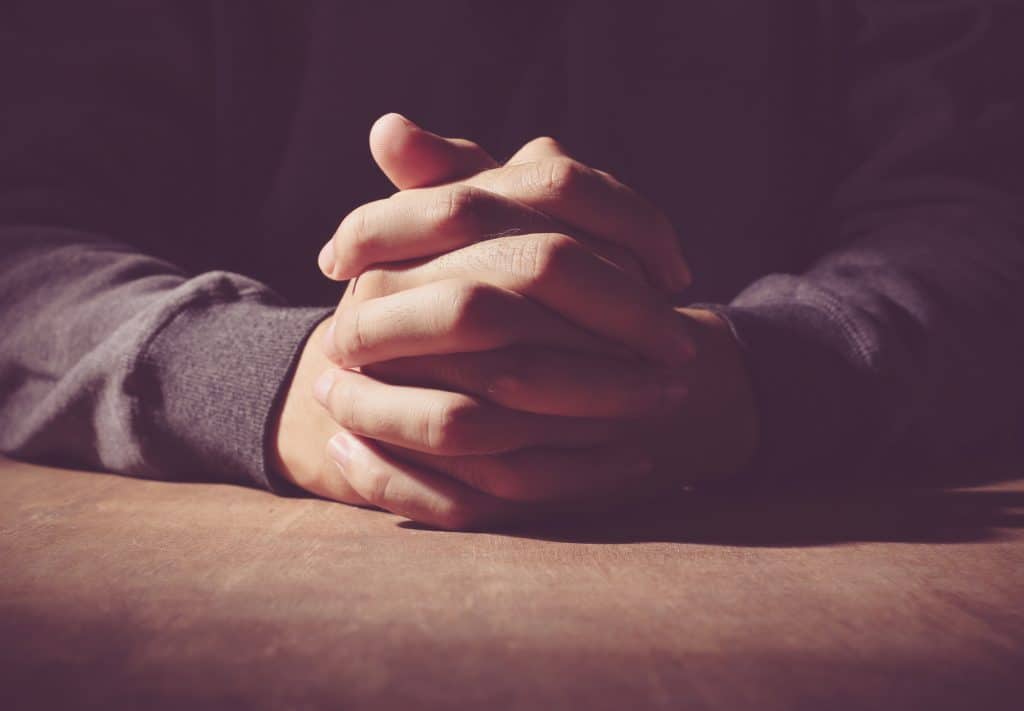
It is the belief, feeling, or experience you have.
Now you’re probably wondering: What do you mean?
Let me explain with the backstory.
A Buddhist and Christian walk into PF Chang’s in Austin, TX not knowing each other and leave as friends. I’m [the] Christian in this true story.
Not coincidentally (because I don’t believe in coincidences and this has been proven to me many times over throughout my life), this Buddhist woman came into my life as a “teacher” in perfect timing. Our conversation inspired this post.
She shared so many wisdom-isms (I’ll call them) with me that had me hanging on her every word. One of my favorites was this analogy she used to share how we always have a choice to write how we feel about certain things/experiences in one of three places: in water, sand, or in stone. These thoughts/beliefs are not permanent unless we make them so.
We can write them in the fluidity of water, coming and going with ease; not holding, forcing, or resisting. We can write these things in the sand where they’ll stay for a time – eventually fading. Or, we can carve them in stone, forever taking up emotional and mental space.
The choice is always ours.
Which will you choose, friend?
P.S. This post was an exercise in patience, in writing my feelings in water as I had to re-write the entire thing. Not sure how it was initially deleted but sigh…such is life, sometimes; gotta go with the flow and ride the tide.
The spiritual journey is one of constant transformation, and we can’t grow if we continually hold onto what is, rather than embrace change and what could be.
My children aren’t big into reading, which breaks my heart because a single book can change your life. Books can also take you to far away places and experiences. Such is the case with the book The Alchemist, one of my all-time favorites about a shepherd boy who yearns to travel for worldly treasure. My point in sharing this is that books can also help us unlock mysteries about ourselves. And often, it is our limiting beliefs about what we believe is possible or what we are worthy of, that keeps us stuck in our lives and making the same decisions over and over. One book, or even a piece of writing – heck, even one line, has the potential to have a lasting impact, helping us to recognize such limiting beliefs.
I recently read a piece of writing that helped me unlock my limiting belief. I have many; we all usually do. However, one could summarize all the rest. My limiting belief is that I don’t deserve/I’m not worthy. Do you have unique china/dishes you only bring out on rare occasions? Or, do you have an article of clothing that you have worn once, never to wear it again because you’re afraid of it being ruined?
On our first anniversary, I received a diamond bracelet from my husband, and it’s rarely seen the light of day outside of its velvet box (that’s inside another box). And what it comes down to is that it’s too good for me. The dishes may be too good for you, or the special scarf or dress may be too good to wear and enjoy them whenever you want. Sure, I could say I don’t want it to get ruined or lose it (and those things would be true) but, if I (and you) think about, the real emotions that come up is that I, or you if this resonates, are not deserving/worthy. People like “me” don’t wear beautiful things like that.
When I was a kid, I typically wore hand-me-downs. Woohoo for corduroy pants (which are making a comeback, by the way)! Anyway, I rarely got anything new. I didn’t mind. Although, I had this weird insistence, for a time, that everything I wore had to match, which was a problem with hand-me-downs because you get what you get. Lol! One year, though, Easter was extra-special as I received an Easter dress. But, I could only wear it for Easter, for that one time I got professional photos taken, and for super-special occasions (so, rarely).
This realization brought up many other examples of how a limiting belief, most often rooted in childhood, can wreak havoc through adulthood. For instance, I’m cozy with thrift stores. Granted, you can find some pretty great finds at thrift stores. Just as some people choose to be thrifty, there are people with no other financial choice. Regardless, if money wasn’t the issue, would you still prefer the thrift store? Likely not. Up until the last few years, I shopped exclusively at thrift stores. So, our limiting beliefs affect the one area of our lives most of us experience struggle of some kind with, and that’s money.
When things happen, too, throughout your life, that reinforces your limiting belief, it only cements that mindset further. For example, being a victim of sexual abuse as a child/adult reinforces the limiting belief that you’re not deserving/worthy. You’re not worthy of love that is pure and honest.
I could go on and on about this. For me, recognizing this has unlocked the ability for me to reframe it. I get to decide, from here on out, how I will shift out of this mindset and into one of self-love. Self-love is mentioned so often nowadays it’s starting to feel like a buzz word. But, it’s the only way we (you and me) can change our future. It’s the only way we can become the captain of our own ship and design our destiny.
What are your limiting beliefs? What stories have been passed down to you? Did you grow up believing life is a struggle; that there is never enough (of money, resources – anything good, for that matter)? I don’t think we comprehend how these beliefs hinder us in our growth.
Self-love – that’s where we find peace and when everything around us begins to shift.
Try this with me: take your three middle fingers and while tapping on your thymus (breastbone), repeat over and over “I’m sorry. I love you.” As you do, bring to mind all the limiting beliefs; the stories passed on to you in childhood (if you need, journal about this first). Forgive yourself for believing it and give yourself some love to release it.
In this post, I shared what forgiveness is and what it isn’t. And, in that post, I also share what I’ve learned about forgiveness, as well as what not to do with forgiveness.
In this post, I’d like to share a deep-dive method I’ve learned in navigating forgiveness. Before we move on, however, if you haven’t completed the exercise I mentioned at the end of that post, I’m including the following info again, for your convenience.
Give some thought to both positive and negative events/unhappy memories of a relationship with someone you’ve found it difficult to forgive. This person can be living, deceased, and any relationship you wish would be or could have been different, better, or more in some way. It is, however, best to start with the closest relationship. For example, in my case, it is the relationship with my mother because she raised me.
Next, map these events in chronological order as best you can on a straight-line timeline, starting with your very first memory with that person regardless of it being positive or negative. For some relationships, it could be the first time you met that person. Keep going, writing the positive events above the line and the negative events below the line and ending with the current year. Also, maybe it was a misunderstanding or memorable event – keep those times in your relationship in mind, too, to add to your timeline. Ultimately, it’s the feelings you had when these things occurred that we’re wanting to dig deeper into.
Some examples are a new dress, a punishment, a vacation, abuse, a tender moment that’s stuck with you. Even with an abusive relationship, if there are positive memories (or actions like paying rent), those must be acknowledged as well. Be as honest with this as you possibly can. Every relationship is made up of good and bad and right and wrong; acknowledge both to express the true picture of the relationship.
When I did this exercise, I had to sit back and let it all sink in a bit. When you see all the things you’re holding on to in your heart, it’s eye-opening. You realize how much toxicity exists within your body. Not all events were below the line, however. I also felt more appreciation in other ways, too, for events written above the line.
The next step is to translate the relationship graph into three categories: apologies, forgiveness, or significant emotional statements. Above-the-line events are usually apologies or significant emotional statements. Some negative events may fall into two categories, too, if there is appreciation but also a negative emotion tied to the event.
When it comes to apologies, you may owe an apology for something you did or did not do. You may not have communicated something before the relationship came to an end. Regardless, this is your perception of your actions or inactions.
A Side Note on Apologies
When you feel like a victim, apologizing comes extra hard to do. I can speak for myself when I say that I had developed a lifelong relationship with my pain and acted like a victim for many years. I didn’t realize this was a problem until I experienced a mid-life unraveling (crisis) and looked inward for the first time.
No matter how insignificant it may seem, apologizing for even the slightest transgression is the only way you can complete your pain to move on from it.
Forgiveness: An Inside Job
The next category is forgiveness, which is the acceptance that there will not be a different or better yesterday. It is the action of giving up resentment held against another person. You would also never want to forgive someone face-to-face, as doing so will likely be met with defensiveness. Always keep in mind: forgiveness is an inside job.I have been a witness to this and it’s just not pretty. Don’t add insult to injury – this is inner work for you and you alone.
Things Left Unsaid
The last category is significant emotional statements. These are neither apologies nor something that calls for forgiveness. We tend to hold on to unsaid things that make a situation feel incomplete for us. A few examples would be: I love you, I hated you, I was ashamed of you, thank you for the sacrifices you made for me, etc.. This category includes all the things left unsaid or things we wish we had said or done (or hadn’t said or done).
Repeat the above for every relationship that’s caused you suffering and you’ll experience many a-ha moments and, my hope, healing as well.
I created a little guide to go along with this post. Enter your name and email and you’ll receive an immediate download. You’ll also receive The Unleashed Letters, which hits inboxes every Wednesday.
Home…I love the word. It wasn’t always that way, however.
For a lot of people, home is a place they, too, would rather avoid because it’s a place of grief, sadness, or discontent – all the things a home shouldn’t be.
Home, for a time, was a place where the show Hee-Haw could be heard in the background or Tom Brokaw’s soothing voice on NBC Nightly News, while my mom was busy mommy-ing in the kitchen making her “famous” dumplings (even though she always cheated using frozen bread dough – I didn’t care, though).
However, days such as these were short-lived.
Before long, my home would become a space filled with great sadness with an empty seat at the table, where the occasional “family” meal consisted of a noodle dish of some kind.
Home would change again – when a new presence would walk in the door. Only, this is the point in time where home would become a place I couldn’t wait to escape.
Arguments. So many arguments. Smoking – lots of it. Trash-talking; plenty of that to go around, too. And aside from weekends where I was expected to be Joan Cleaver, a Merry Maid, and the lawn-keeper, it was me (most of the time) with a lonely bowl of Fruity Pebbles…lots of Fruity Pebbles.
Home: it means something entirely different to me now and has changed its meaning throughout my life. We’ve all heard the expression: home is where the heart is? But what if the heart is broken? What if the home is broken?
Change The Meaning of Home
I got to thinking – what if home was what we made it in our hearts or what we decided we wanted it to be? Can we escape to the inner-room that is the center of our souls – where dreams and aspirations sit quietly and patiently waiting…yearning to be acknowledged?
For a lot of years, I did just that – escaped by going inward, trying to find ways to express myself outwardly that wouldn’t add to the discontent of home.
Raising a teenager today has brought up a lot of the angst I know I felt as a teen. And, it’s gotten me thinking, too: I wonder how our kids perceive home? And, I wonder how they perceive their inner-home, too.
Ponder This…
Just as we sweep off the doorsteps of our physical home, it’s often releasing to clear away the dust, dirt, and grime of our inner-home as well.
What does home feel like to you today?
What has it felt like through the years?
And, what, more importantly, does your inner-home (your heart-center soul) feel like these days?
I happen to know where you can find a broom, friend.
Ho’oponopono: a method of healing developed by a Hawaiian therapist by the name of Dr. Ihaleakala Hew Len. He “cured” an entire ward of criminally insane patients having never met them or spent time with them in the same room. The story goes, he reviewed each of the patients’ files and then healed them by first healing himself.
Why would anything we work on within, have an effect on our outside world? If you think about it, everything that happens to you, you experience it in your mind. Everything you see, hear, every person you meet passes through your mind. You only think it’s “out there” and because of this, you hold no responsibility to it. When, in fact, you are responsible for everything you think and everything you give your attention to.
Forgiveness: The Hawaiian Way
There are four steps to this method, and the order is not essential. Repentance, Forgiveness, Gratitude, and Love are the forces at work that can transform your feelings around a particular relationship.
The best part is this can be done in the quiet of your own home, without assistance from no one, and you can even say the words in your head rather than out loud. The power is surrendering yourself to the feelings that come up and allow them to pass through you – raising your vibrations and capacity to be open to love and forgiveness within your heart.
Four Steps to Forgiveness
Step 1: I AM SORRY As I previously mentioned, you are responsible for everything in your mind, even if it seems to be “out there.” It’s often the “inside” problems that show up in our outside world, so keep that in mind. So, choose something to be sorry for that you know you’ve caused yourself – start there. Do you have an addiction, a weight issue, or other health problems? Maybe you have anger issues? Start there by stating what you’re sorry for as a phrase: I am responsible for [the issue] in my life, and I’m sorry that I have caused this.
Step 2: PLEASE FORGIVE ME PLEASE FORGIVE ME. Say it over and over and mean it. It will feel awkward, but don’t worry about who you’re asking – just ask! Remember how sorry you are from step one as you ask for forgiveness.
Step 3: THANK YOU Say “THANK YOU.” It doesn’t matter who or what you’re giving thanks to. For example, thank your body for all it does for you or yourself for being the best version of yourself you can be. Thank God or the Universe, if that’s more your thing. Keep saying THANK YOU and feel it with every ounce of your body.
Step 4: I LOVE YOU Say I LOVE YOU – to your challenges, to the thing that has you feeling caught up in negativity. You can also say I LOVE YOU to your body, to God (the Universe, if that’s more your thing), to the air you breathe, and to the home that shelters you. Say it over and over. Mean it. Feel it. There is nothing as powerful as Love.
When I initially learned about ho’oponopono, I learned to do this practice alongside EFT (or tapping as you may know it to be called). It’s come to light, in recent years, that tapping isn’t actually a necessary component of the practice, which means – this is easily accessible in the quiet of your mind no matter where you are. Stuck in traffic? You’ve got nothing but time, my friend, and what a fitting situation to give love to, right? Because we all know road rage is real and one can only imagine the blood pressure of some people who take it too far!
Take a few minutes to watch the video below that helps explain how ho’oponopono works, how this physician uses it in her practice, and how it may help you.
I think what this really comes down to is a willingness and openness to be a witness to, be present with, and give attention to the emotional upset within our bodies. Providing love and care to what pains us and lovingly hold it in our hearts and releasing it with a new perspective is a way to heal and forgive ourselves – for ourselves.
Forgiveness is letting go of the hope for a better or different yesterday.
According to Merriam-Webster’s definition, it is “to cease to feel resentment against (an offender).”
When one chooses to forgive, others may see it is condoning; however, the definition of condoning, according to Merriam-Webster, is “to treat as if trivial, harmless, or of no importance.”
If we are to believe these two words are alike, it would be impossible to forgive because who would or want to trivialize a horrible event?
What I’ve Learned About Forgiveness
I have learned, through years of grief, that forgiveness has nothing to do with the other person and everything to do with my well-being.
Forgiveness is an action, not a feeling. One cannot feel forgiveness unless you have forgiven. It is the act of letting go of resentment held against another.
Some may then say: I can forgive but I cannot forget. To that, it’s wise to ask then, has the transgression truly been forgiven? Who is the one who continues to remember and whose life is blocked by a lack of forgiveness?
Over the past few years, I’ve had to work hard at forgiveness. Not only that, I’ve experienced a lack of understanding when I’ve been able to forgive, and others in my life have not.
No one else needs to understand your willingness and openness to forgive. You and you alone know your heart and what it needs. We all walk the road of forgiveness in our own time. Let no one tell you that you’re wrong for offering forgiveness (in the silence of your heart).
What Not To Do with Forgiveness
To that point, never ever feel as though you must verbalize your forgiveness in person. You potentially open yourself up for more hurt and pain if you offer unsolicited forgiveness as the other person may see this as an attack. Remember: forgiveness has nothing to do with the other person.
On the other side of forgiveness is requesting it. When you ask for forgiveness, you are asking the other person to do something that you need to do for yourself. Because, when you’re the one asking for forgiveness, it’s really guilt rearing its head as you’re really trying to apologize for something you have said or done. Rather, it is an apology that is needed.
What are you holding in your heart that you’ve been unwilling to forgive?
Next week, I will share two methods I’ve learned in navigating forgiveness. In the meantime, give some thought to both positive and negative events of a relationship to someone you’ve found it difficult to forgive. This person can be living, deceased, or perhaps, any relationship you wish would be or could have been different, better, or more in some way. Map these events in chronological order as best you can, and then next week Friday, come back here to the blog for part two.
P.S. How about you? Struggling to find forgiveness in your heart? I know it’s hard – truly, I do. But know that by offering forgiveness, you’re not letting the “offender” off-the-hook. Rather, you’re breaking yourself free from the hook.
We use cookies on our website to give you the most relevant experience by remembering your preferences and repeat visits. By clicking “Accept”, you consent to the use of ALL the cookies.
This website uses cookies to improve your experience while you navigate through the website. Out of these cookies, the cookies that are categorized as necessary are stored on your browser as they are essential for the working of basic functionalities of the website. We also use third-party cookies that help us analyze and understand how you use this website. These cookies will be stored in your browser only with your consent. You also have the option to opt-out of these cookies. But opting out of some of these cookies may have an effect on your browsing experience.
Necessary cookies are absolutely essential for the website to function properly. This category only includes cookies that ensures basic functionalities and security features of the website. These cookies do not store any personal information.
Any cookies that may not be particularly necessary for the website to function and is used specifically to collect user personal data via analytics, ads, other embedded contents are termed as non-necessary cookies. It is mandatory to procure user consent prior to running these cookies on your website.