Grief, Growth, Mind/Body Wellness, Resources |

Several months ago, I was sitting in rooms filled with social workers. I decided to attend the Veterans Administration Mental Health Summit, where I had a booth for my grief recovery work. I also had the opportunity to sit in on the presentations. One speaker was talking about suicide prevention. A psychiatrist gave another presentation within the VA who talked about EMDR and other “evidence-based” treatments. The most moving presentations were by veterans themselves who had attempted suicide. Sitting at a table with at least six others (all social workers), I was the only one moved to tears. One woman was on her phone during one veteran’s heart-wrenching account of his story. I don’t know what was pressing at the moment that she thought was more important; however, it spoke volumes to me – no disrespect to social workers. My observation was that, without being a veteran with a similar experience, they resort to what they know and their personal experience.
I still remember the defeated feeling I felt when I left. I remember feeling as though the only way I could help veterans, the way they deserved (within the VA healthcare system and at no cost to them) was to go to college and become a licensed social worker. But, I thought to myself: “I already have this fantastic program available to me that is ‘evidence-based;’ why does it feel like I’m climbing Mt. Everest?” To me, I just needed the right person to hear me out. But that wasn’t happening. Even when I thought I had finally made some progress in a conversation, I only received more discouragement.
Working my way into the VA system, which would allow me to serve the veteran community (while still having a business), has been met with hope and heaps more resistance. Most, who I’ve spoken with, have been open to hearing what I have to say, wish they could help, but then smacked me with the reality that the VA system just doesn’t play nicely with “unlicensed” folk (in not those exact words).
Well, had I listened to all the naysayers, those who said it likely couldn’t be done, I would’ve quit when yet another door was closed in front of me. I wouldn’t be writing this post right now. I would have stopped when given the tenth or fifteenth “good luck.”
What I think we (more often than not) do to ourselves, and what all of those who I spoke with don’t know or realize, is they were placing their limitations on me. And, for a time, I allowed it. I was feeling defeated. I was wondering if this bigger picture vision I’d been holding for myself this entire past year was going to fade into the background of my life. And, not only crush my spirit but become yet another “thing,” I tried.
Fast-forward to a week ago, after over a month of hoop-jumping, I received my “approved” status to work as a contractor for the federal government (i.e., that would include the VA). I don’t know the impact this will have on my business (or my life), but I feel like it’s a massive leap of hope forward. And I do feel like it’s another step in fulfilling a higher purpose in my life. This accomplishment feels enormous to me; in ways, I don’t yet know myself. I have no doubt, I will have more hoops to jump through; however, this hurdle was a big one.
We lie to ourselves – all the damn time. We believe the crap-stories we tell ourselves. We get stuck around the axel of “I can’t(s)” and “It’s going to be painful” and “life sucks” or whatever other garbage we hold onto like a storage tank.
My mentor Lois said it best: “Would you rather be a processing plant or a storage tank?”
It starts with the lies we tell ourselves. That, it’s more comfortable being a storage tank. That, the pain is far more comfortable (and more familiar) than what it takes to get on the other side.
The inspiration for the title of this blog post comes from a quote I read in a book I just started reading. And I believe it to be true.
The greatest sources of our suffering are the lies we tell ourselves. – Elvin Semrad
What lies are you telling yourself that you believe these days? What are you taking in as truth from someone else? Because it may feel right to them, but that doesn’t mean it is going to be right for you. Here is where compassion enters the room.
We see the world through the lens of our own experience. Grief recovery has taught me that, although trauma changes us through and through, it doesn’t have to be the only story we are capable of believing. To me, there’s always hope. Grief recovery gave me that, not just in addressing my trauma, but in every facet of my life, as I’ve shared with you today.
Become the story you want to believe.
Do you want to see more hope in the world?
Start by embodying it.

Grief, Growth |

Do you know what has me excited (in a good way)? The word “grief” is getting thrown around a lot more these days on social media. Not really on the news, from what I’ve seen, but on social? Yes.
This progress means the conversations are starting to shift to calling our emotions what they are – grief. The human experience of every one of us does not go on without grief. We cannot escape it. We all have our walk with it at different stages and phases of life. However, not usually collectively, as a globe.
The correlation I want to make today is how money and grief are similar amplifiers in our lives. When a miserable person wins the lottery, often, it is not the money that makes them happy. What happens more often than not, is the person ends up even more miserable.
Some people may argue they were happier before winning, and, in some cases, that may be true. However, I believe that if you’ve not processed anything that is emotionally incomplete and you win the lottery, all those feelings that have been lying in wait, deep in your heart and subconscious, will rise to the surface and create chaos in your life. Add the grief that comes as a result of winning, too, and life itself can feel unbearable. And, you know what happens when life itself feels intolerable, we look to STERBS (short-term energy relieving behaviors) that help us feel better in the moment. One may resort to gambling, drinking, promiscuity, food, drugs, or other behaviors, maybe never before experienced, to feel better.
On the other hand, let’s say you’re a well-balanced individual. You have a spiritual practice; maybe you’ve been working with a therapist to process your childhood wounds, you’ve gone through years of personal development and growth, your life is full of connection, support, and love. This person wins the same lottery windfall. Do you think this person will have a very different experience? Do you think they would likely enlist the help of a C.P.A to handle the money responsibly? Do you think they are more likely to open a trust or donate to humanitarian efforts/causes freely and abundantly?
We treat ourselves, money, friends, family, co-workers, etc. very differently when our hearts are rooted in grief, then when we’ve done a substantial amount of inner-work to process those feelings.
However which way we lean, in the positive of conscious awareness of our grief and addressing it, to downright avoiding it, directly impacts every area of our lives. Money is no different.
When we ignore our deepest emotions (or our money), the issues that arise because of that avoidance manifests in our lives. This comparison is what I mean when I say money and grief are amplifiers in our lives. What’s emotionally present and the state of our financial matters – expand. Because what we focus on expands; this is the law of the universe
The beautiful thing? We have a choice. We can choose how our tomorrow’s start to look. We can choose what our lives would or could be like if we were fortunate enough to either win or inherit a windfall. Likewise, we can choose how we view money (good, evil, or neutral resource). And, we get to choose if grief will keep our hearts stuck in the past or if we will face it head-on; allowing it to create forward-momentum (for good) in our lives.
What will you choose?
Childhood Grief, Grief, Grief Tips, Growth |

As grievers, our hearts are soft and ever-changing through the motions day-to-day. For comparison purposes, think back to childhood and the hours of fun you had with play-doh; molding, creating and shaping it to make something new to express what you’re thinking/feeling.
Our grieving hearts can also be like clay, soft at the start, only to harden over time. And, this is what happens to, I believe, most of us grievers as time goes on. It’s also why time heals all wounds is a myth that needs to die in conversation. Time does nothing but pass. It’s the action we take in time that creates lasting change.
People say, what they think, are thoughtful, insightful things to grievers. Grievers themselves who’ve never likely processed their grief are sharing from a place of pain themselves. So, why do the things grievers say to other grievers come off as hurtful and unhelpful?
Below are some examples of typical phrases grievers say to other grievers and why these phrases are unhelpful and often hurtful.
“At least he/she is in a better place…” —- First of all, to someone whose grieving the loss of a loved one, they’re sad their loved one isn’t here on earth with them. That would be the better place. In the event of long-term suffering, this may feel true of the griever, but we should never assume that’s how they’re feeling.
“I know how you feel…” —- Impossible. Every loss is different because every relationship is different. It is impossible to know how someone is feeling, and it is unhelpful and hurtful to assume otherwise. Two sisters who experience the death of their mother, despite experiencing the same loss, they’re thoughts and feelings about the loss will be completely different. Each of them experienced a mother-daughter relationship that was unique to them. Similarly, if two people, unrelated, experience a similar loss, although they can relate to each other, their losses will still be individually unique.
“You’re young; you can try/find love again [referring to miscarriage, death of a spouse/significant other]…” —- Saying this is a complete disregard for the emotional weight of what’s been lost. A child, regardless of gestation, is a child to that mother. One never knows the challenges someone faces, too, in conceiving. Also, one never knows if this is a first miscarriage or one of several. Again, it is assuming a story that is ultimately hurtful in this situation. Such is true, too, when it comes to the death of a spouse/significant other when young, To that person, they’ve lost the love of their life. The last thing they’re thinking about is finding love again.
It’s been a year; shouldn’t you be over it by now? —- As I mentioned previously, time does nothing but pass. Whether the loss occurred one or ten years ago, there’s no standard of time by which someone will grieve. March 31st will mark thirty-three years my dad has been gone. The sadness still exists. My children don’t know their grandfather. And, I haven’t had my dad to call on Father’s Day all these years. However, unlike many years prior, today, when I think of my dad, I think about him as my angel. And, I’m no longer emotionally weighed down or feel blame in my heart for how losing him changed my life. Grief Recovery gave me the process and knowledge I needed to process that loss (and every other relationship that has been emotionally incomplete).
These are some of the most common examples of unhelpful and hurtful things we say (as grievers ourselves) to other grievers. I am expressing that these are hurtful/harmful things grievers say to other grievers because I believe we all grieve at 100%. We all grieve something or someone. You may not feel you are a griever, but eventually, you will have another loss that brings all the losses before to the surface.
So, what should you say instead? If you find yourself in a position where you’re tempted to say one of the things above, instead, simply ask how you can help or support them, offer a hug, or, express how you’re there for them whenever they need. It need not be complicated or wordy – these are one of those instances where sometimes, less is truly more.

P.S. In case you missed it, this is my birthday week! This week only, receive $41 off the One-on-One, 7-week grief recovery program, and 60-minute Distant/In-Person Reiki sessions are $41. Reiki sessions and One-on-One spots are limited, and this promotion only goes through this Sunday! Purchase Reiki sessions now, use them later! Reserve a One-on-One spot now; coordinate with me for a time that works best for you! Do you have any questions? Email me at victoria [at] theunleashedheart [dot] com. xx
Childhood Grief, Grief, Grief Stories, Growth, Resources |

Are you the type of person who is always looking for the silver lining in a situation? Or, do you tend to give more thought to what is or could’ve been?
There’s no right or wrong answer here. I’ve just thought this week about how differently we’re all wired.
For the most part, since childhood, I’ve considered myself as optimistic. Likely because of the crappy things I experienced in my youth. Even as a kid, I recognized there is always someone who has had it worse. Always. I don’t say that lightly. And, it’s not even that I was taught this, because I don’t believe I was. I think it’s something I felt and witnessed. And perhaps this is what’s been burned into my heart. And, when I put myself in their shoes, and allow my imagination to take me to that person’s experience, and feel what that would feel like, suddenly, all that I’ve endured doesn’t seem so hard.
But, all that empathy, optimism, and always looking to the future (when I get older, I’m going to do this, I’m going to experience that, etc..) kept me from really feeling what I was experiencing in the present. I look back on my childhood and recognize that I spent a lot of time in my imagination.
Silver linings are great; as long they’re not a coping mechanism to deflect from what’s going on in the heart. Children, in my opinion, do this naturally, though – as a way to protect themselves. And, children are also more sensitive to the energy of others, and often pick up on and perceive situations differently than adults.
Although I believe we have tendencies that are hard-wired and written into our DNA, I equally think that early traumatic experiences re-wire our brains and create physical changes on a cellular level. I’m starting to dive into the topic of trauma and it impacts on our bodies, but I find it fascinating and will share as I learn.
In the meantime, I guess I will continue to be one of those annoying people who are always ready to point out the silver lining of a situation. However, what I’ve learned through grief recovery is that firstly, it is most important to acknowledge and not minimize the human experience someone else is having.
Everyone sees situations through their lens of experience. And, that’s why the Grief Recovery Method is so powerful. We learn to be a heart with ears for others; removing the lens through which we see the world, and giving someone else the presence of heart – and heart alone.
When we begin to work on our inner “stuff,” we see our lives (and the lives of others, too) from a different perspective. It also becomes a lot easier to see the silver lining for ourselves, too. Because, when you get 5-12 people in one group sharing their deepest pain, I guarantee you’d rather keep your problems. And, it’s not to compare, again – that’s not what we do in Grief Recovery. But, the awareness of that alone has the power to illuminate the grief in our lives – in a way, nothing else can. And that is why we can never heal in isolation.
What is a silver lining-feeling you desire in your life? How do you wish to see a situation differently?
Think about it this way; those who survived as POW’s (the late John McCain, for example) or Holocaust survivors (for example, this book by Viktor Frankl, which has been on my “to-read” list for far too long), are some of the greatest optimists you’ll ever meet. When I’ve watched interviews, recently this one shared on CBS Sunday Morning for the 75th Anniversary of Auschwitz, I could feel their optimism, despite what they’ve endured. I’ve been to the Dachau Concentration Camp; just walking the grounds was a sobering experience.
Where does optimism come from, if not from our life experience?
I’ll leave you today with Frankl’s words:
Everything can be taken from a man but one thing: the last of the human freedoms—to choose one’s attitude in any given set of circumstances, to choose one’s own way.
When we are no longer able to change a situation, we are challenged to change ourselves.
Between stimulus and response there is a space. In that space is our power to choose our response. In our response lies our growth and our freedom.
P.S. Heads up! Next week Monday, I’ll be sharing a birthday week promotion! You’ll have an opportunity to book Reiki sessions at a discount for that week only (can be used later) – due to my schedule; sessions are limited! Also, there is a discount for the 7-week One-on-One Grief Recovery Program. Stay tuned! I will be sending my email list the info first if you’d like to get in on the birthday shenanigans! 🙂
Grief, Grief Stories, Growth, Mind/Body Wellness, Resources |
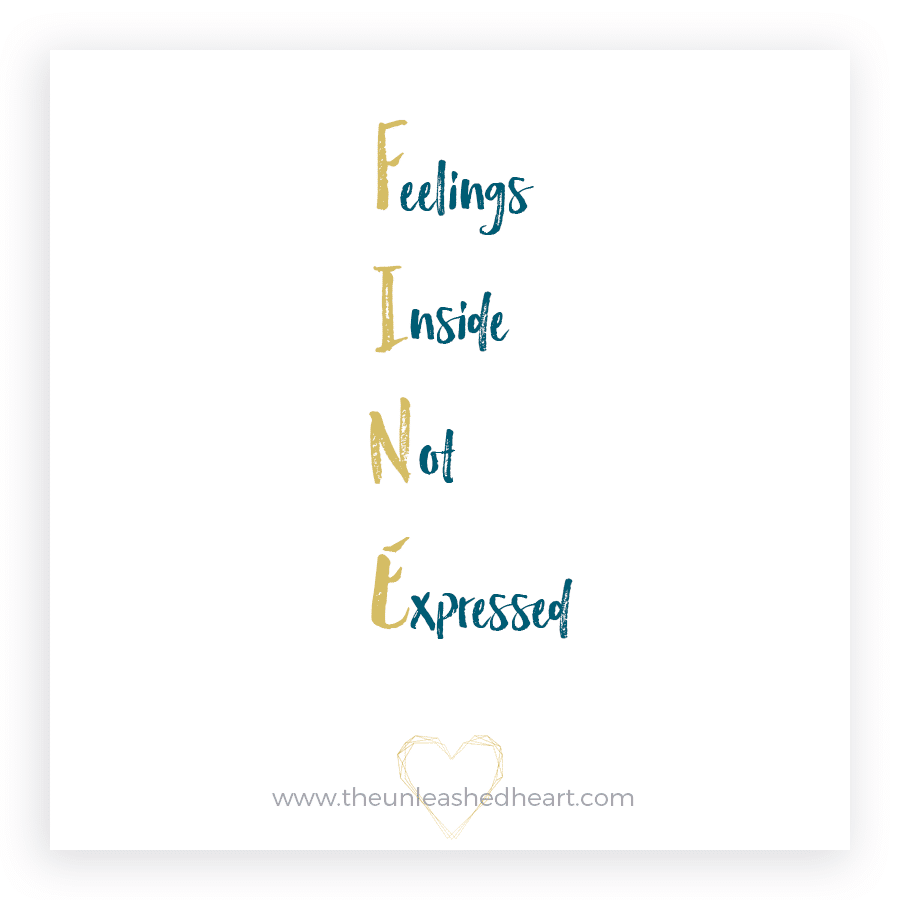
I had a different blog post planned for today; however, I felt this topic more strongly today. So, let’s talk about the word fine, particularly in the context of I’m fine.
For most of my life, when someone would ask me, “how are you?” My response (like it is for a lot of us) would be, “I’m fine.”
There’s a question we need to interject, however. In the space between that question and our knee-jerk response, ask: “Do I like to be lied to?”
We often pause, to tell the truth about ourselves in this instance, because it’s just easier. Getting deep with, what is often a casual, small-talk question, would be uncomfortable, right? I mean, if we ask someone (anyone) how they’re doing, we’re likely to be caught off guard if we got the truth – if it’s anything but “I’m fine.”
Let’s look at this typical scenario more closely, shall we?
Had I told the truth about myself when someone asked me how I was doing back in 2014, I would have said:
Life itself overwhelms me, and I am feeling miserable inside. I feel like there’s more to me than where I’m at and what I’m doing right now. Everything from my past is creaping up on me. I feel like a hot mess. I haven’t showered for three days (no lie) and only get out of my pj’s and make my bed right before my kids come home, so they don’t see what a hot mess I am. I take personality tests, am going through various personal development programs trying to figure out why I’m so f*cked up. That’s how I feel – f*cked up. I ache all over. I can’t eat because I feel bloated all the time. My hair is falling out in clumps in the shower. I am quick to anger and slow to love. Also, I got a dog because my youngest went to kindergarten and, I needed a distraction, because, just like that, I feel like I’ve lost a part of my identity – in so many ways.
How do you think someone would respond to that on the street, on the phone, or at lunch? They likely would’ve regretted even asking. And, for some reading that, you may be realizing, for the first time (if you haven’t read my book), how I really felt and what my days really looked like back then.
Grief causes us to behave in ways that are out of character for who we are at our core. But, here’s the caveat to that statement: I don’t think we truly know ourselves until we dissect ourselves. We may have an understanding of our likes, dislikes, passions, etc.. But, I’m talking really deep examining and knowing. The knowing you finally feel when you look in the mirror, and your reflection meets your soul. When have you seen yourself this way? Have you looked at yourself in the mirror so profoundly that you began to weep? If I were Kenny Rogers singing “Gamgling Man,” I’d bet my left kidney that you haven’t. It’s been a long time since I’ve done so myself.
I can tell you, what’s happened for me when I have in the past, is a whole lot of tears start flowing. Those tears would come from a whole lot of hurt at that time. I would bet my right kidney, but considering I already bet my left and probably lost, I’ll say I’d bet my next paycheck that if I did so today, it would be a different story. Today, I feel a whole lot of appreciation for being where I am in my life and all the sh*t I worked through to get to this place. I know this because it happens so easily now when I am in meditation or journaling.
So, perhaps when people ask me now, “how are you?” I should say: “Fantastic. How can I help you feel fantastic today, too?” I’m sure that’s not something most people would expect to hear, right?
So, friend – how can I help YOU feel fantastic today? Or, perhaps, tomorrow, or nine weeks from now? More specifically, I can, after the last session of my upcoming eight-week grief group program (March 11th). Shameless plug, I know. But truthfully, this program was the catalyst for changing the trajectory of the rest of my life. I feel this in my bones because I became certified, and I’ve found my calling in this work. However, even if you’re not certifying and are a participant, you’re going through it and doing the work. You complete deep inner-work, in a supported and guided environment. You don’t know it yet, but the feeling after the eight weeks will have you choosing another response than “I’m fine.” I guarantee it.
Let’s remove “I’m fine” from our vocabulary and, instead, begin to tell the truth about ourselves. Grief isn’t a dirty word. And yet, it certainly feels like it is. I’m on a mission to make grief common-talk, just like the weather. Not one person is immune to it, regardless of race, gender, sexual preference, etc.. We can look at anyone on the street and know there’s something within them that causes an ache inside because we all grieve something or someone. “I’m fine” is merely a distraction from the pain and loneliness that persists inside. And by saying “I’m fine,” we’re placing a bandaid over an infection. All the while, we’re rejecting and denying where our “hut (heart + gut)” is telling us we need to heal.
We start changing the conversation when we start getting honest with ourselves and with each other. And, this conversation starts in our homes with our children. We need to stop accepting, “I’m fine.” We have to help our children find the words to help them express how they’re truly feeling. Because behind every “I’m fine” is a lie if we take the time to dissect it.
One last thought: How can we expect our children to tell the truth about themselves when we hide the truth about ourselves?
P.S. Tickets/info for my upcoming group in Bismarck, ND can be found HERE, if you’re interested in moving beyond your grief.
Childhood Grief, Grief, Living Unleashed, Resources |

Do you feel sad around the holidays? A lot of people do. The holidays are supposed to be a joyful time surrounded by loved ones and about joy and good cheer. So why do many people have a hard time? For some, there was a loss around the holidays, so it’s a reminder of someone they loved passing during that time. Or, being around others who have their loved ones, is a reminder of the loss of a special relationship. And, for many, it’s the first holiday without their loved one.
As you can see, there are many reasons why this time of year can be emotionally charged and challenging. There is a lot of stimulus touching your heart in its most painful spot. With all the holiday hustle and bustle, someone in this situation will either prefer to isolate or become the organizer and entertainer. In the process, you are using the holiday busy-ness as a distraction.
What is a stimulus, and how does it relate to grief?
Stimuli consist of the sights, smells, sounds, and tastes that trigger our memory. It causes your brain to recall events or feelings associated with the stimulus. Stimuli such as holiday lights, decorations, and music can cause you to remember a family member who died, a break-up, or childhood experiences. Fond memories are normal and healthy. Unresolved grief is when fond memories turn painful.
For example…
The same stimulus can affect two different people in two different ways. Let’s say two sisters hear a Christmas song that was a favorite of their mother, who died.
One sister might hear the song and remember how much her mother loved it. She may miss her mother for a few minutes, but then she goes back to what she was doing. The song served only as a reminder of how much she loves her mom but didn’t affect her entire day.
The other sister might hear the song, think about how much she misses her mother, get sad, and be unable to focus the rest of the day. She might walk around feeling numb and unable to participate in holiday festivities fully. Or she may refuse to talk about anything other than her mother’s death.
The second sister is an example of unresolved grief.
A personal example I have is my dad always used Old Spice after-shave. And, not so very long ago, I was visiting my mom, and what did she have in her medicine cabinet in the bathroom? A bottle of Old Spice after-shave. I never asked her about it, and I don’t have to – I already know why she has it in there after all these years. Perhaps it’s still the same bottle left from my dad – I don’t know.
Another personal example is when my dad would change his colostomy bag. That smell is burned into my brain. And, although that’s not something that someone would smell on the regular, when I have, throughout my life smelled something even remotely similar, it takes me back in time. And, it’s not a particularly happy memory at all.
I have so many examples of this. I’m sure you can think of some of your own as well. Reminders can be all around us at times. During the holidays, it can just feel overwhelming.
Even at Thanksgiving, I found myself talking about Cabbage Patch dolls. What came up for me, at that moment, was how the first Christmas after my dad died, I received two cabbage patch dolls in the mail from who, I don’t know. All I know is, I can think of these things now with gratitude with how far I’ve come in addressing the grief around losing him. The grief never goes away – it just changes, as does my response to it. I’m not dwelling, ruminating, and feeling stuck in that grief rut as I had been all those years prior.
How do I know if I’m experiencing unresolved grief?
The holidays may remind you of any number of losses, such as moving, events that happened during childhood, an ex-spouse, a sick child, or a pet that died.
If a Christmas tree reminds you of the fun holidays, you spent with a loved one who died, that’s normal. If you then become brokenhearted over the loss of your family member due to fond memories turning painful where your entire day is impacted – that’s unresolved grief.
Unresolved grief affects your ability to stay in the moment, which limits your capacity for happiness. During the holidays, it might limit your ability to enjoy time with your friends and family fully. Some people avoid holidays altogether because they don’t want to risk the feelings associated with painful reminders of their loss. Until you become complete with the losses in your life, you will never be able to enjoy all life has to offer fully.
Unresolved grief may be at the root of any fear associated with thoughts or feelings about a relationship. – The Grief Recovery Institute
What To Do Instead When Grief is Causing the Holidays to Suck
The Death of Someone Important to You:
- Don’t Isolate Yourself. It’s normal and natural to feel lost and alone―but Don’t Isolate―even if you have to force yourself to be with people and participate in normal activities.
- Don’t misuse food or alcohol to cover up or push down your feelings. As children, when we were sad about something, we were often told, “Don’t feel bad. Here have a cookie, you’ll feel better.” The cookie doesn’t make the child feel better, it makes the child feel different, and the real cause of the sadness is not addressed. When we get older, alcohol and drugs are used for the same wrong reasons―to mask feelings of sadness.
- Talk about your feelings, but don’t expect a quick fix. It’s essential to have someone you trust to talk to about your memories and the feelings they evoke. Ask your friend to listen to you and not try to fix you. You’re sad, not broken; you need to be heard.
- While it’s important to talk about your feelings, don’t dwell on them. Telling the same sad story over and over is not helpful it can establish and cement a relationship to your pain. Better to make a simple statement of how you feel at the moment. For example, say, “I just had a sad feeling of missing him.”
- Time doesn’t heal—actions do. The myth that time heals a broken heart is just that, a myth. Time can’t heal a broken heart any more than air can jump into a flat tire. Time goes by. It’s the actions you take within time that can help you feel better.
Death of a Spouse or Divorce:
- Just because you feel lonely doesn’t mean you’re ready to start dating. Don’t start dating while your heart is still broken, or you will guarantee that the next relationship will fail. Being prepared to date again is a function of the actions you take within time to repair your heart – whether you’re dealing with a death or divorce.
- Don’t get too busy—avoid hyperactivity. Be careful not to get too busy. Being super active distracts you, it doesn’t help you deal with your broken heart.
- Maintain your normal routines. Adapting to the changes in your life following a death or a divorce is an enormous adjustment. You are learning how to move from being with someone to being alone. It’s never a good idea to add a host of other changes while you’re trying to adapt to so much disruption in your life.
- Go through the pain, not under, over, or around it. It’s very tempting to try to avoid the pain associated with a broken heart. But it’s also a form of self-punishment. Whenever you skirt the pain, all you’re doing is pushing it away temporarily. It will always come back to haunt you.
- Find practical guidance, or you will sabotage your future. While the grief of a broken heart is the normal reaction to the death of your mate or the end of a romantic relationship, it’s constructive to find effective tools to help you discover and complete everything that was left emotionally unfinished. Otherwise, you will drag your emotional baggage into the next relationship and ruin it before it starts.
For most people, the first holiday season after a death or a divorce is the most painful. But that’s not true for everyone. For many, the second, third, and subsequent years are excruciating. Since time doesn’t heal emotional wounds, people often report feeling worse the more years that go by. No matter when your loss occurred, it’s most important that you become aware that recovery is possible and to learn which actions will help you.
If you’re dealing with a death, go to the library or bookstore and get a copy of The Grief Recovery Handbook. The principles and actions of The Grief Recovery Method have been used by more than a half-million people to help deal with the impact of the death of someone important to them.
If you’re dealing with the aftermath of a divorce or romantic breakup, go to the library or bookstore and get a copy of Moving On. The principles and actions in it will help you deal with your broken heart.
If your children are struggling with a loss of any type and any level of emotional intensity, go to the library or bookstore and get a copy of When Children Grieve.
P.S. If you are ready to take action towards resolving what is emotionally incomplete for your children (and receive grief education like never before), there is still time to save your spot, at a reduced rate, for a future Helping Children with Loss group program. Click HERE to reserve your spot!
P.P.S. Also, just for funsies, if you KNOW you want to (or plan to) participate in a future in-person grief recovery program (1-on-1 or group), here’s your incentive to commit yourself and your heart. Click HERE to check out this and the other discounts i’m offering through Cyber Monday (12/2). There is no expiration on this offer – so, the next time I provide a group in your community, you’ll be all set. Or, we can set up a 1-on-1 asap, too. I actually need two more 1-on-1 clients. Then I will be able to pursue additional training that will enable me to offer grief recovery ONLINE (which will be HUGE, given my geographical location and the interest I have throughout the state of ND and beyond)!
*portions of this blog post are adapted from The Grief Recovery Institute blog
